In a nutshell
- 🧊🧂 The ice + coarse salt combo acts as frozen abrasive media that scours the grind ring and chamber, refreshing bite without truly “sharpening blades.”
- ⚙️ Method: add 1–2 handfuls of ice, sprinkle coarse salt, run cold water, and grind for 15–30 seconds; optional lemon peel; never use hot water and cut power before any hand contact.
- 🧪 Science: cold briefly hardens fats so they fracture; coarse grains scrub better than fine salt; meltwater flushes biofilm, grease, and odours for a cleaner, quieter unit.
- 🚫 Limits: this clean won’t fix worn bearings, leaks, severe jams, or electrical faults; humming, tripping, or violent vibration are cues to stop and seek professional help.
- ♻️ Care: do a monthly cycle (fortnightly in busy kitchens); try vinegar ice or bicarbonate as alternatives; avoid caustic cleaners and keep it septic-friendly.
There’s a thrifty little trick humming through kitchen chat: drop a tray of ice cubes mixed with coarse salt into your garbage disposal (or waste-disposal unit) and let physics do the polishing. The result isn’t a razor’s edge, but a cleaner, faster grind that sounds healthier and smells fresher. As the frozen grains shatter and tumble, they scour the metal surfaces, break up clinging grease, and flush out stubborn grit. It’s a maintenance move you can complete between rinsing dishes, using ingredients already on the shelf. Here’s the science, the method, and the limits—laid out so you can restore bite and banish odour without calling a plumber.
The Science Behind Ice and Salt in Disposals
Most units don’t hide razor blades. Instead, impellers fling scraps against a textured grind ring that macerates food. Over time, fibrous strands, scale and fat create a glazed film that dulls the bite. That’s where ice and coarse salt excel. The cubes offer rigid but sacrificial media—dense enough to scrub, soft enough to spare the metal. Salt crystals act as micro-abrasives that scrub the ring and de-burr tiny edges, restoring micro-texture. Meanwhile, near-freezing meltwater rinses residue as it forms. Think of it as a cold, controlled sandblast inside a sealed chamber, reversing the slickness that slows grinding and breeds smells.
Temperature plays a supporting role. Cold water plus ice briefly hardens congealed fats, making them brittle, so the tumbling mass fractures the film rather than smearing it. The slurry then carries loosened particles down the drain before they can reattach. Coarser grains (rock or kosher salt) bite more effectively than fine table salt, which dissolves too fast. The action is cumulative: several seconds of crunchy churn polishes high spots, wipes biofilm, and quietens the unit’s chatter. This trick cleans and burnishes rather than ‘sharpening’ a knife edge, but the effect—livelier, cleaner grinding—is what home cooks notice.
Step-by-Step Method for a Safer, Sharper Grind
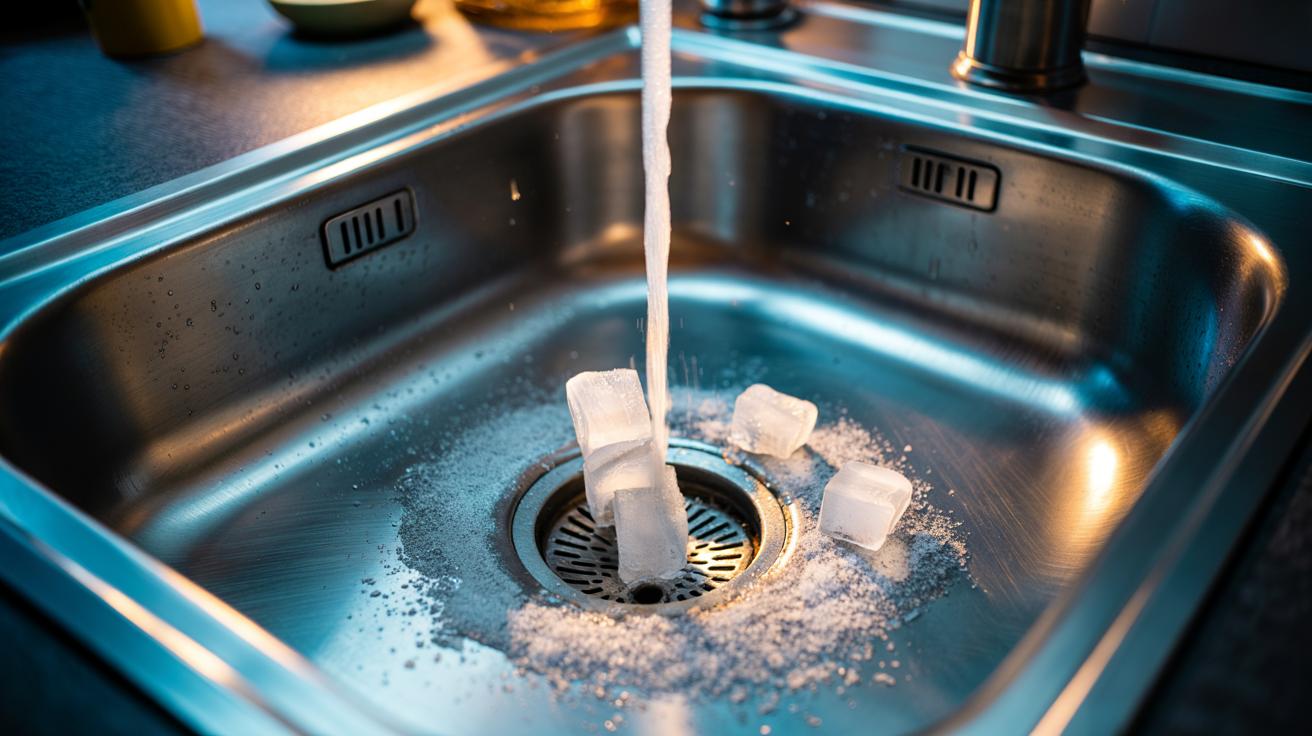
Load one to two large handfuls of ice cubes into the sink opening, sprinkle with a tablespoon or two of coarse salt, then run a steady stream of cold water. Switch on the disposal and let it chew through the mix for 15–30 seconds, topping up with a few more cubes if needed. Add a strip of lemon peel at the end for a final polish. Never use hot water during this routine; you want fats brittle, not melted. Do not put hands into the unit. If you must remove a jam, cut power first at the switch and fuse.
| Item | Purpose |
|---|---|
| Ice cubes | Rigid media that fractures buildup and scours surfaces |
| Coarse salt | Abrasive grains that polish the grind ring and absorb odours |
| Cold water | Flushes slurry and keeps fats brittle and the motor protected |
| Lemon peel (optional) | Citric acid loosens mineral film; fresh scent |
Listen for the change in pitch as the ice disappears and the chamber runs clear. Finish with a 10-second cold-water rinse to send the salty slush down the line. If your unit sounds laboured or you notice persistent rattle, pause and check for foreign objects. This routine is a maintenance clean, not a remedy for mechanical faults. Done correctly, it leaves the internal metal brighter, reduces odours, and restores the brisk, even grind that prevents clogs from forming downstream.
What the Combo Fixes—and What It Does Not
The ice-and-salt cocktail excels at removing biofilm, loosening grease glaze, and knocking off soft mineral scale. It can quieten a unit by evening out rough high spots and flushing grit tucked along the grind ring. It also deodorises by scrubbing the splash guard and chamber walls. Expect a livelier, more consistent grind rather than a dramatic ‘blade sharpening’. In practice, that means fewer strings of vegetable fibre wrapping around pivots, fewer lingering smells, and less strain on the motor during daily use.
It won’t mend worn bearings, leaking seals, or cracked housings. It won’t cure a chronic jam caused by a coin, a bone chip wedged crosswise, or a spoon. If the unit trips repeatedly, hums without turning, or vibrates violently, stop. Cut power and consult the manual’s un-jam procedure or a professional. Abrasive cleaning complements, but does not replace, mechanical repair. Finally, be wary of overloading with dense ice if your appliance is older or undersized; short, measured cycles are kinder and just as effective.
Maintenance Schedule, Alternatives, and Environmental Notes
For most households, a monthly deep clean with ice and coarse salt is enough. Busy kitchens may benefit from a quick half-portion every fortnight. Between cycles, keep a disciplined habit: run cold water for several seconds before and after grinding, avoid fibrous tanglers like celery strings in bulk, and slice long peels into shorter strips. As an alternative, freeze vinegar ice cubes for a two-in-one descale and scrub; the acetic acid helps with limescale. A teaspoon of bicarbonate of soda followed by ice can also freshen without perfume.
From an environmental standpoint, the method is light-touch. The ice melts, the salt dose is small, and most of the work is mechanical rather than chemical. Avoid caustic drain cleaners, which can damage seals and carry a higher environmental cost. If you’re on a septic system, the modest salt used here is unlikely to matter, but don’t overdo it. The reward for this routine is practical: a cleaner chamber, less odour, and performance that keeps scraps moving—reducing the odds of a plumber’s bill and a clogged U-bend.
The ice-and-salt clean is a rare home hack that stands up to scrutiny: it’s cheap, quick, and grounded in straightforward mechanics. The frozen grains abrade, the cold locks fats, and the salty slurry rinses everything away. Used sensibly, it restores the crisp efficiency that keeps pipes clear and kitchens sweet. Still, every home is different: water hardness, food habits and appliance age all influence results. The smartest approach is to try a light cycle and listen to your unit’s response. What small adjustments could make this frosty tune-up work best in your kitchen routine?
Did you like it?4.7/5 (20)