In a nutshell
- 🧪 Science that works: Lemon’s citric acid reacts with calcium carbonate limescale, forming soluble salts; with ~10 minutes of contact, a quick brush lifts the softened ring.
- 🍋 Step-by-step method: Prep bowl, use a fresh lemon half (optional fine salt), press and twist along the waterline, allow a 10‑minute dwell, then scrub with a nylon brush; avoid baking soda which neutralises acid.
- ⚠️ Safety first: Never mix acids with bleach, wear gloves, ventilate, and keep acids off metal fixtures and marble; brief use is safe on vitreous porcelain and septic systems.
- 🔄 When lemon isn’t enough: Use a 5–10% citric acid solution with paper towel soaks, 5–10% cleaning vinegar, or a wetted pumice stone; avoid hydrochloric acid at home.
- 🛡️ Prevention and value: Low‑cost, biodegradable fix; add a monthly acid clean, wipe the waterline after use, and consider a water softener or non‑chlorine cistern fresheners to slow return.
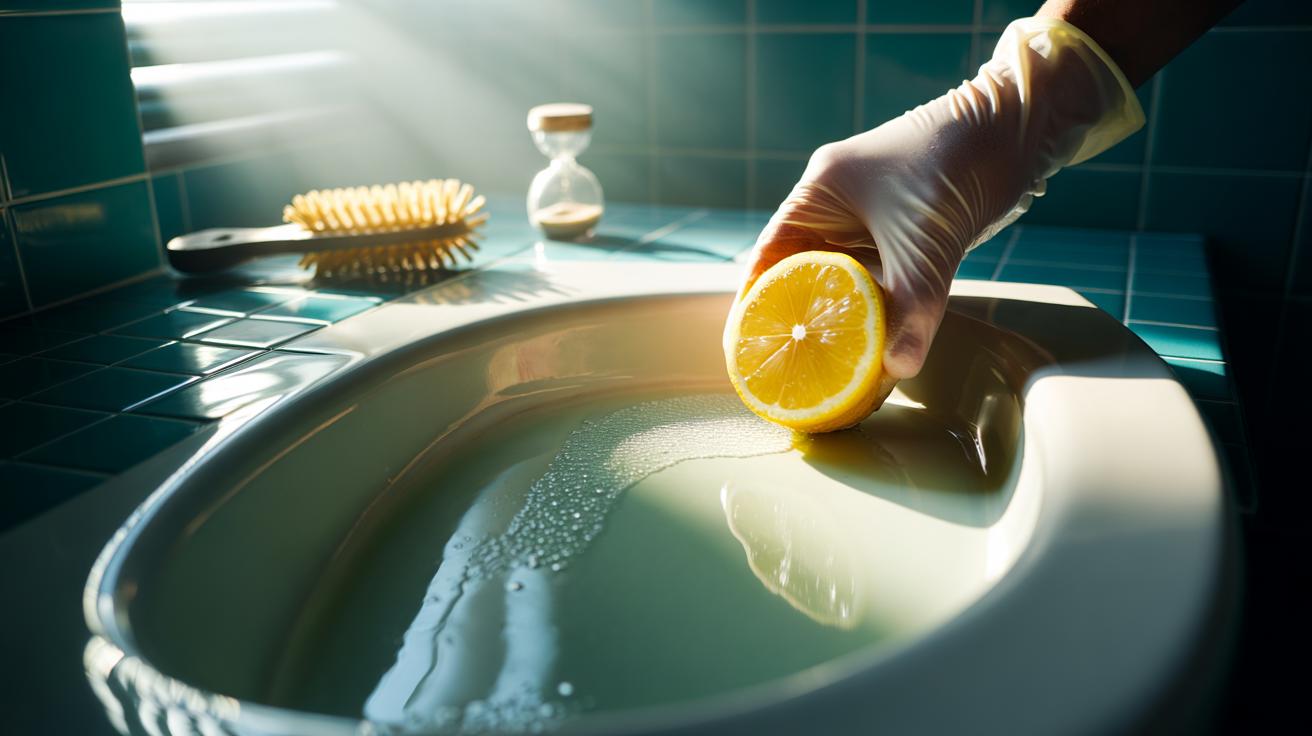
For households in hard‑water regions of the UK, that chalky ring at the toilet’s waterline is a stubborn, familiar foe. A surprisingly effective fix is also the simplest: a lemon half pressed directly onto the stain. The fruit’s citric acid chelates and dissolves the mineral salts that form limescale, often in as little as 10 minutes. It’s low‑cost, biodegradable, and kinder to porcelain than harsh chemicals. Never mix acidic remedies with bleach or chlorine products, and always ventilate. Below, the science explains why lemon works, a step‑by‑step guide shows how to do it safely, and a quick reference table helps you judge when to reach for alternatives if the ring has been building up for years.
Why Limescale Forms and How Lemon Acid Dissolves It
Limescale is largely calcium carbonate deposited as hard water evaporates. Toilets in London, Kent, and parts of East Anglia see rapid build‑up, especially around the waterline where splashes dry. The chemistry is simple: citric acid in lemon forms soluble calcium citrate, softening and lifting the crust so a brush can finish the job. Unlike perfume‑heavy cleaners that mask the issue, acid directly targets the mineral bonds that make limescale cling to enamel. The pH of fresh lemon juice (about 2) is strong enough to act quickly, yet mild enough for porcelain when used briefly and rinsed.
Expect visible improvement within 10 minutes, sometimes faster on newer deposits. Old, greyed rings may need a second application or a longer dwell up to 20 minutes. A light, even pressure helps the juice and pulp stay in contact with the ring. Consistent contact time matters more than brute scrubbing, because the dissolution is a surface reaction. Finish with a nylon‑bristle brush to lift loosened residue without scratching the glaze.
Step-by-Step: The Lemon Half Method
1) Prep the bowl. Flush once to refresh the water. For thick rings, scoop a little water out so the deposit sits just damp, not submerged; this allows juice to cling. Wear washing‑up gloves. 2) Cut a fresh lemon in half. Optionally dip the cut face in fine salt, creating a gentle abrasive that won’t neutralise the acid. Avoid baking soda here; it reacts with the acid and reduces cleaning power.
3) Press and twist the lemon half along the ring, squeezing as you go to release juice and smear the pulp. Ensure continuous coverage; tuck the lemon into the curve under the rim where scale hides. 4) Leave to dwell for about 10 minutes. Do not add bleach or alkaline products during this time. 5) Scrub with a nylon brush, focusing on the waterline and the S‑bend entry. Reapply for stubborn spots, then flush thoroughly.
One lemon usually treats a toilet once, costing pennies. The method is safe on modern vitreous porcelain; avoid prolonged contact with metal hinges or unsealed stone nearby. If your ring returns within days, the culprit is persistent hard water. Add a monthly acid clean to the routine or address supply hardness to lengthen the time between treatments.
Safety, Materials, and What to Avoid
Acids are effective because they dissolve mineral salts rather than polishing over them. That power warrants care. Never combine lemon, vinegar, or citric acid with bleach or chlorine tablets; the mix can release hazardous gases. Protect skin with gloves, keep eyes clear of splashes, and ventilate the room. Lemons are safe for porcelain and septic systems in normal household quantities, but avoid long soaks on chromed bolts or marble thresholds. If your toilet seat is coloured or antique, test a hidden spot to ensure no discoloration.
For clarity, here’s a quick reference you can keep to hand during a clean:
| Item | Purpose | Typical Time | Notes |
|---|---|---|---|
| Lemon half | Dissolves limescale via citric acid | 10–15 minutes | Cheap, biodegradable; avoid metal contact >30 min |
| Fine salt (optional) | Gentle abrasion | During application | Do not use baking soda; it neutralises acid |
| Nylon brush | Dislodges softened deposits | 1–2 minutes | Non‑scratch on porcelain glaze |
| Bleach | Disinfection only | N/A | Never mix with acids |
| Citric acid powder | Stronger alternative | 15–30 minutes | Use 5–10% solution; rinse well |
When Lemon Is Not Enough: Alternatives and Science
If the ring has calcified over months, step up the concentration. A 5–10% citric acid solution in warm water clings better and works deeper than raw lemon. Soak paper towels in the solution, drape them along the waterline, and leave for up to 30 minutes before brushing. White vinegar (5% acetic acid) is another household option; cleaning vinegar at 10% halves the dwell time. For extreme crusts on vitreous porcelain, a wetted pumice stone can safely abrade softened scale—always keep the surface wet to protect the glaze.
Avoid hydrochloric or “muriatic” acid in domestic bathrooms; it’s overkill and risks fumes and damage. Commercial descalers based on lactic or sulfamic acid are safer mid‑strength choices when used as directed. To slow the limescale cycle, wipe the waterline after deep cleans, replace in‑cistern chlorine blocks with non‑chlorine fresheners, and consider a whole‑home water softener in very hard areas. Prevention saves time and reduces chemical use, keeping porcelain bright with less effort.
The lemon‑half trick succeeds because it brings simple chemistry to the exact place limescale forms, for a quick, satisfying lift in as little as 10 minutes. It’s affordable, low‑impact, and easy to fold into a weekly clean, with stronger options in reserve for older rings. Keep acids and bleach separate, work with ventilation, and rely on contact time over elbow grease. With the right routine, even homes in hard‑water postcodes can keep bowls spotless without harsh fumes. How will you adapt this approach—stick with lemon, scale up to citric solutions, or combine prevention steps to keep the ring from returning at all?
Did you like it?4.5/5 (28)