In a nutshell
- 🍋 Chemistry that shines: citric acid in lemon dissolves copper oxides and chelates ions, while a pinch of salt adds gentle abrasion—dissolving tarnish rather than scratching the metal.
- 🧽 Practical method: Rub a salted lemon in small circles, allow 30–90 seconds dwell, rinse warm, then neutralise with diluted bicarbonate of soda, dry and buff; finish with a whisper-thin coat of beeswax or mineral oil.
- ⚠️ Safety and suitability: Avoid acids on lacquered pieces and prized patina; test discreetly, use gloves on sensitive skin, keep away from marble surfaces, and in coastal homes consider skipping salt to limit chlorides.
- ⚖️ Natural vs shop-bought: Lemon and vinegar (acetic acid) offer low-cost, low-impact control; commercial copper polishes act fast with added abrasives, but the rule stands—choose the mildest method that achieves your finish.
- ✨ Lasting results: Thorough rinsing and drying matter more than the cleaner; sealing with wax/oil slows re-oxidation, and selective cleaning preserves character where some patina is desired.
It is one of those kitchen alchemies that never loses its thrill: a cut lemon, a pinch of salt, and a dull copper pan suddenly glows again. Far from being an old wives’ tale, the lemon-juice polish draws on sound chemistry to dissolve the drab film that hides a metal’s gleam. In a cost-of-living era, the appeal is obvious—natural, low-cost, low-waste cleaning that works in minutes and smells like summer. Handled with a little care, natural acids restore shine without biting into the metal beneath. Here’s how and why this method delivers results that rival shop-bought cleaners, and when to use it—or avoid it.
What Tarnish Is and Why Natural Acids Work
Copper loses its glow when exposed to air, moisture, and pollutants, forming layers of copper oxide, copper carbonate, and, in coastal settings, copper chlorides. These compounds are chemically different from the bright metal below, scattering light and creating a brown or green cast. Citric acid in lemon juice attacks these layers by acidifying the surface and helping to solubilise metal salts. It also chelates copper ions, loosening the bond of tarnish and enabling it to be wiped away. The key is dissolving the film, not scratching the metal, which is why a mild organic acid is so effective.
When paired with a sprinkle of salt, the lemon becomes a targeted cleaner. Salt adds gentle abrasiveness and, in minute amounts, chloride ions that can help lift certain tarnish compounds. This is why the rub feels both slick and faintly gritty. Keep contact time short and rinse thoroughly, as lingering chlorides may encourage pitting in damp storage. Unlike harsh mineral acids, citric acid is kinder to both copper and skin, making the method suitable for most cookware, ornaments, and hardware. A quick clean, swift rinse, and thorough dry protect the newly brightened surface.
Step-by-Step: Polishing Copper with Lemon and Salt
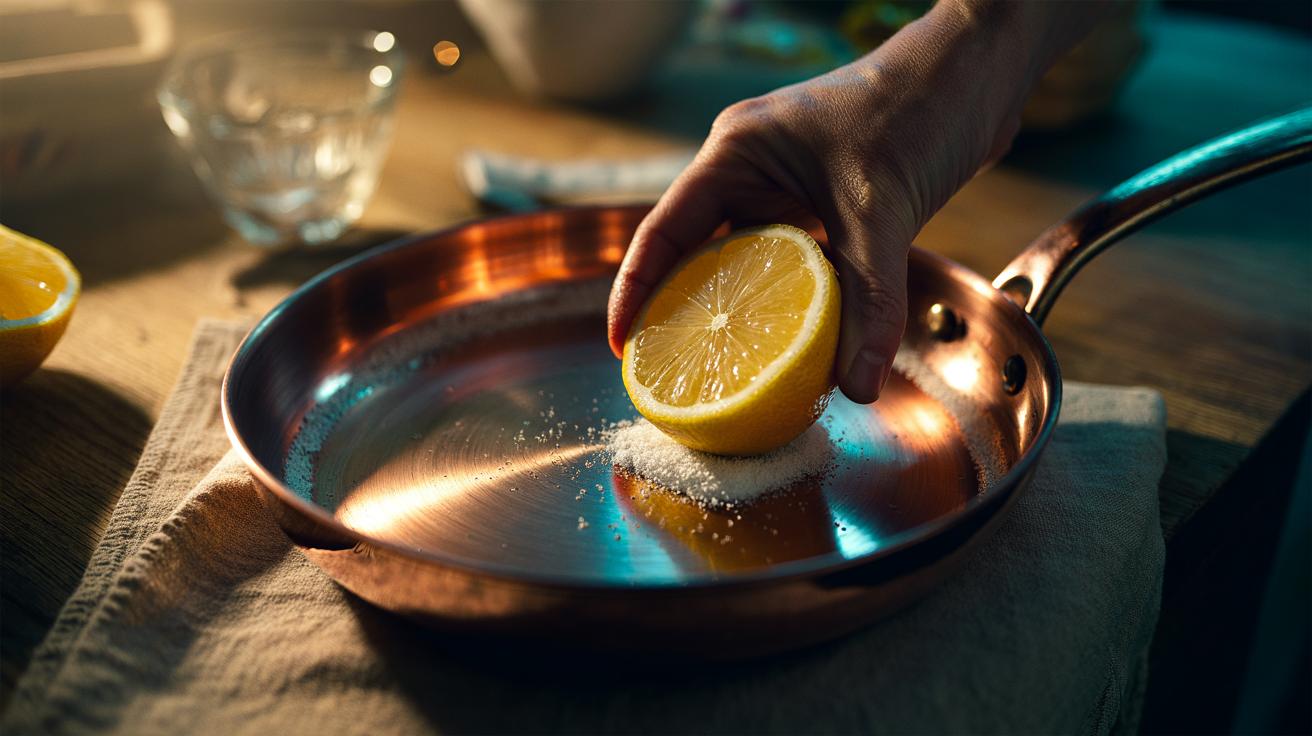
Slice a fresh lemon and dip the cut face into fine table salt. Rub the salted lemon over the copper in small circles, focusing on darkened areas. Let the juice sit for 30–90 seconds—long enough for the citric acid to dissolve oxides, not long enough to dry. Stubborn spots respond to a second pass. If the item is delicate or engraved, use a cotton bud dipped in lemon juice to control where the acid lands. Short, controlled contact avoids streaking and preserves detail.
Rinse under warm water and inspect. Repeat if needed, then neutralise any residues with a quick wipe of diluted bicarbonate of soda solution, and rinse again. Dry immediately with a soft cloth and buff to a sheen; residual moisture is the enemy of shine. For a uniform finish on larger pieces, create a paste of lemon juice and a touch of flour to slow runoff and keep the acid in place. Finally, apply a whisper-thin coat of beeswax or food-safe mineral oil to delay fresh tarnish.
Safety, Patina, and When to Avoid Acid Treatments
Not every copper surface is a candidate for citrus shine. If an item is lacquered, acids will haze the coating; clean lacquer with mild soap only. Museum finishes and desirable patina—the deep, even brown or artistic green—should not be stripped with acids, as their value lies in the aged surface. Test on an inconspicuous spot before committing to a full clean. Also be cautious with copper alloys: some brasses and bronzes respond well, but the lemon-and-salt approach can accentuate colour differences where tin or zinc content varies.
Protect skin with lightweight gloves if you have sensitive hands, and keep acids away from stone worktops that etch, such as marble. Do not use on items with electrical components or joints sealed with materials that may corrode. Thorough rinsing is essential to remove any chloride residues from salt. After drying, a breathable barrier—wax or oil—slows re-oxidation without creating a sticky film. For pieces living near sea air, consider skipping salt altogether and using lemon juice with a soft cloth to reduce chloride exposure.
Natural Acids vs Shop-Bought Cleaners
Choosing between cupboard staples and commercial creams is a balance of cost, speed, and control. Natural acids such as citric acid (lemon) and acetic acid (vinegar) give transparency: you see what is happening and stop on cue. Proprietary polishes often blend organic acids, surfactants, and fine abrasives for fast results, though residues may require extra rinsing. The table below outlines common options at a glance for household copper. The best choice is the mildest method that achieves the finish you want.
| Cleaner | Active Ingredient | Typical Contact Time | Abrasiveness | Approx. Cost | Environmental Impact |
|---|---|---|---|---|---|
| Lemon juice + salt | Citric acid | 0.5–2 minutes | Low–medium (salt) | Very low | Low; food-grade ingredients |
| Vinegar + flour + salt paste | Acetic acid | 5–10 minutes | Low | Very low | Low; easy to rinse |
| Commercial copper polish | Organic acids + fine abrasives | 1–5 minutes | Medium | Moderate | Moderate; packaging and additives |
If your aim is a quick refresh before dinner service, the lemon-and-salt method wins for immediacy and scent. For heavily neglected items with thick verdigris, a longer soak using a vinegar paste can be less effort. Commercial polishes excel at leaving a uniform finish on mixed-metal fittings, though you trade a bit of formulation opacity for speed. Whichever route you pick, rinsing and drying thoroughly, then sealing with wax, make more difference to how long the metallic glow lasts than the cleaner itself.
Lemon’s quiet chemistry shows why simple ingredients still have a place in modern homes. By dissolving tarnish rather than grinding it away, natural acids restore copper’s warm glow with minimal mess and cost. The technique rewards a light touch, quick rinsing, and careful drying, and it respects the character of older pieces when used selectively. If you value a lived-in look, you can even clean selectively to keep some patina. With a few cupboard staples and a steady hand, what will you choose to shine first—and how will you make that lustre last?
Did you like it?4.4/5 (30)