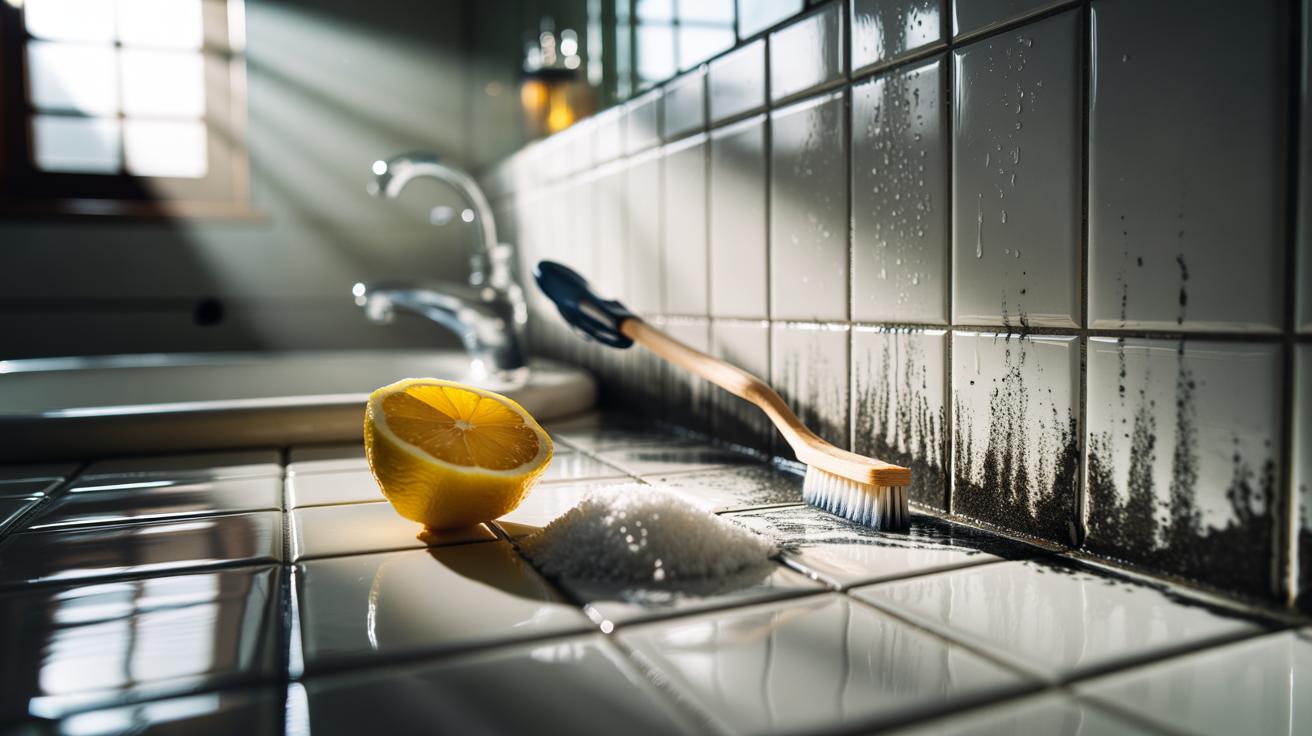
In a nutshell
- 🍋 A simple scrub of lemon and salt whitens grout in minutes by pairing low-pH chemistry with gentle abrasion.
- 🧪 Citric acid dissolves limescale and disrupts mould biofilm, while salt adds osmotic stress and mechanical lift.
- 🧽 Method: mix 1–2 tbsp lemon juice with 2–3 tsp salt into a paste, apply, allow a 3–5 minute dwell time, scrub, rinse, and dry.
- ⚠️ Safety & surfaces: avoid acids on natural stone, don’t mix with bleach or ammonia, limit dwell time, and protect metal trims; test coloured grout first.
- 🌬️ Prevention: improve ventilation, squeegee tiles, and dry grout after use to starve mould of moisture and reduce regrowth.
Your bathroom grout doesn’t need a harsh bleach bath to look clean again. A simple scrub made from fresh lemon and kitchen salt can lift grey film, loosen black mould, and brighten lines fast—leaving a fresh, citrus scent instead of chemical fumes. The secret is the pairing of citric acid’s low pH with the gentle abrasion of salt. Together they cut through soap scum, limescale and biofilm, revealing the grout’s original colour beneath. Used correctly, this pantry duo can whiten grout in minutes while helping to break the cycle of returning mould. Here’s the science, the method, and the safety rules you’ll want to follow.
Why Lemon and Salt Work on Grout and Mould
Fresh lemon juice is rich in citric acid, a weak organic acid with a low pH that dissolves mineral build-up and disrupts the sticky biofilm mould uses to cling to porous grout. Acid also chelates metal ions in scale, loosening stains so they rinse away. At the microscopic level, an acidic environment stresses mould cells by denaturing enzymes and weakening the cell wall. Salt adds a second line of attack: its crystalline edges provide a mild abrasive action that dislodges grime, while osmotic pressure draws water from mould structures. Acid breaks the grip; salt helps you scrub it free.
Grout is a porous matrix, so discolouration often sits below the surface. The lemon–salt paste seeps in, softens residues and lifts them mechanically as you brush. That’s why a short dwell time matters: one to five minutes lets chemistry do the heavy lifting. In many bathrooms, you’ll see visible brightening within minutes, especially where stains are recent or mostly mineral. Persistent dark specks may reflect deeper staining or dye from older spores; a second pass usually improves the result.
How to Mix and Apply the Lemon–Salt Scrub
Juice half a fresh lemon (about 1–2 tbsp) into a small bowl. Stir in 2–3 tsp of fine table salt to form a grainy paste; add more salt for heavy build-up. For vertical tiles, thicken with a pinch of bicarbonate of soda to reduce drip while keeping the pH acidic. Always test a discreet patch first, especially on coloured grout.
Wipe the area to remove loose debris, then spread the paste along the grout lines using a soft toothbrush or grout brush. Let it sit for 3–5 minutes to loosen limescale and biofilm. Scrub with short, firm strokes, refreshing paste as needed. Rinse with warm water and wipe dry with a microfibre cloth to prevent water marks. For stubborn corners, repeat once more, extending dwell time slightly.
Good ventilation speeds drying and deters mould’s return. Never mix acidic cleaners with bleach or ammonia—dangerous gases can form. Wear gloves if you have sensitive skin, and avoid prolonged contact with metal trims, which can tarnish in acid. Finish by running an extractor fan or opening a window to remove lingering moisture.
Timing, Safety, and Surface Compatibility
On standard cementitious grout, the lemon–salt method is both effective and gentle when used occasionally. Two light passes are better than one aggressive scrub; grout is durable but not invincible. Limit dwell time to about five minutes per round and rinse thoroughly to neutralise residues. Epoxy grout is less porous, so the paste mainly removes surface film; use a softer brush to avoid haze. Where mould has penetrated deeply, a follow-up with a pH-neutral cleaner between scrubs keeps re-growth in check.
Do not use acidic treatments on natural stone such as marble, limestone or travertine—the acid can etch and dull the surface. For those materials, choose a pH-neutral stone-safe cleaner and a steam pass for sanitising. On glazed ceramics and porcelain, lemon is safe when rinsed promptly. Protect adjacent aluminium or brass trims with painter’s tape, and keep the paste off unsealed wood. Gloves, eye protection, and fresh air are sensible basics for any cleaning session.
Quick Reference: Ingredients, Roles, and Results
Keep this cheat sheet close when you’re tackling a tired shower or kitchen splashback. It distils the “why” and “how” into a snapshot so you can work quickly and safely. The key is pairing low pH for chemical lift with light abrasion for mechanical removal—then drying the area so mould can’t bounce back.
| Item | What It Does | Ratio/Use | Notes |
|---|---|---|---|
| Lemon juice | Lowers pH, dissolves scale, disrupts mould biofilm | 1–2 tbsp per batch | Fresh works best; bottled is acceptable |
| Salt | Abrasive lift and osmotic stress on mould | 2–3 tsp, add to desired grit | Use fine salt for tighter joints |
| Bicarbonate (optional) | Thickens paste for vertical lines | Pinch or two | Keep paste acidic; don’t overdo |
| Brush + microfibre | Mechanical scrub and residue removal | Soft to medium bristles | Rinse and dry thoroughly |
Plan your workflow: apply, wait, scrub, rinse, dry. Dwell time unlocks the chemistry, while drying starves spores of moisture. Most light staining responds in minutes, but heavy mould may need a second round and better ventilation to prevent reappearance. Finish by squeegeeing tiles after showers, or run a fan for 15 minutes to keep humidity down.
This lemon and salt approach is budget-friendly, low-odour and satisfying, turning dingy grout lines crisp and bright without resorting to harsh bleaches. By understanding how citric acid and salt team up—one dissolving scale and biofilm, the other providing abrasion and dehydration—you can clean smarter and cut rework. The real secret is consistent drying and airflow, which stops mould from reclaiming the territory you’ve just scrubbed. Will you try the lemon–salt method on your grout this weekend, or adapt the technique to other kitchen and bathroom trouble spots first?
Did you like it?4.6/5 (22)