In a nutshell
- ✨ The magic ratio is 4:1 vinegar to dish soap, with flexible options of 6:1 for light fingerprints and 3:1 for heavy grease.
- ⚗️ Vinegar dissolves mineral deposits while dish soap surfactants emulsify oils, preserving the stainless steel’s passivation layer for a mirror-like shine.
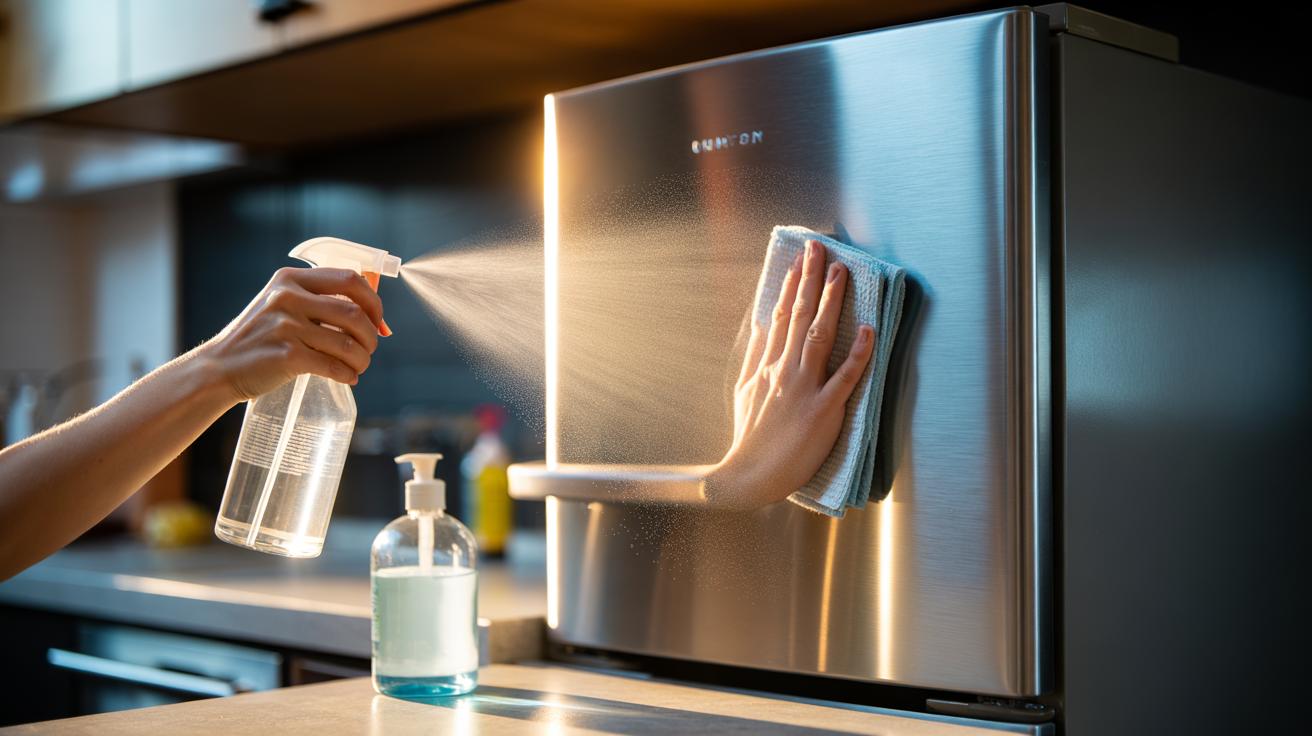
- 🧽 Technique matters: spray the cloth (not the appliance), wipe with the grain using a clean microfiber, allow brief dwell time, then buff dry for a streak-free finish.
- 📏 A quick-reference approach: use distilled white vinegar and a non-moisturising soap; the article’s table outlines ratios, example volumes, and dwell times.
- ⚠️ Safety first: never mix vinegar with bleach, avoid prolonged contact with stone or rubber, test coated finishes, and remember that too much soap causes streaks.
Stainless steel fridges and hobs look magnificent until fingerprints, cooking fog, and water spots dull the finish. The simplest fix is hiding in the pantry: a smart blend of distilled white vinegar and dish soap. Used in the right proportion and applied with the right cloth, this duo dissolves grease, lifts grime, and leaves a vivid, mirror-like sheen. Avoid harsh abrasives and polish pastes that scratch or haze; a gentle solution and good technique protect the metal’s passive layer. Below, you’ll find the magic ratio, the science that makes it work, and a quick routine tested on brushed and satin finishes alike—no gimmicks, just chemistry.
The Science Behind the Gleam
Stainless steel’s lustre comes from a thin, self-healing passivation layer of chromium oxide. Fingerprints and kitchen films scatter light over that layer, making surfaces appear streaked or cloudy. Vinegar (acetic acid) breaks down mineral deposits and neutralises alkaline residues, while dish soap contributes surfactants that emulsify oils so they rinse clean rather than smear. The trick is adding enough surfactant to cut grease without leaving a soapy film. Too much soap causes streaks; too little won’t break stubborn smudges. This balance—plus a non-scratch microfiber cloth and wiping with the metal’s grain—translates chemistry into shine.
Vinegar sits at roughly pH 2–3, so it’s potent against limescale but far gentler than abrasive creams. The surfactants in mild dish soap reduce water’s surface tension, letting the solution wet the steel evenly and lift oils. Once the film is removed, light reflects uniformly, creating that “mirror” effect. Always test any cleaner on an inconspicuous spot first, especially on coated stainless panels or fingerprint-resistant finishes, which may include polymer layers.
The Magic Ratio: Measurements That Work
The sweet spot for most kitchens is a 4:1 ratio of vinegar to dish soap by volume. It supplies enough acid to tackle water marks while keeping soap low, so residues don’t streak. For a spray bottle, mix 200 ml distilled white vinegar with 50 ml mild dish soap. For heavy, greasy splatter—like near a hob—a stronger 3:1 blend helps. For everyday fingerprints on a brushed fridge door, a lighter 6:1 mix is often perfect. Less soap typically means fewer streaks and faster buffing. Warm vinegar slightly (not hot) to improve degreasing, but never boil or inhale vapour directly.
Use distilled vinegar to avoid introducing minerals that can spot as you wipe. Blue, enzyme, or antibacterial soaps work, but choose a non-moisturising, dye-light formula to reduce film. If you prefer a softer action for routine upkeep, cut the 4:1 mix with an equal part of warm water in a secondary bottle—still effective, just milder on lightly soiled panels.
| Purpose | Vinegar:Soap | Example Amounts | Dwell Time | Best For |
|---|---|---|---|---|
| Routine shine | 6:1 | 180 ml : 30 ml | 30–45 sec | Fingerprints, light smears |
| All-round clean | 4:1 | 200 ml : 50 ml | 45–60 sec | Daily marks, water spots |
| Deep degrease | 3:1 | 210 ml : 70 ml | 60–90 sec | Cooker hoods, splatter zones |
Step-by-Step Method for Streak-Free Shine
First, dust or dry-wipe the surface to remove loose grit. Decant your chosen vinegar–soap mix into a fine-mist sprayer. Always spray the cloth, not the appliance, to stop excess liquid seeping into seams or control panels. Using a clean, tight-weave microfiber, work in straight strokes along the metal’s grain. Give the solution up to a minute to soften grease, then wipe again with light pressure. For crevices around handles and badges, wrap the cloth around a plastic card edge to guide along trims without scratching.
Follow with a second, dry microfiber for a brisk buff—this is where the mirror finish appears. Persistent marks may need a fresh spritz and a slightly slower pass. If you like a showroom gleam, finish with one drop of food-safe mineral oil on a cloth, massaged in with the grain, then buff dry. Buffing is non-negotiable for a true streak-free result; it removes micro-residue and aligns the sheen.
Safety, Variations, and Common Mistakes
Never mix vinegar with bleach or chlorine-containing products; the combination releases hazardous gases. Keep the solution off natural stone splashbacks, cast-iron trivets, or rubber gaskets for prolonged periods—acid can degrade or etch. On black stainless or anti-fingerprint coatings, consult the manufacturer and test discreetly. Store your mix in a labelled bottle, away from sunlight, and shake before use as surfactants can separate. If you see clouding, you likely used too much soap; wipe with a damp cloth and rebuff.
For odour sensitivity, add a few drops of lemon essential oil or switch to cleaning vinegar diluted to the same ratio. Hard-water households may benefit from the 3:1 blend near sinks where spotting is stubborn. Avoid paper towels, which can lint and streak. Always wipe with the grain to prevent crosshatch marks on brushed finishes. Done right, the method protects the metal’s passive layer while delivering a crisp, reflective polish.
There’s elegance in a solution this simple: a precise 4:1 vinegar-to-dish-soap blend, a careful spray onto microfiber, patient dwell time, and a confident buff with the grain. The chemistry handles minerals and oils; your technique ensures zero haze. Keep a small bottle under the sink and the routine becomes a one-minute habit after cooking. Shiny steel is less about brute force and more about balance—right ratio, right cloth, right motion. What variation of the mix and method will you try first on your own appliances to hit that mirror finish?
Did you like it?4.5/5 (22)