In a nutshell
- 🧽 Microfibre uses ultra-fine split fibres and light static to trap dust, working dry for dusting and damp for greasy residue, delivering cleaner, streak-free surfaces fast.
- ⏱️ Pros cut cleaning time in half with colour-coded cloths, folding into eighths, an overlapping S-pattern, and top-to-bottom sequencing to touch each surface once.
- 🧵 Match fabric to task: 200–300 GSM and suede for glass, 300–360 and terry for general dusting, 360–450 and waffle for tiles and wet work.
- 🧼 Extend lifespan with proper care: wash at 30–40°C, no fabric softener or bleach, low heat dry, launder separately—good cloths last 300–500 washes.
- 🌿 Fewer chemicals, fewer passes: quality microfibre often cleans with water alone, reducing residues and improving finishes on glass, stainless, and worktops.
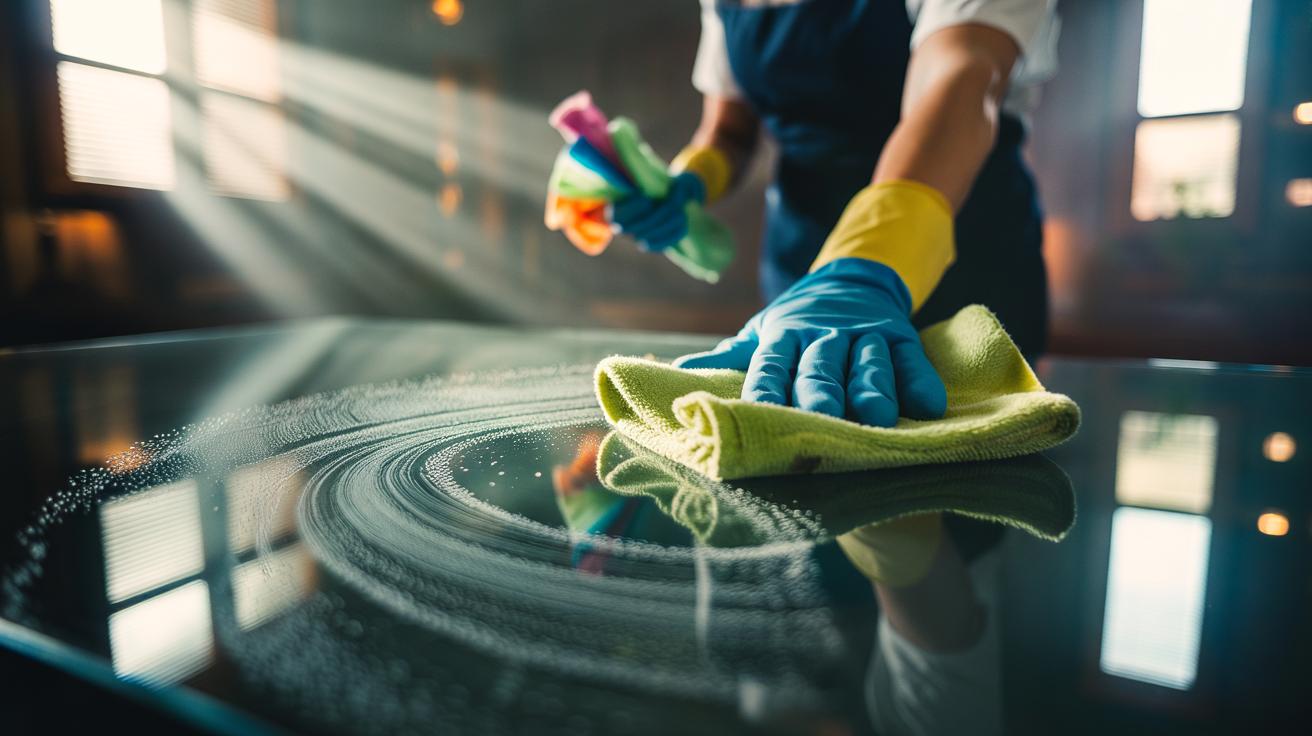
Professional cleaners aren’t magicians; they’re methodical. The quiet star of their kit is the humble microfibre cloth, a fabric engineered to grip dust, lift grime, and leave fewer streaks. Thanks to ultra-fine, split fibres and smart workflows, pros routinely halve the time it takes to refresh busy homes and offices. The trick isn’t scrubbing harder but letting the material’s physics do the heavy lifting. With a handful of colour-coded cloths, minimal chemicals, and a clear top-to-bottom sequence, they work faster and cleaner. Here’s how microfibre traps more dust, which tools and techniques pay off, and the care tips that keep cloths performing like new for hundreds of washes.
Why Microfibre Cloths Capture More Dust
What makes microfibre different is its split fibre structure: each strand is fractured into wedge-shaped filaments much thinner than a human hair. Those wedges multiply surface area and create countless tiny hooks that grip fine particles. When used dry, microfibre builds a light static charge, drawing dust and pet dander into the cloth rather than flicking it into the air. Damp, the same cloth leverages capillary action to pull oily residue and fingerprints off surfaces. That dual-mode versatility—dry for dusting, damp for degreasing—explains why one cloth replaces a handful of traditional tools.
Density and weave matter. A higher GSM (grams per square metre) usually means greater absorbency and longer working time before saturation. Terry weaves excel on general surfaces; waffle patterns bite into textured areas and tiles; suede microfibre glides on glass and screens without lint. Crucially, microfibre doesn’t just push dirt aside—it traps it within the fibre matrix. Studies show well-made cloths remove up to 99 per cent of bacteria with water alone, reducing reliance on harsh chemicals. Less chemical, less time re-wiping, and fewer streaks equals a measurable speed advantage.
Tools, Techniques, and Timings Used by Pros
Pros keep it simple: a set of colour-coded cloths (red for bathrooms, blue for glass, green for kitchen, yellow for general), a light all-purpose cleaner, and water. They pre-fold cloths into eighths to present multiple clean “faces,” flipping to a fresh panel as soon as one loads up. The motion is deliberate: an overlapping S-pattern from top to bottom, edges first to contain dust, then the centre. Every pass is purposeful—touch surfaces once, not twice. For glass, a damp suede cloth followed by a dry buff prevents haze. For high dusting, a dry terry microfibre on an extension wand captures cobwebs without raining debris.
| Task | Traditional Tool | Avg Time | Microfibre Method | Avg Time | Time Saved |
|---|---|---|---|---|---|
| Desks & Shelves (10 m²) | Feather duster + spray | 12 min | Dry terry + damp follow-up | 6 min | 50% |
| Kitchen Worktops | Paper towels + cleaner | 10 min | Damp terry, folded in eighths | 5 min | 50% |
| Bathroom Surfaces | Sponge + disinfectant | 15 min | Damp terry + waffle for tiles | 8 min | 47% |
| Glass & Mirrors | Newspaper + vinegar | 8 min | Suede damp + dry buff | 4 min | 50% |
Workflow matters as much as fabric. Start high, finish low. Vacuum first if needed, then dust, then damp-wipe. Keep a caddy so you don’t double back. Eliminate wasted movement and the microfibre does the rest. The result is fewer passes, quicker drying, and tighter finish times across rooms.
Smart Product Choices and Care That Extend Lifespan
Not all cloths are equal. Look for a high split ratio, stitched or ultrasonic-cut edges that don’t fray, and the right GSM for the task: 200–300 GSM for glass, 300–360 for general dusting, 360–450 for wet work. Choose waffle for tiles and shower screens, suede for mirrors and stainless, and a robust terry for everything else. A few premium cloths outperform a drawer full of cheap ones. Buy once, use hundreds of times—microfibre’s speed advantage grows with quality.
Care is simple but strict. Wash at 30–40°C without fabric softener (it clogs fibres) and avoid bleach. Tumble on low or air-dry; high heat can melt filaments. Launder microfibre separately to prevent lint loading. A well-kept cloth lasts 300–500 washes, driving down cost per use to pennies and reducing waste. Store clean, folded, and colour-coded so you never cross-contaminate. Good care protects the fibre’s bite and the static attraction that makes dust disappear on the first pass.
Microfibre isn’t a fad; it’s a practical upgrade that compounds into faster routines, cleaner finishes, and fewer chemicals in the air you breathe. From split fibres that grab dust to folding tactics that reveal fresh faces, the professional approach is easy to copy at home or across facilities. Adopt the right cloth, the right weave, and a repeatable top-to-bottom sequence, and you’ll see the “half the time” headline borne out. Which room in your space would benefit most from a microfibre-first workflow, and what change will you try this week to measure the difference?
Did you like it?4.3/5 (22)