In a nutshell
- 🛏️ The pillowcase trick slides over each blade to wipe both sides and trap dust—no mess on furnishings.
- 🌀 Cleaner fans improve indoor air quality, reduce allergens, and boost airflow efficiency with quieter, balanced operation.
- 🧽 Steps: switch off power, use a stable stool, mist inside the case (water + white vinegar), slide, hug, pull, empty outdoors, then launder.
- 🛡️ Follow safety basics—stable ladder, minimal moisture near the motor, optional mask/eye protection—to keep the job quick and risk-free.
- 🌱 It’s eco-friendly and budget-wise: reuse a pillowcase, skip disposable wipes, clean monthly/seasonally, and set the fan’s correct rotation for the season.
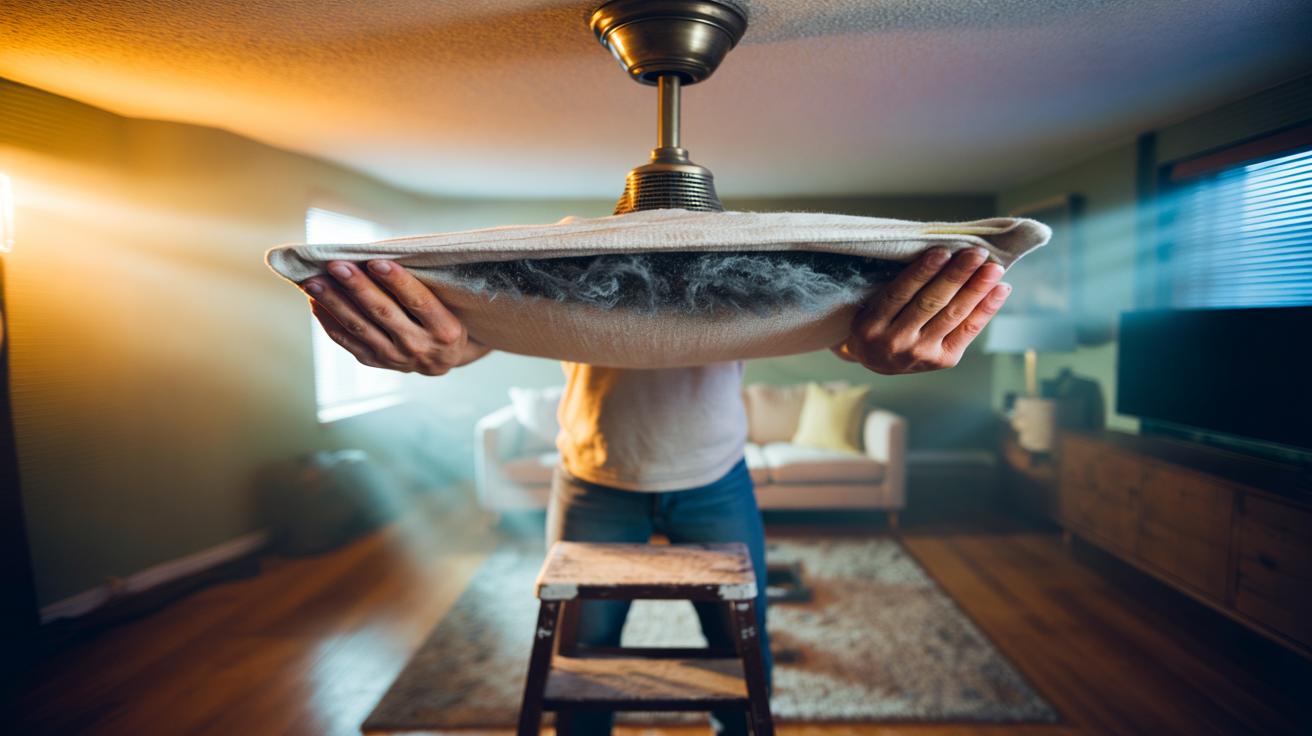
Walk into almost any British home and you’ll find an unsung villain lurking above: ceiling fan blades lined with grey fluff. Give them a careless swipe and a snowstorm of dust tumbles onto the sofa, bookshelves, and carpet. There’s a smarter, tidier method beloved by professional cleaners: the pillowcase trick. Slide an old cotton pillowcase over each blade, wipe, and the grime stays sealed inside the fabric. No dust falls to the floor, and your lungs avoid a sneeze-inducing plume. This simple hack takes minutes, costs nothing, and turns an awkward chore into a neat, satisfying routine you’ll actually keep up with.
Why Dust from Fan Blades Matters
Those feathery deposits on fan edges aren’t just an eyesore. They’re a cocktail of allergens, dead skin, textile fibres, and particulate pollution drawn from everyday life. Each time you flick the switch, blades whip through the air and redistribute that debris around the room, undermining indoor air quality. For anyone with hay fever, asthma, or sensitive sinuses, that means more irritation and less restful sleep. Preventing dust fallout is as important as removing it, because once particles settle into upholstery and rugs, they cling, linger, and are harder to extract even with a diligent vacuum.
There’s also a practical angle. A fan free of fluff moves air more efficiently, which keeps bedrooms cooler in summer and helps circulate warm air down from high ceilings in winter. While energy savings are modest, the cumulative effect of clean, balanced blades is notable: less wobble, quieter operation, and a longer service life for the motor. Small maintenance habits compound into tangible comfort, and this one is as easy as repurposing a pillowcase.
How the Pillowcase Trick Works
The genius is in containment. A cotton pillowcase acts like a soft dust sleeve. You slide it fully over a blade, pinch along the edges, and draw it back. The fabric gathers grime from the top and bottom surfaces while the case’s walls trap the fallout. Because the dust is captured inside the case, it doesn’t billow onto furnishings or your face. A light mist of cleaner inside the pillowcase boosts capture by slightly dampening particles, which reduces static cling and helps lift greasy films that build up in kitchens or near road-facing windows.
| Item | Purpose |
|---|---|
| Old cotton pillowcase | Encloses the blade and traps dust |
| Step stool or sturdy ladder | Safe access to ceiling height |
| Mild cleaner (water + white vinegar) | Loosens oily residue and reduces static |
| Microfibre cloth | Final polish and hub wipe-down |
| Mask and eye protection | Optional comfort if blades are very dirty |
After wiping each blade, invert the pillowcase mouth, keeping debris sealed inside. Do not shake it out indoors. Tip the contents carefully into a bin liner outside, then launder the case on a hot cycle. Your fan ends up clean, and your room stays spotless.
Step-by-Step Instructions
1) Switch off power at the wall and allow the fan to stop. Never clean moving blades. 2) Set up a stable step stool; avoid dining chairs, which can tip. 3) Lightly spritz the inside of an old pillowcase with a 1:4 mix of white vinegar to water, or a gentle eco cleaner. 4) Slide the case fully over the first blade until the leading edge reaches the seam. 5) Press your hands against the top and bottom surfaces to “hug” the blade, then pull back slowly. The case will squeegee grime from both sides while containing the mess.
6) Repeat for every blade, rotating your stance rather than twisting at the waist. If residue is sticky, a second pass will lift it. 7) Wipe the motor housing and pull chain with a barely damp microfibre cloth. 8) Turn the pillowcase inside out over an outdoor bin, shake gently, then place it in the wash. 9) Return indoors, dry any damp spots on blades, and hand-spin to confirm smooth balance. The whole job takes about ten minutes, creates zero fallout, and restores quiet, efficient airflow.
Safety, Sustainability, and Smart Maintenance
Safety first: switch off power and let blades come to a complete stop. Use a sturdy step stool on level flooring; if your ceiling is high, enlist a helper to stabilise the ladder. Keep one hand in contact with the stool when reaching, and avoid leaning far to the side. If you’re sensitive to dust, wear a basic mask and protect your eyes during the first pass. Resist the temptation to oversaturate blades—excess moisture can drip into the motor housing.
The pillowcase trick is gentle on finishes, kinder to the environment, and budget-friendly. Reusing a pillowcase means fewer disposable wipes and no aerosol polishes. A monthly quick clean during peak use, or a seasonal pass for occasional fans, prevents build-up and maintains balance. In kitchens or near busy roads, grime accumulates faster; schedule bi‑monthly attention. Finish by setting the fan’s rotation: counter-clockwise in warm months for a cooling breeze, clockwise on low in winter to gently push warm air down. Clean blades make every setting more effective.
There’s quiet pleasure in a chore that leaves no trace. With one old pillowcase, you protect furniture, lungs, and the gleam of your fan, while sidestepping the usual dust storm. This small change makes cleaning quicker, safer, and more sustainable, and it turns a wobbly, dull fan into a smooth, efficient helper all year. Next time you look up and spot that grey fringe, you’ll know exactly what to do—no fuss, no fallout, no panic vacuuming. Which room in your home will you start with, and what other everyday items could you repurpose to make cleaning easier?
Did you like it?4.4/5 (24)