In a nutshell
- 🥣 The rice-jar method uses uncooked rice’s starch as a mild desiccant to lower local humidity and draw moisture from damp shoes.
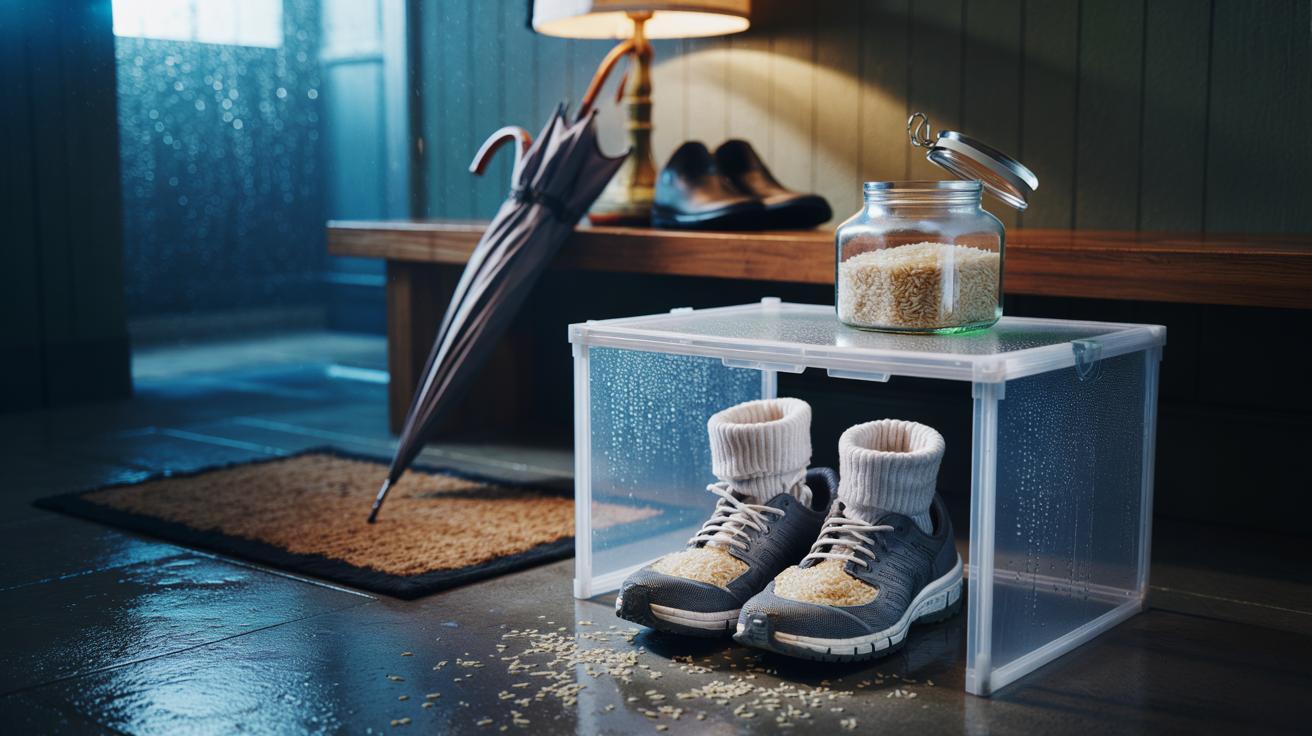
- 👟 Create a sealed microclimate: place rice-filled socks and an open jar of rice with shoes in an airtight container for 6–24 hours depending on wetness.
- ⚗️ Science note: amylose/amylopectin granules bind water via hydrogen bonding, avoiding the warping and glue failure caused by high heat.
- 🧰 Alternatives compared: silica gel (fast, reusable), clay litter (budget), and newspaper (quick start) — all work best with containment.
- ⚠️ Care and safety: use white rice in breathable bags, clean heavy contamination first, support leather/suede with shoe trees, and never cook used rice.
Damp footwear can wreck a commute, sour a gym bag and shorten a shoe’s lifespan. Before reaching for a radiator or hairdryer, consider the quiet efficiency of the rice-jar method. By using uncooked rice as a natural desiccant, you can coax lingering moisture out of fabric, foam and leather without warping materials. The trick relies on starch chemistry and a controlled low-humidity microclimate. Place your shoes in a sealed box with jars or socks filled with rice and let physics do the heavy lifting. It’s gentle, inexpensive and surprisingly effective for routine dampness, giving soles a chance to recover and uppers to hold their shape while odours are kept in check.
How the Rice-Jar Method Works
Uncooked rice contains abundant starch granules—networks of amylose and amylopectin—that are mildly hygroscopic. Water molecules are attracted to hydroxyl groups within starch and held by hydrogen bonding. When rice sits in a confined space with damp shoes, it lowers the local relative humidity, creating a vapour pressure gradient. Moisture within the shoe materials migrates towards the drier air and into the rice. Think of it as a slow, steady draw rather than a blast of heat, which helps preserve adhesives, foams and delicate fibres.
The “jar” component matters because containment accelerates drying. A lidded box or large zip bag prevents ambient humidity from creeping back in, letting rice maintain a drier atmosphere. Compared with forced heat, the method minimises warping, cracking and colour bleed. It won’t match the capacity of silica gel, but for day-to-day damp—post-rain walks, sweaty insoles—it’s a dependable, low-risk option that avoids energy use and reduces wear.
Step-by-Step: Drying Damp Shoes With Rice
First, pat shoes with a towel to remove surface water. Take out insoles and laces to open up airflow. Fill two clean socks or small mesh bags with uncooked white rice—long-grain works well—and knot them. Place the filled socks inside each shoe, then set the shoes in an airtight box alongside an open jar or bowl of rice. Seal the container. Leave for 6–12 hours for light dampness, up to 24 hours if soles are saturated. Rotate or fluff the rice socks halfway for quicker results.
After drying, tap out any grains, brush seams and reinsert insoles. For odour control, dust a little bicarbonate of soda inside and shake out later. Avoid short-cuts that risk damage: do not place shoes on radiators or use high heat. Heat can delaminate glue and harden leather. If mud is present, clean first; drying dirt into fibres makes stains stubborn. For suede, use a shoe tree and finish with a suede brush to restore nap.
Choosing and Using Desiccants: Rice Versus Alternatives
Rice is accessible and gentle, but it sits within a wider toolkit of moisture absorbers. Silica gel offers higher capacity and faster action, especially in sealed containers. Clay-based cat litter can work in a pinch, though dust can be messy. Newspaper absorbs quickly at first but saturates fast. Choose based on shoe material, how wet they are and your timeframe. For routine dampness, rice is the pragmatic middle ground; for deep soaks, consider upgrading to purpose-made desiccants or alternating methods.
| Desiccant | Speed | Mess/Residue | Reusability | Best Use |
|---|---|---|---|---|
| Rice (uncooked) | Moderate | Low (use in socks) | Limited (replace when clumpy) | Everyday damp, gentle care |
| Silica gel | Fast | Very low | High (rechargeable) | Heavy wetting, tight deadlines |
| Cat litter (clay) | Moderate | Medium (dust) | Moderate | Budget option in a tub |
| Newspaper | Quick initial | Ink transfer risk | Single-use | First stage, then swap |
Whichever you use, containment is the force multiplier. A sealed environment cuts the drying time dramatically and reduces the quantity of desiccant required. Keep packets or jars off direct contact with delicate uppers to prevent dust smears, and replace materials when they feel damp or claggy.
Care Notes, Safety, and When Not to Use Rice
Use plain white rice; coloured or flavoured grains can stain. Keep rice in socks or breathable bags to stop grains lodging in seams. For leather and suede, support shape with shoe trees while drying, then condition leather to replenish oils. If shoes are soaked through after a downpour or river crossing, start with a towel press and air circulation before any desiccant. Rice handles residual moisture well; it is slower with heavy saturation. Replace rice once it clumps or feels cool and damp to the touch.
Avoid rice if there’s contamination from seawater, sewage or heavy mud—wash and disinfect first. Don’t mix rice with heat sources or sprays inside a sealed box; condensation can rise and re-wet uppers. For persistent odour, pair rice with charcoal inserts overnight. Store a small jar of dry rice in your boot room to maintain a low-humidity baseline in wet months. Finally, discard used rice responsibly; never cook or eat it after use.
The rice-jar method is a modest intervention with outsized impact: it protects materials, keeps odours at bay and buys time when the British weather refuses to cooperate. By leveraging the hygroscopic pull of starch and a sealed microclimate, you can dry shoes efficiently without compromising structure or comfort. Ready to refine your routine—will you keep a dedicated drying box, upgrade to silica gel for emergencies, or pair rice with charcoal to build a home “dry lab” for footwear care?
Did you like it?4.4/5 (30)