In a nutshell
- 🧂 Use of coarse salt as a gentle abrasive that lifts carbonised residue without scratching, protecting the pan’s seasoning.
- 🔬 The science: a hardness mismatch lets salt abrade carbon but not iron; warmth and a touch of oil form a debris-trapping slurry.
- 🛠️ Step-by-step: warm pan, add coarse sea salt, optional neutral oil, scrub, wipe, rinse hot, dry over heat, finish with a thin oil coat; never soak.
- ⚖️ Tool choices: start with salt; escalate to chainmail for heavy crusts; reserve steel wool for stripping; use baking soda for gentle deodorising.
- ♻️ Results and care: maintain a durable black satin finish, keep maintenance quick and chemical-free, and re‑oil lightly to rebuild seasoning if the pan looks grey.
British cooks swear by cast iron for its unflappable heat retention and deep-flavoured sear, yet the surface can look tired after a sticky fry-up or a scorched stew. Enter the humble coarse salt shake: a low-cost, high-control scrub that lifts clingy residues without carving into the pan’s precious seasoning. Unlike steel wool or harsh detergents, salt crystals act like small, sacrificial beads, scuffing off carbon without scouring metal. Used correctly, the salt-shake trick restores glide and sheen while preserving the protective oil polymer you’ve built over time. It’s quick, odourless, and infinitely adjustable—a quiet triumph of everyday chemistry that keeps your skillet in rotation and your Sunday roast on schedule.
Why Coarse Salt Rescues Cast Iron
Cast iron’s non-stick character comes from a thin, hard film of polymerised oil bonded to the metal. Food burns and clings when sugars or proteins carbonise on top of that film. Coarse halite crystals are mechanically aggressive enough to disrupt the carbon layer, yet soft compared with iron itself. On the Mohs scale, salt sits around 2–2.5; seasoned iron is far tougher, so the crystals abrade residue first. As salt picks up oil and moisture, edges round off and the grains fracture, further limiting scratch risk. The secret is a mismatch of hardness: salt beats carbon, but not the pan.
Heat matters. Warmth softens fats and loosens the bond of stuck-on bits, letting coarse granules do efficient, targeted work. Add a touch of neutral oil and you create a slurry that traps debris while the grains act like mini ball bearings. Because the crystals dissolve and are rinsed away, they leave nothing behind but a clean, intact seasoning layer ready for a light oil seal.
How to Use the Salt-Shake Method Step by Step
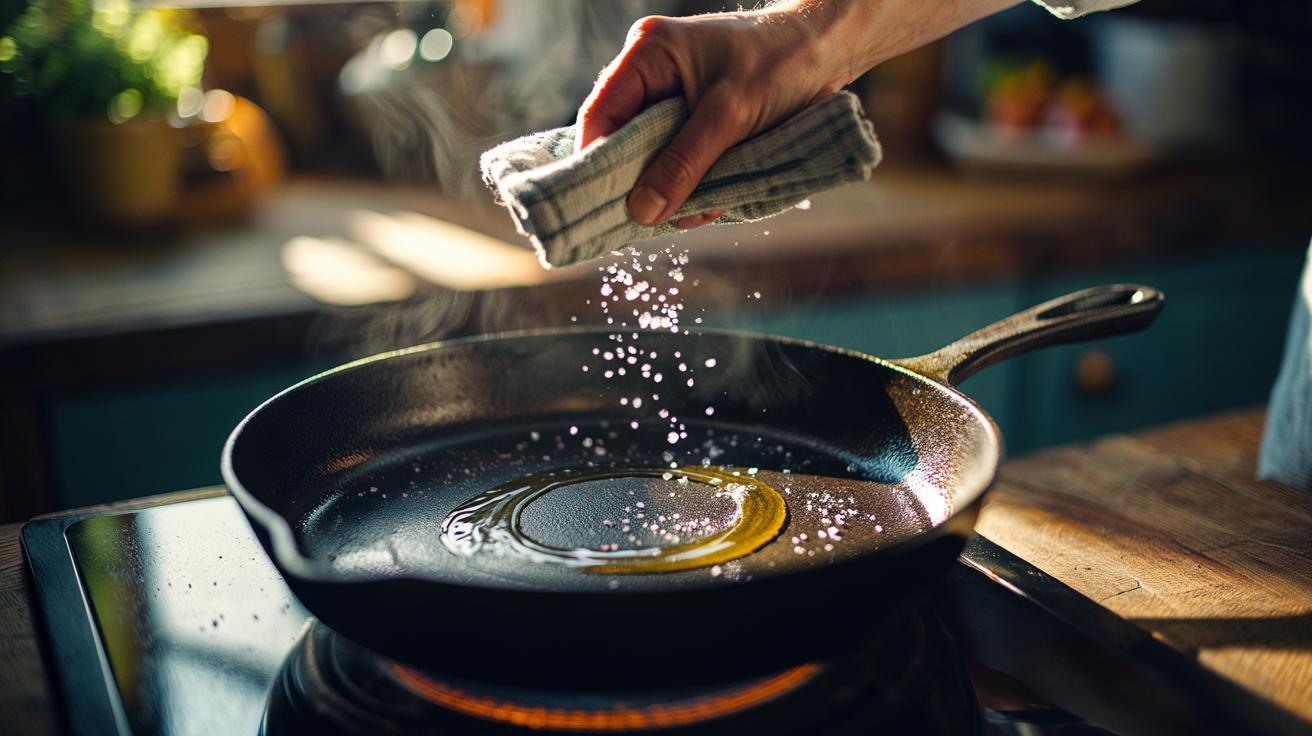
1) While the pan is still warm—not smoking—shake in a generous tablespoon or two of coarse sea salt. 2) Add a teaspoon of neutral oil if the surface is dry; skip it if there’s residual fat. 3) Using a folded tea towel, silicone pad, or a wad of kitchen roll, press and scrub in tight circles, letting the salt do the cutting. 4) For stubborn spots, push the grains to the area and grind firmly without gouging. Let the salt—not your elbow—do the heavy lifting.
Once the residue lifts, wipe out the dirty crystals and repeat with a fresh pinch if needed. Rinse with hot water, then dry thoroughly on a low flame. Finish by rubbing in a whisper-thin film of oil and heating briefly to restore that satiny sheen. Never soak cast iron or leave it wet; water is the enemy of the seasoning you’ve just saved. This whole routine typically takes two to three minutes, and it preserves flavour confidence for your next fry.
Salt Versus Other Scrubbers: What to Choose When
Not all abrasives are equal. The right tool depends on the mess, the age of your seasoning, and how quickly you need to turn the pan around. Coarse salt is the most forgiving daily driver; chainmail excels with heavy crusts; scouring pads can be overkill; baking soda is gentler but slower. Choose the mildest method that clears the problem, so your seasoning stays stable over months, not meals. When in doubt, start with salt on a warm pan, then escalate cautiously. Avoid soap unless odours or lingering flavours demand it, and if you do use it, re‑oil immediately.
| Scrubber | Abrasiveness | Risk of Scratching | Best For | Notes |
|---|---|---|---|---|
| Coarse salt | Medium, dissolving | Low | Daily stuck-on bits | Leaves seasoning intact; adjust pressure and quantity |
| Chainmail scrubber | Medium–high | Medium | Heavy crusts | Use with oil; avoid on fresh seasoning |
| Scouring pad/steel wool | High | High | Stripping and re-seasoning | Removes polymer layer quickly |
| Baking soda paste | Low | Low | Gentle deodorising | Slower; rinse thoroughly |
| Hot water + scraper | Low–medium | Low | Soft, fresh residues | Pair with salt if needed |
Reserve aggressive tools for emergencies; the more you remove, the more you must rebuild. A good rule: if the pan looks grey and thirsty after cleaning, warm, oil, and lightly bake to re-seal. Your goal is a durable, black satin finish that shrugs off eggs and embraces steak.
The salt-shake trick is kitchen common sense that happens to be smart science: a soft abrasive, a warm surface, and a finish-friendly rinse. It keeps maintenance quick, seasoning robust, and waste minimal—no harsh chemicals, no bin-bound sponges. Treat your cast iron as a living tool, not a delicate ornament, and it will repay you with reliable heat and flavour for decades. Next time a crusty ring threatens supper, will you reach for the salt, or will you experiment with another method and see how your seasoning responds under real-world pressure?
Did you like it?4.5/5 (29)