In a nutshell
- 🌀 Slow passes improve suction efficiency by maintaining a nozzle seal, boosting static pressure, and giving debris time to lift.
- 🏎️ Moving too fast ruins suction: it breaks the seal, causes turbulence, reduces contact time, and re-deposits grit.
- 📈 Physics in practice: balancing airflow and static pressure at the nozzle—validated by IEC 62885 testing—beats raw motor power.
- 🧭 Practical settings: slower pass speeds, 50% overlap, appropriate brush height, and surface-specific modes outperform high-wattage rushing.
- 🧰 Technique + maintenance: keep filters clean, brushes de-fluffed, and gaskets sealed; glide slowly on the push and pull for deeper, longer-lasting results.
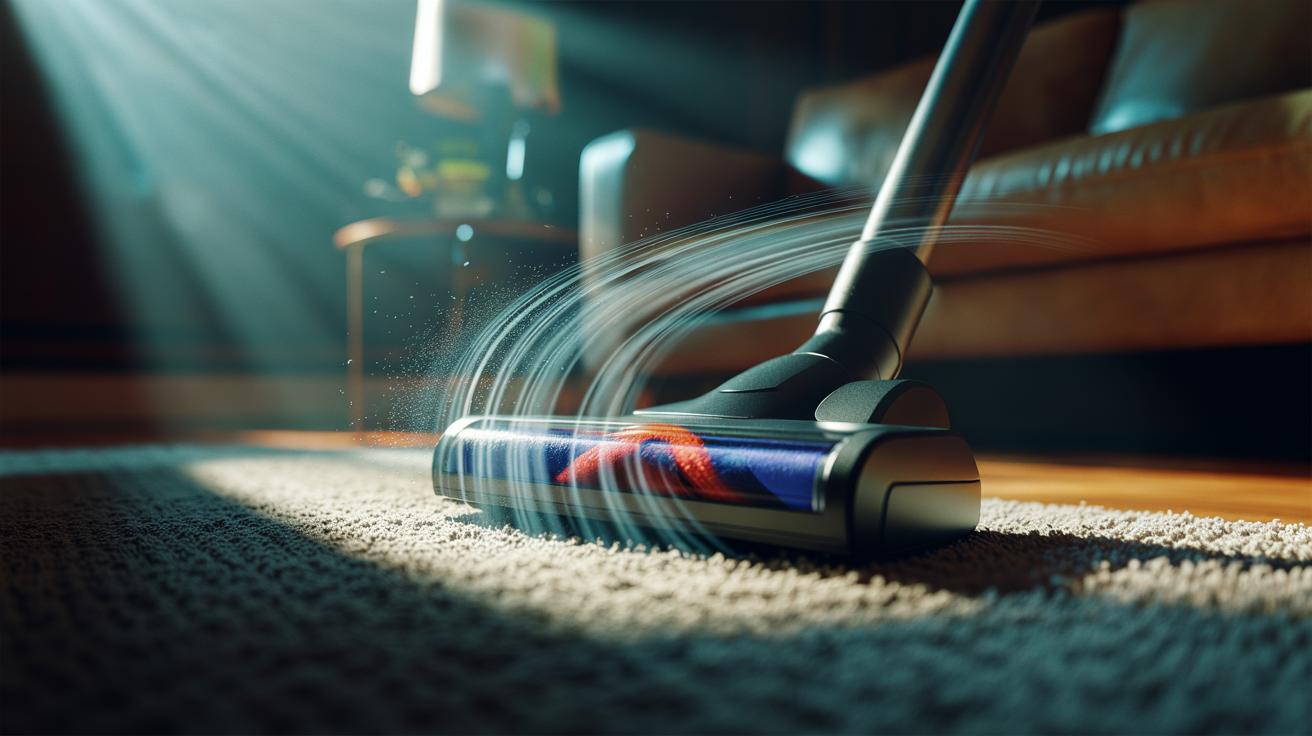
When a carpet looks dusty, many people push a vacuum faster, assuming speed equals power. Engineers and cleaning consultants say the opposite. Moving slowly improves pickup because the nozzle needs time to create a tight seal, build pressure, and dislodge grit. The slow vacuum method is not about babying your machine; it is about harnessing the physics of airflow, static pressure, and agitation. On both short-pile carpets and hard floors, measured trials show that brisk sweeping starves the vacuum of air, creating turbulence that leaves soils behind. The result is a deceptively clean surface and a deeper layer of embedded dust.
Why Speed Reduces Suction Efficiency
The heart of a vacuum’s performance is the balance between airflow (volume of air moved) and static pressure (the force available to lift dirt). Sprinting across a room upsets that balance. The nozzle lifts off micro-contours, pressure equalises, and air slips around debris instead of pulling it through the throat. Speed breaks the seal that concentrates suction at the carpet face. With the seal compromised, the motor still spins, but much of the energy goes into churning air, not extracting soil.
Fast passes also reduce contact time for the brush and lips to “grab” particles. Grit needs shear plus lift to leave the fibres; that takes milliseconds more than a quick flick. At high travel speeds, debris rebounds, eddies form, and crumbs are kicked sideways, to be re-deposited in tracks. Two slow passes will outclean five fast passes, particularly around skirting boards and traffic lanes where soils are heavier and more compacted.
The Physics: Airflow, Static Pressure, and Contact Time
Vacuum cleaners operate along a fan curve: as resistance rises, airflow (often expressed in CFM or L/s) drops, but static pressure (Pa) increases. Slow movement lets the nozzle create micro-seals against the floor, nudging the system toward higher pressure at the point of pickup. That shift matters for heavy grit and fine dust alike. Without dwell time, the machine never reaches the pressure differential needed to uproot particles trapped at the base of the pile. Brush bars then agitate instead of ejecting, providing the shear that pairs with pressure to lift debris.
Standards such as IEC 62885 and legacy carpet soil removal tests show the same dynamic: better removal at controlled, slow travel. The term air watts is helpful, but it is only meaningful at the nozzle. A lightweight head moved slowly can outperform a high-wattage motor rushed across the floor. On hard floors, a deliberate pace reduces bounce and scatter, letting the airflow capture fines before wheels push them aside or the exhaust plume wafts them out of reach.
Real-World Tests and Settings That Work
Field trials by facility cleaners and domestic testers converge on a simple rule: pace governs pickup. Slower passes concentrate airflow, stabilise the seal, and give filtration time to settle particles in the bin or bag instead of recirculating them. Speed ruins suction by starving the nozzle of pressure and replacing lift with turbulence. To translate that into dial settings, think in terms of surface, brush height, and pass speed rather than raw power alone.
| Floor Type | Pass Speed | Passes | Brush Height | Suction/Mode |
|---|---|---|---|---|
| Short-Pile Carpet | 10–20 cm/s | 2–3 overlapping | Just touching fibres | Medium–High |
| Deep-Pile Carpet | 8–15 cm/s | 3 overlapping | Raised 1 notch | High |
| Hard Floors | 20–30 cm/s | 2 | Brush off/soft roller | Low–Medium |
Robotic vacuums implicitly follow the rule: they crawl, increase contact time, and return for extra passes. Corded uprights and cordless sticks benefit from the same approach. Aim for 50% overlap along each lane, pause momentarily over gritty patches, and keep the head square to skirting for better edge sealing. That pattern makes the most of your machine’s design, whether cyclonic or bagged.
Technique and Maintenance: Getting More from Your Vacuum
Technique is half the battle. Glide at a measured pace, then pull back slowly; the return stroke often collects what agitation has loosened. Keep the head flat and avoid tipping on the nose, which vents the seal. On carpets, use medium power first; if the head sticks, raise the brush or reduce suction to maintain airflow. On hard floors, a soft roller or squeegee-lipped head at a steady pace prevents scatter and captures fine dust that fast passes blow around.
Maintenance locks in the gains. A clean filter preserves static pressure; a de-fluffed brush increases effective contact time. Replace or empty bags before they’re crammed, check gaskets for leaks, and clear hair from axles so wheels roll freely, keeping the nozzle level. A well-sealed machine moving slowly delivers more lift at the surface than a powerful but poorly maintained unit rushing by. Those small habits turn a weekly chore into a deeper clean that lasts longer.
Slow vacuuming is not a ritual; it is a practical application of how air and surfaces behave. By controlling pace, overlap, and head height, you give your machine the conditions it needs to work at its best, extracting packed soils instead of glossing over them. In short, time under the nozzle equals dirt removed. The reward is cleaner air, fresher fibres, and fewer repeat passes. How will you adjust your routine this week to test how a slower, methodical sweep changes what your vacuum actually lifts?
Did you like it?4.6/5 (25)