In a nutshell
- 🧪 Mechanism: acetic acid lowers pH while dish soap surfactants break biofilm and improve wetting, disrupting spores on contact for faster removal.
- ⚗️ Mix & dwell: Use 1:1 white vinegar (5%) and water with ~1 tsp dish soap per 500 ml; allow 10–15 minutes for light growth or 30–60 minutes for stubborn patches.
- 🧴 How to use: Spray onto dry surfaces, ensure ventilation, let it dwell, agitate grout with a soft brush, wipe, rinse, and dry thoroughly; repeat as needed, then switch to prevention.
- ⚠️ Safety & surfaces: Never mix with bleach or ammonia; avoid natural stone/brass; wear gloves and ventilate. If coverage exceeds ~1 m² or symptoms occur, seek pros; keep humidity under 60%.
- 🚿 Limits & prevention: Works best on non-porous tiles, glass, and grout; deep black silicone may need sealant replacement. Daily squeegee use and extractor fans reduce regrowth.
British bathrooms are humid, busy spaces, and that makes them a haven for black speckles creeping along grout lines and silicone seals. The quick, budget fix many cleaners swear by is a simple spray: white vinegar plus a dash of dish soap. This pairing does more than freshen the air. It loosens the mould’s protective layer, attacks its chemistry, and helps you wipe away colonies with less scrubbing. Used with the right ratio and dwell time, it can visibly cut mould within minutes. Here’s how the mix works, why it’s fast, and how to use it safely on tiles, glass and plastic without wrecking finishes—or your lungs.
Why Vinegar and Dish Soap Beat Bathroom Mould
The strength of this spray lies in two complementary actions. Vinegar contains acetic acid, typically around 5%, which shifts the surface to a low pH that mould spores dislike. This acidity helps denature proteins and disturb transport across cell membranes. Meanwhile, surfactants in washing-up liquid slash water’s surface tension, so droplets spread and cling to vertical grout and silicone rather than beading and running off. Better wetting equals better contact—critical for any biocidal effect.
Mould often hides inside a greasy, microscopic biofilm seeded by soap scum and body oils. The dish soap breaks up that slick, exposing hyphae and spores. Vinegar then penetrates the loosened layer, attacking the organism and softening mineral deposits that shield growth. The result: colonies detach more readily during a wipe-down, reducing both staining and viable material left behind. While not a miracle cure, it punches above its weight for routine outbreaks on non-porous surfaces.
How the Chemistry Disrupts Spores on Contact
On contact, acetic acid alters pH at the mould surface, stressing enzymes that drive metabolism. That interference is particularly effective on bathroom species that thrive near neutral pH. Lowering pH also helps dissolve calcium-rich scale that protects filaments within grout pits. At the same time, the soap’s anionic or non-ionic molecules pry apart oils and lipids that hold colonies together, dispersing particles into the cleaning solution so they’re lifted away rather than smeared.
This one-two action is amplified by time. Dwell time allows the acidic solution to diffuse along microcracks and pinholes, where spores lodge during steam-filled showers. Soap maintains even coverage and stops the vinegar evaporating too quickly, meaning more of the solution stays active where it matters. The mix is best classed as cleaner-disinfectant: it reduces microbial load substantially and disrupts regrowth niches, while visible improvement confirms coverage. For porous render or entrenched silicone staining, you may need repeat applications or sealant replacement.
Step-By-Step: Mix, Spray, and Dwell Time
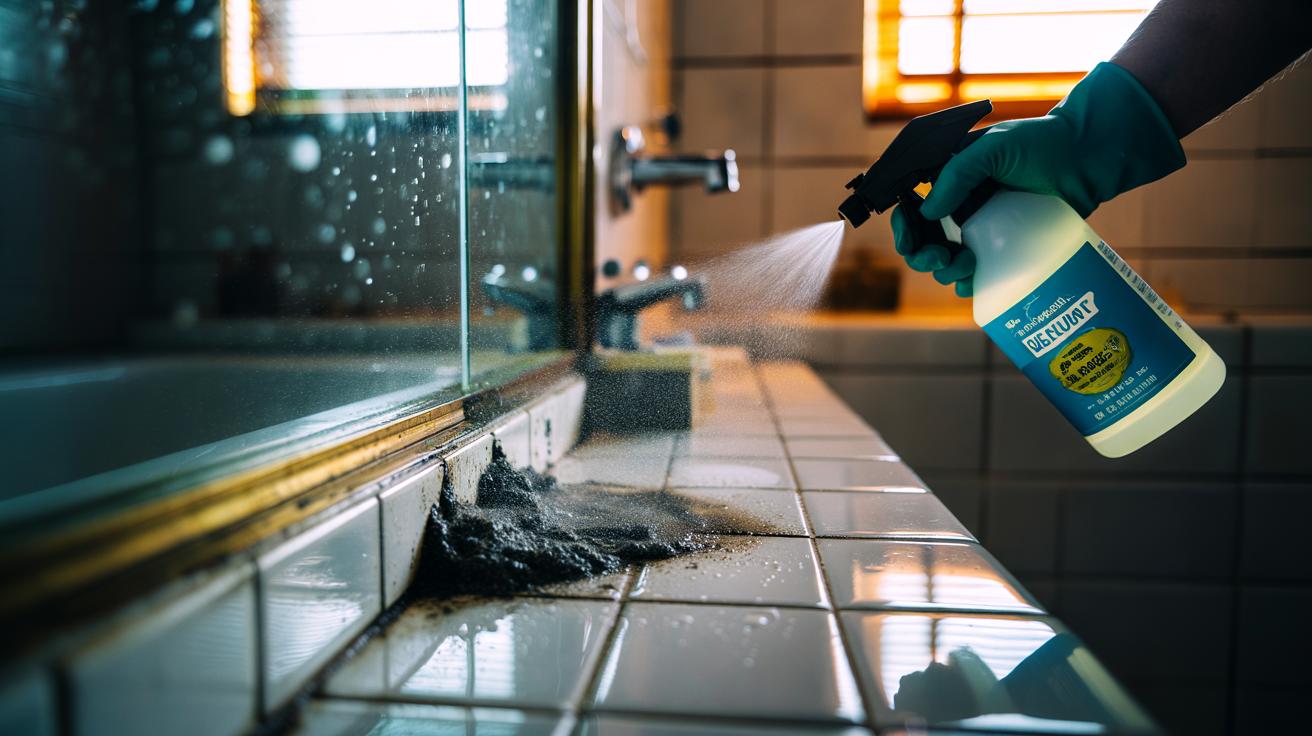
For a bottle, combine 1 cup white vinegar with 1 cup water and 1 teaspoon washing-up liquid. Shake gently to avoid excess foam. Target dry surfaces; ventilation on, windows ajar. Spray until surfaces glisten, then leave undisturbed. Ten to fifteen minutes handles light speckling; thirty to sixty minutes helps on stubborn patches. Agitate with a soft brush along grout lines, then wipe with a clean microfibre. Rinse to remove residue and dry thoroughly—fans and squeegees starve mould of lingering moisture.
Consistency matters. Repeat every few days until staining fades, then switch to prevention: squeegee after showers, run extractors for 20 minutes, and fix weeping seals. Always patch-test on obscure spots, especially on metals or coloured grout. Never mix the spray with bleach or products containing chlorine—dangerous gases can form. The guide below summarises typical ratios and where they shine.
| Component | Role | Typical Ratio | Best For | Notes |
|---|---|---|---|---|
| White vinegar (5%) | Acidic disruptor | 1 part | Tiles, glass, grout | Avoid natural stone; can etch marble and limestone |
| Water | Diluent, spread | 1 part | General use | Use undiluted vinegar only for heavy staining, with caution |
| Dish soap | Surfactant, wetting | 1 tsp per 500 ml | Biofilm and soap scum | Too much increases residue; always rinse |
Safety, Surfaces, and When to Call a Professional
Vinegar is mild compared with industrial fungicides, but it’s still acid. Wear gloves, avoid contact with eyes, and ventilate to reduce vapour. Never mix vinegar-based sprays with bleach or products containing chlorine or ammonia. Skip natural stone, cementitious terrazzo, brass and some anodised finishes—use a pH-neutral cleaner instead. On silicone, vinegar helps with surface mould, but deep black staining often means the sealant’s matrix is colonised; replacement is the lasting fix.
If mould keeps returning, look for root causes: leaky cisterns, cold bridges, weak extraction, or shower curtains that never fully dry. As a rule of thumb, if visible mould spans more than about one square metre, affects porous plaster, or triggers respiratory symptoms, seek professional help and investigate moisture ingress. Keep indoor humidity under 60%, run the fan after bathing, and heat evenly to limit condensation. The vinegar–soap spray is a smart first responder; prevention is the long game.
Used correctly, the vinegar and dish soap combo is a nimble cleaner-disinfectant that attacks biofilms, improves surface coverage, and makes bathroom mould easier to lift on the cloth. It isn’t a silver bullet for soaked plaster or perished silicone, but it’s quick, cheap and kinder to indoor air than harsh alternatives. The secret is contact: wet evenly, wait patiently, and dry thoroughly. What’s your biggest mould trouble spot at home—and which change, from better ventilation to diligent squeegeeing, could help you keep it at bay?
Did you like it?4.5/5 (21)