In a nutshell
- 🔬 Chemistry: Vinegar’s acetic acid reacts with calcium carbonate scale; warm solutions and adequate contact time keep surfaces wet so deposits dissolve and wipe away.
- 🧽 Method: Pre-clean grime, apply vinegar via soaked cloths or bags, dwell 10–60 minutes, gently agitate, then rinse and dry; repeat light cycles for heavy build-up.
- ⚠️ Surfaces & safety: Safe on chrome, stainless, glass; avoid natural stone; use proper dilutions (often 1:1), warm not boiling, ventilate, and wear gloves if sensitive; test an inconspicuous spot.
- 🛠️ Troubleshooting: Remove and soak aerators/showerheads, floss around tap bases, drain toilet bowl to target rings; if needed, step up to citric acid—never mix acids with bleach.
- ♻️ Economy & eco: Low-cost white vinegar cuts limescale, reduces chemicals and packaging, and improves appliance efficiency—clean kettles heat faster—so you save energy and money with minimal fuss.
Britain’s hard water leaves a tell‑tale crust. Chalky taps, cloudy shower screens, kettles that hiss and spit. Professional cleaners don’t panic. They reach for a cheap staple: white vinegar. Used correctly, it slices through limescale with surprising grace, often faster than many fancy gels. The trick isn’t mystery chemicals; it’s method. Temperature, dwell time, contact, rinse. Each part matters. Get those right and the scale seems to melt away. Here’s how the pros use a humble bottle of 5% acetic acid to restore sparkle, protect fixtures, and keep homes running efficiently, without harsh fumes or a hefty bill.
Why Vinegar Works on Limescale
Limescale is mostly calcium carbonate, a stubborn alkaline deposit left behind as hard water evaporates. Vinegar contains acetic acid, which reacts with that carbonate, forming soluble calcium acetate, water, and a fizz of carbon dioxide. That gentle effervescence is your visual cue that chemistry is doing the heavy lifting. In practice, the acid loosens the mineral lattice so it can be wiped or rinsed away. Contact time is crucial, because the reaction needs a wet surface and patience. Warmer vinegar works faster, as reactions speed with heat, but you don’t need to boil it or risk scorching smells to see powerful results.
In kitchens and bathrooms, cleaners treat limescale as a layered problem. The top film lifts with wipe-downs, yet deeper scale hides in micro‑pits and aerators. Vinegar reaches those nooks. It creeps under the edges, dissolving the bond between scale and metal or glass. That’s why soaking and re‑wetting matter. The acid must remain in touch with the deposit rather than running off and drying prematurely, which halts the reaction and leaves a patchy finish.
The Professional Step-by-Step Method
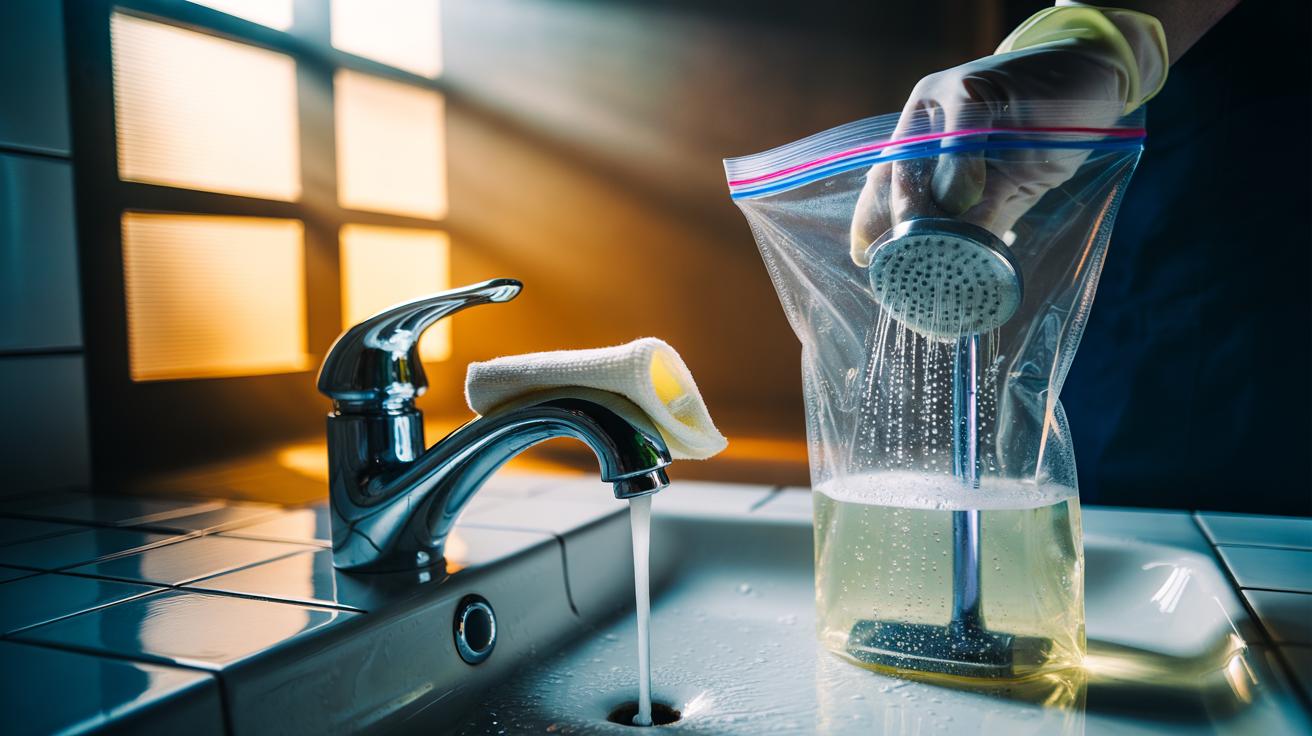
Pros start by clearing the canvas. They remove soap scum and grease with a neutral cleaner, then dry the area lightly. Acid can’t dissolve limescale efficiently if it’s fighting through grime. Next comes application: for vertical glass or tiles, they soak paper towels or microfibre in white vinegar and press them onto the surface to stop drips. On taps and fittings, a reusable cloth wrap keeps everything wet. For showerheads, they unscrew and submerge in a bowl of warm vinegar; if fixed, a zip‑bag is tied around the head.
Then they wait. Ten to fifteen minutes for light deposits, up to an hour for heavy crusts. Between times, they re‑wet the pack if it begins to dry. Gentle agitation follows: a soft nylon brush or a non‑scratch pad breaks the final hold. Never use steel wool on chrome; it scratches and invites rust. Finally, an abundant rinse with warm water, then a thorough dry with a clean towel to prevent fresh spotting. If faint shadows remain, they repeat rather than forcing it.
Surfaces, Safety, and Dilution Ratios
Vinegar is effective, but it’s still an acid. Always test on an inconspicuous spot first. It’s safe for most chrome, stainless steel, and glass, but avoid natural stone such as marble, limestone, and travertine—acids etch them. Be cautious with delicate finishes like brushed nickel and some enamel coatings; prolonged exposure may dull the sheen. Gloves help if you have sensitive skin, though vinegar is far milder than many descalers. Ensure decent ventilation, especially in small bathrooms, to keep fumes comfortable. Warmer solutions speed results, yet don’t use boiling liquids on glass or porcelain, which hate sudden thermal shock.
| Surface/Fixture | Vinegar Dilution | Dwell Time | Notes |
|---|---|---|---|
| Chrome taps and spouts | 1:1 (vinegar:water) | 10–15 minutes | Use cloth wrap; gently brush joints and aerator. |
| Showerheads (removable) | Neat vinegar | 30–60 minutes | Rinse thoroughly; poke jets with a toothpick if needed. |
| Glass shower screens | 1:1 or neat for heavy scale | 15–30 minutes | Apply via soaked towels to prevent runs. |
| Kettles | 1:1 | 10–15 minutes (warm) | Heat gently, do not boil; rinse and re‑boil with fresh water. |
| Natural stone (marble, limestone) | Avoid | — | Use a stone‑safe, non‑acidic descaler instead. |
| Rubber seals and silicone | 1:3 | 5–10 minutes | Short contact prevents drying and potential dulling. |
Troubleshooting Stubborn Scale and Hard-Water Nightmares
Some deposits are ancient. They laugh at one pass. Professionals repeat the cycle: wet pack, dwell, gentle agitation, rinse, dry. Multiple mild treatments beat one aggressive scrape. For thick collars around tap bases, they slide dental floss or thread dipped in vinegar under the rim and seesaw to cut through the crust. Aerators are unscrewed and soaked separately; many hide a surprising amount of scale, throttling flow and causing spray to misbehave. On toilets, they shut off the water, drain the bowl below the ring, and apply a vinegar‑soaked towel for an hour before brushing.
If vinegar stalls, a stronger but still user‑friendly acid like citric acid (5–10% solution) can finish the job. In commercial contexts, technicians may step up to sulfamic acid descalers, following label safety to the letter. Avoid mixing acids with bleach or alkaline cleaners; neutralisation wastes effectiveness and mixing can be hazardous. The golden rule remains: let chemistry work, then remove mechanically with the softest tool that does the job.
Economy and Eco Credentials
Cost matters in UK homes and cleaning firms alike. Supermarket white vinegar is inexpensive—typically well under a pound per litre for cleaning‑grade bottles. A branded bathroom descaler can cost several times more per equivalent active acid. Because vinegar tackles scale without dyes, thickeners, or strong solvents, it keeps indoor air friendlier and drains kinder. There’s less packaging, less perfume, fewer unknowns. Scale removal also saves energy: a clean kettle or element heats faster, trimming bills. Still, the greenest clean is the one you do carefully. Store vinegar away from stone, label your spray bottle clearly, and keep it out of children’s reach.
In the end, the professional secret isn’t secret at all: consistent method. Pre‑clean, soak, wait, agitate, rinse, dry. Repeat lightly if needed. It’s a calm routine that turns chalky fixtures clear and bright. With a couple of cloths and a bottle of vinegar, you can reclaim taps, glass, and appliances in under an hour, and for pennies. Are you ready to try the pro approach this weekend, and which limescale battle will you tackle first—the showerhead that spits, or the kettle that growls?
Did you like it?4.6/5 (28)