In a nutshell
- ✨ The vinegar + plastic bag trick restores crystal brilliance by letting acetic acid dissolve limescale and lift embedded dust overnight without scrubbing.
- 🧪 Use a 1:1 white vinegar to water mix for routine grime (6–8 hours) or 2:1 for heavy scale (8–12 hours), then rinse with distilled water to prevent spotting.
- 🧰 Method: power off, protect the floor, bag each pendant with solution while keeping metal parts out, remove carefully, rinse, and dry with microfiber for a high sparkle.
- ⚠️ Safety first: never mix vinegar and bleach, avoid soaking metal finishes, keep liquid away from sockets, and shorten exposure for lead crystal or glued components.
- 📋 Alternatives and tips: test a single pendant, shield antique finishes, or use warm water with non-ionic detergent if bagging isn’t practical; finish with a gentle final buff.
If your chandelier has lost its sparkle, an old-school trick is enjoying a quiet renaissance: a simple mix of white vinegar and water, sealed around each pendant in a plastic bag, left to work overnight. The solution is gentle, inexpensive, and remarkably effective on dullness caused by limescale, airborne grease, and urban soot. By avoiding full dismantling, the method preserves delicate fittings while delivering a showroom sheen. Because the acid targets mineral films, trapped dust lifts away with minimal effort. Below, we unpack the science, the exact steps, and the pitfalls to dodge so your crystal drips, rosettes, and beads refract light as they were meant to—brilliantly.
Why Vinegar Works on Chandelier Grime
White vinegar contains acetic acid, a weak acid that is strong enough to dissolve calcium carbonate (the backbone of limescale) and loosen metallic salts deposited from hard water and city air. Dust on chandeliers isn’t just fluff; it’s a cocktail of fine particulates bound together by sticky films of kitchen vapour, nicotine residues, and static. The lowered pH breaks ionic bonds in these films and disrupts the electrostatic hold on the glass surface. Left overnight, this mild acid bath dissolves mineral films and frees embedded dust without aggressive scrubbing, which can scratch delicate cuts in crystal prisms.
Vinegar also alters surface tension, helping the solution wick into tight crevices and along bevels where grime hides. When followed by a rinse with distilled water, you avoid the telltale white spotting that ordinary tap water leaves behind. The result is a cleaner optical path through each pendant, restoring the crisp prismatic flash that defines a well-kept chandelier.
The Plastic Bag Overnight Method, Step by Step
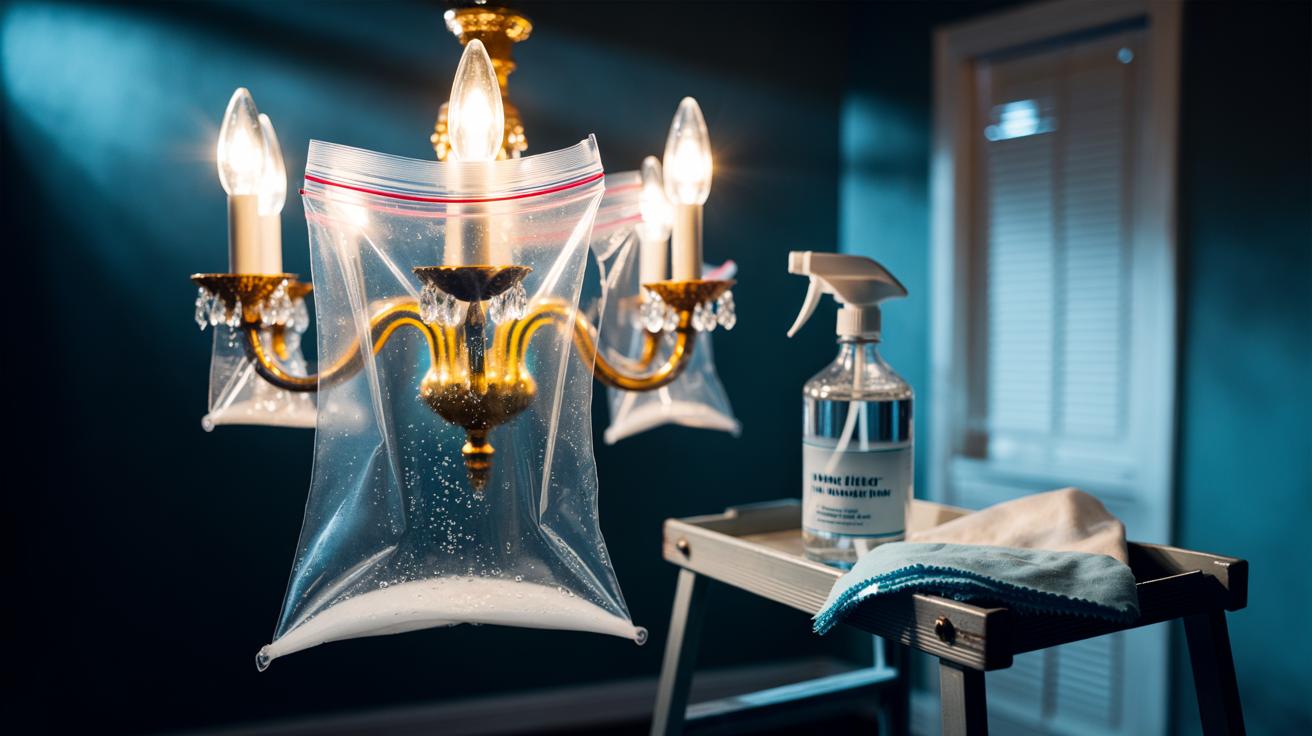
1) Cut power at the breaker and remove bulbs. Place a padded sheet beneath the fitting. Put on nitrile gloves to prevent fingerprints. 2) Mix a solution: start with 1:1 white vinegar to water for routine cleaning; for heavy scale, use 2 parts vinegar to 1 part water. 3) Slip a small, sturdy zip-top bag over each crystal or small cluster, adding enough solution to submerge only the glass, not adjacent metal. Secure the neck with a soft tie so it seals without stress. Do not soak metal arms, silk-covered wire, or decorative finishes.
Leave the bags in place for 6–12 hours. For lead crystal, aim for the shorter end to avoid any prolonged acid exposure. Remove each bag carefully, supporting the pendant, and immediately rinse the crystal with distilled water from a spray bottle. Pat dry with a lint-free cloth or microfiber gloves, then allow air-drying. Reinstall bulbs and restore power only when every part is completely dry. A final buff with a dry cloth polishes facets to a high sparkle.
Materials, Dilutions, and Timing at a Glance
| Item | Use | Ratio | Time | Notes |
|---|---|---|---|---|
| White vinegar + water | Standard clean | 1:1 | 6–8 hrs | Safe for most glass/crystal |
| White vinegar + water | Heavy limescale | 2:1 | 8–12 hrs | Shorten if lead crystal is present |
| Distilled water | Final rinse | 100% | Immediate | Prevents spotting |
| Plastic zip-top bags | Targeted soak | One per pendant | As above | Keep metal out of solution |
| Microfiber gloves | Drying/polish | — | Until dry | Stops fingerprints |
Use the milder 1:1 dilution first; escalate only where scale is visible. Test on a single pendant to confirm finish compatibility. Nickel, chrome, and lacquered brass can tarnish if bathed in acid, so protect or avoid metal contact. Always finish with a distilled-water rinse to remove acetate salts and prevent new mineral deposits. Where crystals are glued rather than clipped, keep times conservative to avoid softening adhesives, and support each piece while removing bags to prevent stress on pins and hooks.
Common Pitfalls and Safer Alternatives
Never mix vinegar with bleach; it releases hazardous chlorine gas. Keep the room ventilated and use only white vinegar; malt or coloured vinegars can stain. Don’t spray liquid into sockets or onto fabric-covered wires; power must remain off until everything is bone-dry. Limit metal exposure to acid, and if arms or cups are grimy, wipe them separately with a barely damp cloth and neutral pH soap, then dry immediately. For fragile antique finishes, wrap metal with cling film before bagging the glass.
If bagging is impractical—say, for oversized prisms—remove pendants and soak them in a shallow tray, protecting the metal pins by keeping only the glass submerged. Sensitive to lead crystal? Switch to a gentler approach: warm water, a drop of non-ionic detergent, and a quick rinse, followed by distilled water. Work slowly on a stable ladder and avoid any twisting force on old hooks. With care, the transformation from haze to high sparkle is both swift and satisfying.
The vinegar-and-bag method earns its reputation because it uses simple chemistry to tackle the stubborn mineral films that dim crystal brilliance, all without disassembling an intricate fixture. By isolating pendants, controlling dilution, and finishing with a distilled-water rinse, you get clarity, colour, and fire back with minimal risk. With a protective sheet underfoot and the power off, the job is calm, methodical, and economical. Ready to give your chandelier a quiet restoration that looks anything but? What features of your own fitting—size, age, or finish—might shape the way you try this overnight clean?
Did you like it?4.6/5 (23)