In a nutshell
- 🧪 The haze is usually hard-water limescale, not dirt; distinguish mineral film vs etching to avoid futile scrubbing.
- 🥤 A vinegar rinse works because acetic acid reacts with calcium carbonate, dissolving deposits without scratching glass.
- 🧼 Follow a simple method: choose the right dilution and dwell time, soak, gently agitate (brush or rice), then rinse and buff dry.
- ⚠️ Safety first: never mix vinegar with bleach, limit contact with metals and glued trims, and keep acids off porous stone surfaces.
- 🌿 Smart alternatives and prevention: try citric acid, avoid neutralising vinegar with bicarbonate, use filtered water, and dry vases to reduce build-up.
Cloudy glass vases are a familiar frustration in hard-water regions across the UK. The culprit is a hard-water film of mineral deposits that dulls clarity and traps odours from past bouquets. A simple household remedy—the vinegar rinse—can cut through this haze without harsh abrasives. At the heart of it is acetic acid, the active component in vinegar, which dissolves stubborn limescale and restores the lustre of glass. The trick is pairing the right dilution and dwell time with gentle mechanical action. Below, we unpack the chemistry, outline a safe, effective method, and flag the pitfalls that lead to scratching, streaks, or, occasionally, permanent cloudy glass that no cleaner can fix.
What Causes Cloudy Vases: Mineral Film vs Etching
The misty look that creeps up a vase’s neck is usually mineral film—mainly calcium and magnesium salts left behind when hard water evaporates. It often appears as a grey-white veil or a chalky tide mark at the waterline. This deposit feels slightly rough and responds well to mild acids such as vinegar. If you dab a hidden spot with vinegar and see a faint fizz or the patch brightens after a minute, that’s a sign of limescale rather than dirt or grease. When the film is mineral, chemistry—not heavy scrubbing—does the heavy lifting.
Not all haze is equal. Long-term exposure to alkaline detergents, dishwashers, or abrasive scouring can create micro-etching—minute pits in the glass surface that scatter light. Etched glass looks uniformly cloudy and will not improve with soaking. If a test clean leaves no change, you’re likely seeing etching. In that case, only professional polishing with cerium oxide can help. Distinguishing deposit from damage saves time and prevents overcleaning that risks scratches or loosening decorative finishes.
How Vinegar Works: Acetic Acid Versus Limescale
Vinegar’s cleaning power comes from acetic acid (typically 5% in distilled white vinegar; cleaning versions may be 6–10%). The acid reacts with alkaline minerals such as calcium carbonate and magnesium hydroxide, converting them into soluble salts (for example, calcium acetate), releasing carbon dioxide, and allowing the residue to rinse away. This targeted acid–base reaction removes scale without scratching the glass surface. Warmth helps: slightly warm solution speeds dissolution by increasing molecular activity, though boiling water risks thermal shock in fine glass.
Choose clear, distilled white vinegar to avoid tannin stains that some brown malt vinegars can leave. For most vases, a 1:1 to 1:3 vinegar-to-water dilution balances speed with safety, especially around painted bands, glued bases, or metal collars. Acid is not friendly to all materials. Keep vinegar away from natural stone worktops, cast-iron trimmings, and reactive metals. Rinse surfaces thoroughly and dry with a microfibre cloth to prevent new spotting as droplets evaporate.
Step-by-Step Vinegar Rinse That Revives Shine
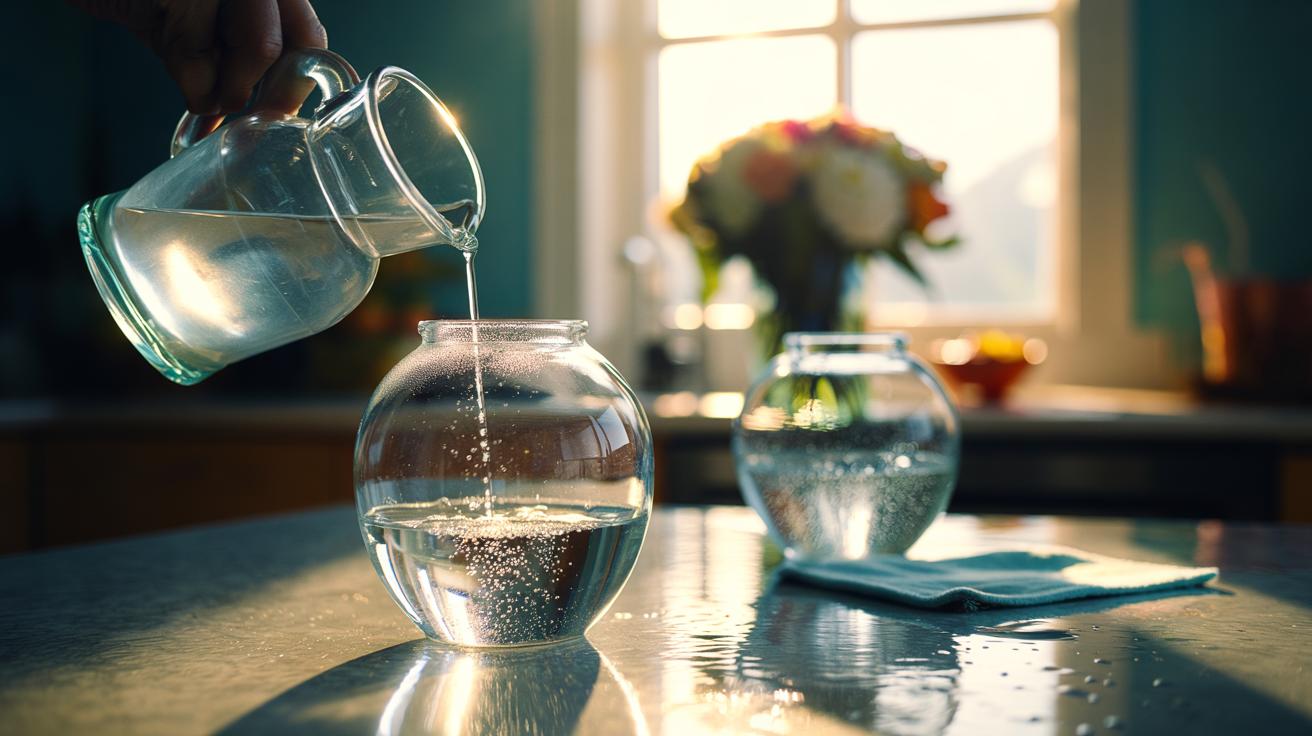
Start with a quick rinse to remove loose residue. Add a little warm water and a drop of mild washing-up liquid, swish, and empty. Fill the vase to the problem line with your chosen vinegar solution. For narrow necks, plug the opening and tip the vase to wet the entire ring. Let it soak until the haze softens; use a bottle brush to agitate, or add a spoonful of raw rice and swirl to reach tight corners. Gentle agitation plus acid contact time is the winning combination.
| Problem | Vinegar:Water | Soak Time | Helpful Extras |
|---|---|---|---|
| Light haze | 1:3 | 10–15 minutes | Soft brush, microfibre dry |
| Heavy limescale ring | 1:1 | 30–60 minutes | Rice swirl, repeat once if needed |
| Stubborn neck deposits | Undiluted on cloth | Spot treatment 5 minutes | Bottle brush to finish |
| Odour or mould | 1:2 | 20 minutes | Rinse, then air-dry upside down |
When the film yields, empty the vase and rinse thoroughly—first with cool water to stop the reaction, then warm to clear residues. Dry immediately with a lint-free cloth to avoid new spots. For a final sparkle, wipe with a fresh vinegar-dampened cloth and buff. Never mix vinegar with bleach—this produces dangerous chlorine gas. If the vase has gilt, applied decals, or glued joins, limit soaking time and test a discreet area first.
Tips, Pitfalls, and When to Try Alternatives
For fine crystal, cut soaking time to the minimum and rely on a softer dilution, because leaded glass can be sensitive to prolonged acid exposure. Painted rims and metal mounts may tarnish; shield them with petroleum jelly or keep them above the liquid line. Avoid abrasive powders and scouring pads, which scratch and turn temporary haze into permanent dullness. Do not clean on porous stone surfaces; spills can etch worktops. If scale persists after two cycles, you may be dealing with etching rather than dirt—stop before you do harm.
Alternatives have their place. Food-grade citric acid (5–10% solution) is odourless and effective on limescale. Lemon juice works in a pinch but can leave sticky sugars if not rinsed. Enzymatic cleaners tackle organic films left by stems. Resist the urge to mix vinegar with bicarbonate of soda during cleaning; they neutralise each other, reducing performance. Instead, use bicarbonate separately for deodorising after the acid step. To slow future build-up, rinse vases with filtered or boiled-cooled water, and dry fully between uses. Prevention is easier than repeated descaling.
A smart vinegar rinse can return a cloudy vase to display-ready clarity with little cost and no abrasives, provided you match dilution, time, and gentle agitation to the severity of the deposit. Understanding how acetic acid dissolves limescale helps you clean decisively and safely, and it tells you when you’re dealing with permanent etching. With a few precautions—care around metals, swift rinsing, and thorough drying—your favourite glass will keep its sparkle. What piece in your home would benefit most from a careful acid rinse, and how will you tailor the method to its material and history?
Did you like it?4.4/5 (25)