In a nutshell
- 🔬 Vinegar’s acetic acid reacts with calcium carbonate limescale, forming soluble calcium acetate plus water and CO₂—hard water marks seem to “melt”.
- ⚡ For faster results, use a warm 1:1 white vinegar:water spray, allow 5–10 minutes dwell, keep surfaces wet, then rinse and buff dry.
- 🧽 Works best on glass, chrome, stainless steel, and ceramic tiles; wrap-soak heavy deposits on taps or shower heads, then gently brush.
- 🚫 Safety and limits: Never mix vinegar with bleach or peroxide; avoid marble/limestone and be cautious with nickel, anodised aluminium, rubber seals, and grout.
- 🇬🇧 In UK hard-water regions, carbonate-heavy scale is common; regular vinegar maintenance reduces energy loss, protects appliances, and keeps surfaces clear.
Across the UK, chalky crescents on taps, speckled shower doors, and stubborn kettle rings are the calling cards of hard water. A simple vinegar spray seems to “melt” these mineral stains, clearing glass and chrome in minutes. That speed is not sorcery; it’s chemistry in action. When household vinegar—about 5% acetic acid—touches limescale, the deposit breaks apart and rinses away as harmless by-products. The result is immediate clarity with minimal scrubbing, a low-cost, low-toxicity fix that beats harsher cleaners for many routine jobs. Here’s why those white marks vanish on contact, and how to use vinegar smartly and safely.
The Chemistry Behind Vinegar’s Instant Effect
Hard water leaves deposits dominated by calcium carbonate and magnesium compounds. When acetic acid meets these alkaline minerals, it neutralises them in a classic acid–carbonate reaction: calcium carbonate plus acetic acid forms calcium acetate, water, and carbon dioxide. That soft fizz you sometimes hear is CO2 escaping as the crust dissolves. This is not scrubbing—it’s chemistry breaking the crystal lattice. Because the resulting salts are soluble, the crust loosens, detaches, and can be wiped or rinsed away, taking the cloudy stain with it.
Acetate ions also help by lightly complexing calcium, keeping it in solution. The low pH of vinegar (typically around 2.4) rapidly shifts the equilibrium, accelerating dissolution. Warmth speeds this further, so a slightly warmed spray works faster on thick limescale. Magnesium hydroxide residues succumb for the same reason—protonation converts them into soluble forms. The faster the contact and the better the wetting, the cleaner the glass or metal will look after a single pass.
| Deposit | Main Composition | What You’ll See | Vinegar Action |
|---|---|---|---|
| Limescale on taps | Calcium carbonate | White crust, chalky fringes | Forms calcium acetate + CO2; crust softens and lifts |
| Soap scum | Calcium/magnesium soaps | Grey film, smeary patches | Acid breaks mineral bonds; wipe to remove fatty film |
| Shower glass haze | Mixed mineral spots | Clouding, water spots | Dissolves mineral cores; leaves glass clear after rinse |
How to Use a Vinegar Spray for Hard Water Marks
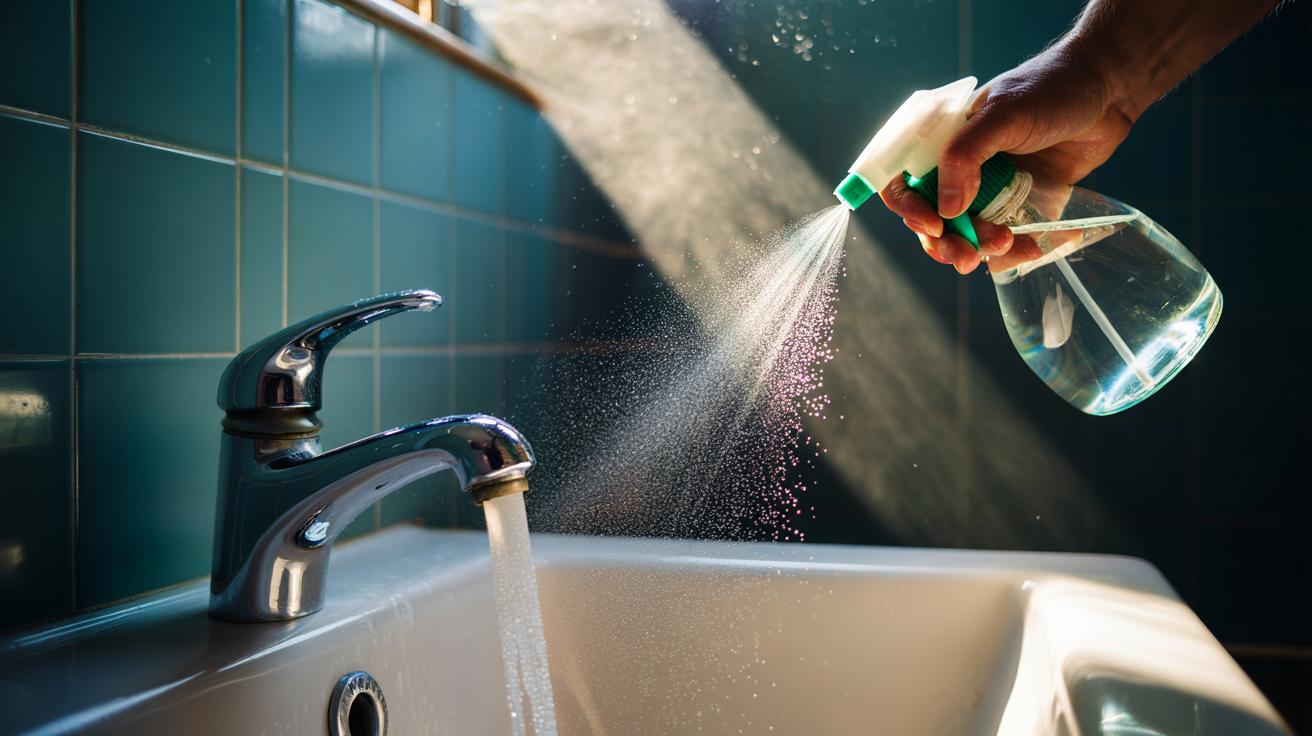
Mix a practical cleaner by combining equal parts white distilled vinegar and water in a spray bottle; warm the solution slightly for faster action. Mist until the stain is fully wet and let it dwell for 5–10 minutes. Keep the area damp—re-spray if it starts to dry—then wipe with a microfibre cloth. For heavy crusts on taps or shower heads, soak a cloth or paper towel in vinegar, wrap it around the deposit, and leave for 20–30 minutes before scrubbing gently with a soft brush.
Finish with a thorough rinse and a dry buff to prevent fresh spotting. A drop of washing-up liquid adds surfactancy, helping the spray spread under the scale. Never mix vinegar with bleach—this releases toxic chlorine gas. Avoid combining it with hydrogen peroxide, which can create irritant peracetic acid. Wear gloves if you have sensitive skin and ventilate bathrooms. If water marks persist after one cycle, repeat the dwell; layers built up over months may need incremental treatments rather than forceful scraping.
Where Vinegar Shines—and Where It Doesn’t
Vinegar excels on chrome, stainless steel, ceramic tiles, and tempered glass, where mineral scale is the chief culprit. Shower screens clear quickly, stainless sinks lose the dull grey, and aerators regain flow after a brief soak. Kettles and coffee makers with mineral buildup respond well to a controlled descaling cycle, followed by several rinses to prevent any lingering tang. For everyday hard water marks on non-porous surfaces, vinegar is both effective and economical, reducing reliance on harsher acidic cleaners.
There are limits. Never use vinegar on marble, limestone, travertine, or concrete terrazzo: the acid etches calcium-rich stone. Prolonged contact can dull nickel finishes and anodised aluminium; always spot-test. Rubber seals and certain cartridge components may degrade if soaked repeatedly—apply only to the scale and keep dwell times conservative. Cement-based grout can slowly erode; use pH-neutral cleaners for routine grout maintenance and reserve vinegar for targeted scale along glazed edges. If in doubt, consult the surface manufacturer’s care guidance.
Why Hard Water Chemistry Makes the UK a Prime Test Case
Much of England, notably the South East and East Anglia, sits atop chalk and limestone aquifers that push dissolved calcium and magnesium into tap supplies. The result is very hard water—often above 200 mg/L as CaCO3—that furs kettles, narrows shower heads, and leaves tell-tale rings on glassware. Those sparkling drips on chrome turn to chalky halos as water evaporates, concentrating minerals into visible crusts. Because the deposits are largely carbonate-based, vinegar’s acid-carbonate reaction is especially effective across these regions, often working within minutes.
Beyond looks, limescale insulates heating elements and shortens appliance life. A routine spritz-and-wipe regimen with vinegar curbs buildup, supporting efficiency with negligible environmental cost. It’s biodegradable, inexpensive, and widely available. For extreme hardness or sensitive finishes, citric acid solutions and mechanical prevention—wiper blades on screens, water softeners, or filtered shower heads—extend the interval between deep cleans. The most reliable strategy is frequency: little and often keeps the chemistry on your side and the surfaces bright.
In short, vinegar’s speed against mineral stains is rooted in simple, predictable chemistry: acetic acid converts stubborn carbonate scale into soluble salts and escaping CO2, so marks seem to “melt” away. Used with smart dwell times, careful rinsing, and surface awareness, it’s a trusted ally for Britain’s hard-water realities. What’s your toughest limescale challenge at home, and where do you think a targeted vinegar routine—or a different acid—would make the most immediate difference?
Did you like it?4.7/5 (23)