In a nutshell
- 🔬 The vinegar steam trick pairs acetic acid with heat and humidity, delivering latent heat that softens polymerised grease and lowers viscosity for effortless wiping.
- ♨️ Step-by-step: place a pan with white vinegar and water (1:1 for heavy grime, up to 1:3 for maintenance), heat to 120–150°C for 10–15 minutes, rest 5 minutes, then wipe top-to-bottom.
- 🛡️ Safety first: never mix vinegar with bleach, ventilate well, wear gloves, and be cautious with bare aluminium and catalytic liners; steam is fine, avoid splashing.
- 🔧 For stubborn build-up, follow the steam with a bicarbonate of soda paste, warm rack soak, and a glass door two-step (steam, then bicarb; wipe and rinse).
- ✨ Benefits: low-cost, low-fume, and fast; regular use prevents hard lacquer. Adjust ratio, temperature, and dwell time to match your oven’s condition.
The humble bottle of vinegar hiding at the back of your cupboard can transform a mucky oven in minutes. Home cooks across the UK swear by the vinegar steam trick, a low-cost method that uses heat and humidity to release stubborn, baked-on grime. This approach is fast, safe for most enamel interiors, and avoids the choking fumes of harsh chemicals. By warming a small pan of diluted vinegar, you flood the cavity with acidic vapour that weakens grease bonds, softens carbonised splatters, and loosens sugary spills. The result? A simpler wipe-down, clearer glass, and fresher aromas. Here’s how it works—and how to make it work brilliantly in your kitchen.
Why Vinegar Steam Works
The secret sits at the intersection of chemistry and physics. Vinegar contains acetic acid, which lowers surface tension and begins to break the bonds in polymerised cooking oils. Meanwhile, steam transports that acid as a warm mist, then condenses on cold, greasy patches, delivering a burst of latent heat right where it’s needed. This micro-soaking effect heats and hydrates residue, softening burnt grease almost instantly. As fats warm, their viscosity drops; they become easier to dislodge with a cloth. A fan-assisted oven circulates vapour efficiently, carrying acidic moisture into corners and seams. You’re not dissolving heavy carbon so much as weakening its grip, turning a hard scrub into a gentle swipe. Best of all, the method works with everyday supplies and leaves a pleasant, clean finish without caustic odours.
Because the vinegar is diluted, you get the benefits of acidity without risking damage to most enamelled surfaces. The heat does the heavy lifting, while the acetic acid nudges along the release of sticky, brown layers. Think of it as pre-soaking your oven walls with warm, targeted humidity. The softened film then wipes away with a microfibre cloth, and a rinse with warm water removes any remaining tang. For embedded grime on door glass, the steam begins the job, reducing the pressure needed from your follow-up cleaning steps.
Step-By-Step: The Five-Minute Method
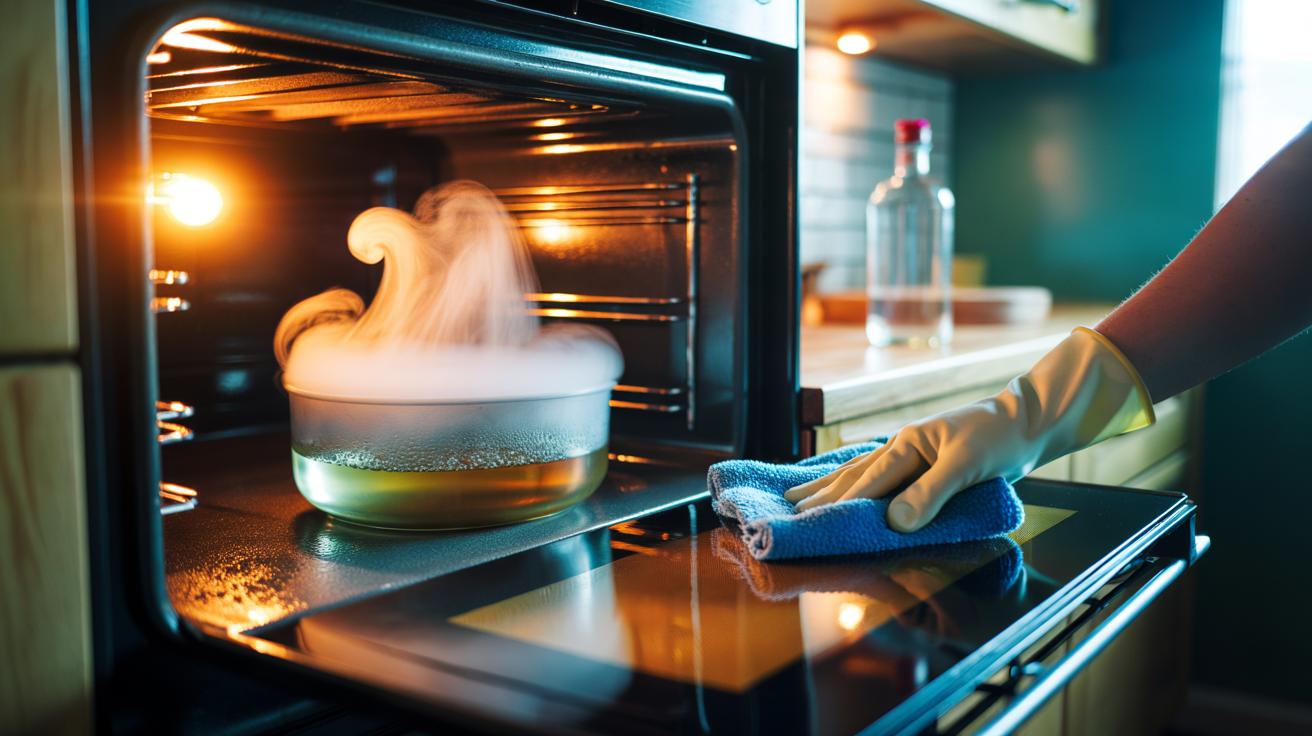
Start by removing trays and racks so steam can circulate freely. Place an oven-safe pan with 500 ml water and 250–500 ml white vinegar on a middle shelf. Heat the oven to 120–150°C for 10–15 minutes until you see a steady shimmer of vapour. Switch off the oven and keep the door closed for five more minutes to let condensation soak the grime. Open carefully—steam is hot—then wipe the interior with a damp microfibre cloth, working from top to bottom. For edge seals and corners, use a cotton bud or soft brush dipped in the same warm solution.
If residue persists, repeat once or target patches with a cloth warmed in the vinegar-water mix. For glass doors, rest a vinegar-wet towel on the pane for two minutes after steaming, then buff with a dry cloth for clarity. Finish by wiping with clean water to neutralise any tang. In most cases, the whole process takes under 20 minutes and involves almost no scrubbing.
Safety, Materials, and Smart Variations
Use white distilled vinegar for neutral colour and predictable acidity. Stainless-steel interiors tolerate this method well, as do enamel linings; avoid prolonged contact with bare aluminium. Never mix vinegar with bleach or products containing chlorine. For a gentler scent, add a strip of lemon peel to the pan; the citrus oils won’t impair performance. If your oven has catalytic liners, steam is generally safe, but don’t drown them—stick to vapour, not splashing. Fan ovens distribute steam evenly, yet watch the door seal: it can get very warm. Always ventilate the kitchen and handle the pan with oven gloves.
For eco-conscious tweaks, reduce vinegar to 1:3 with water and extend the heating phase by a few minutes—the temperature and time compensate for milder acidity. If your oven is extremely soiled, run a pre-warm at 80–100°C with water only, then repeat with vinegar for a deeper release. Think of variations as dials you can adjust: ratio, temperature, and dwell time, depending on the state of your oven.
| Setting | Recommended Value |
|---|---|
| Vinegar : Water | 1:1 for heavy grime; 1:2–1:3 for light maintenance |
| Temperature | 120–150°C (fan helps circulation) |
| Steam Time | 10–15 minutes + 5-minute soak with oven off |
| Tools | Oven-safe pan, microfibre cloth, gloves, soft brush |
When Stubborn Build-Up Needs Extra Help
Steam handles the bulk of everyday grime, but carbonised patches sometimes demand reinforcement. After steaming, apply a paste of bicarbonate of soda and water to cooled, sticky zones and leave for 10 minutes. The mild alkali complements the acid pre-soak, lifting fatty residues without scratching. Agitate lightly with a non-scratch pad, then wipe clean and rinse. For oven racks, let the steam session finish, remove racks while warm (with gloves), and soak them in hot, soapy water spiked with a splash of vinegar; residues will slide off faster after the heat treatment.
Glass doors respond well to a two-step: steam to soften, then a bicarb paste spread thinly and removed with a damp cloth for a smear-free finish. Avoid razor blades on coated glass and keep abrasives away from printed markings. If your oven has heavy tar-like build-up from roasting fats, repeat the steam cycle, concentrating vapour by placing the pan closer to trouble spots. The goal is persistence with gentle methods, not brute force.
Used weekly or even monthly, the vinegar steam trick keeps grease from hardening into the sort of lacquer that demands a day’s scrubbing. It’s inexpensive, low on effort, and kinder to your lungs than harsh aerosols. Let heat and humidity do the work, and save your elbow grease for cooking. Keep a marked bottle of diluted vinegar under the sink, and the next spill-over won’t become a future headache. How will you adapt the ratio, temperature, and timing to suit your oven’s quirks—and what stubborn stain will you test it on first?
Did you like it?4.5/5 (25)