In a nutshell
- 🔥 Heat supercharges vinegar: Warm acetic acid reacts faster with calcium carbonate, improving wetting and penetration; aim for 45–55°C for safe, effective descaling.
- 🧰 Step-by-step flush: Soak the showerhead or bag it with warm vinegar for 15–30 minutes, agitate gently, then flush and massage silicone nozzles to clear loosened deposits.
- ⚠️ Safety and materials: Don’t boil vinegar, limit soak times on delicate finishes, protect metal threads, avoid natural stone contact, and never mix vinegar with bleach.
- 🔁 If scale persists: Use warmed 5–10% citric acid, avoid vinegar–bicarb fizz (neutralises cleaning power), and consider careful disassembly or gentle plastic picks.
- 🛡️ Prevention: Wipe after showers, perform a monthly warm-vinegar flush, consider filters/softeners in hard-water areas, and check hoses/valves to maintain strong, even spray.
Across the UK, hard water quietly sabotages showers, leaving chalky deposits that throttle pressure and spoil the spray. A simple fix is hiding in your pantry: a warm-vinegar flush. Heat transforms mild acetic acid into a faster, more persuasive cleaner, loosening limescale, dissolving mineral crusts, and freeing clogged nozzles. This isn’t a hack so much as applied science: raise temperature, reduce reaction time, and restore flow. Do not use boiling vinegar; controlled warmth is the secret to safe and striking results. Below, we unpack why heat matters, how to do it properly, what to avoid, and when to escalate to alternatives without damaging the finish or rubber seals on your showerhead.
Why Heat Supercharges Vinegar Against Limescale
Hard-water deposits are dominated by calcium carbonate and magnesium compounds. Plain white vinegar contains acetic acid, which reacts with these minerals to form soluble salts and carbon dioxide. Raising the vinegar to a warm, hand-safe temperature increases reaction kinetics, helps disrupt stubborn crystalline layers, and softens the organic biofilm that often glues scale to the nozzle plate. Warmth doesn’t change the acid’s strength, but it accelerates contact and penetration, meaning less scrubbing and shorter soak times. It also improves wetting: heated liquid spreads more readily into micro-channels where grains lodge, boosting the total area exposed to the cleaner.
Heat helps in two more ways. First, it weakens the bond between scale and surfaces like chrome or plastic by expanding the deposit slightly relative to the substrate. Second, it releases trapped gases more quickly, so fresh acid can reach new layers of scale without the fizz stalling in one spot. The net effect is a measurable bump in efficiency: the same vinegar, used warmer, removes more deposit in less time, with less risk of forceful scraping that can scratch nozzle faces.
Step-by-Step Warm-Vinegar Flush You Can Do Today
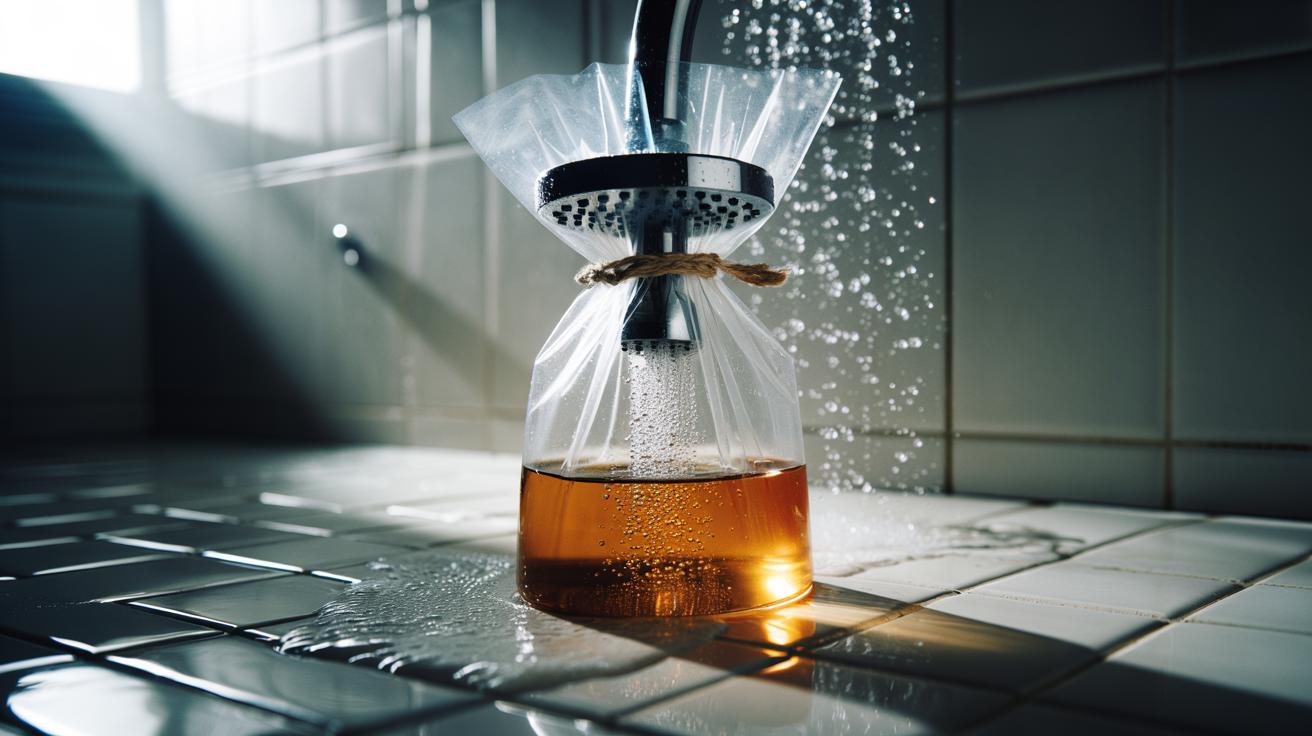
Begin by switching off the shower and removing any water restrictor if accessible. Heat plain white vinegar to roughly 45–55°C—hot bath temperature, not scalding. If it’s too hot to hold comfortably, it’s too hot for seals. For handheld heads, detach the hose and submerge the face in a bowl of warm vinegar for 15–30 minutes. For fixed heads, fill a sturdy freezer bag with warm vinegar, lift it over the head so the nozzles are immersed, and secure with a rubber band. Agitate gently every few minutes to dislodge loosened granules and refresh contact along blocked jets.
After soaking, run warm water for 60 seconds to flush dissolved minerals. Massage rubber nozzles with your thumb or a soft toothbrush, sweeping scale outwards. If buildup is heavy, repeat once more with fresh warm vinegar. Avoid mixing with cleaners; vinegar plus bleach or acid plus alkali is unsafe and counterproductive. Finish by rinsing the faceplate, then polish with a microfiber cloth. A swift weekly 2–3 minute warm-vinegar spritz can maintain clarity and preserve a strong, even spray pattern.
Safety, Materials, and What Not to Do
Modern showerheads are a sandwich of plated metals, plastics, and EPDM or silicone nozzles. While acetic acid is mild, heat magnifies its action on adhesives and gaskets. Never exceed hand-safe warmth and never boil vinegar. Keep soak times conservative on delicate finishes: PVD-coated or brushed nickel often prefer shorter baths and quick rinses. Avoid steel brushes or pins that gouge nozzle holes; mechanical damage invites new scale. If your enclosure or tray is natural stone, don’t let vinegar run onto it—acids etch marble and limestone. Ventilate well to diffuse vapour. If you have a brass or antique head, test on a hidden edge first.
| Finish/Material | Water Hardness | Vinegar Temp | Soak Time | Note |
|---|---|---|---|---|
| Chrome-plated plastic | Moderate | 45–50°C | 15–25 min | Gentle brush only |
| Brushed/PVD nickel | Hard | 45°C | 10–20 min | Rinse promptly |
| Solid brass | Very hard | 50–55°C | 20–30 min | Spot test first |
| Silicone nozzles | Any | Up to 50°C | 15–25 min | Massage to clear grit |
Two absolute don’ts: don’t mix vinegar with bleach or proprietary descalers, and don’t leave metal threads immersed for hours; cap threads or keep them above the liquid line. Finish by applying a light rinse of clean water, then run the shower hot for a minute to drive out remnants before anyone bathes. This gentle protocol safeguards coatings and seals while restoring the crisp spray you paid for.
If Scale Persists: Smarter Alternatives and Prevention
If the head still spits unevenly, step up to citric acid (5–10% solution warmed to 40–50°C), which chelates minerals efficiently but is kinder to some finishes. Commercial descalers designed for kettles and coffee machines can work if the label allows use on chrome and plastics. Avoid fizzing baking soda with vinegar; the neutralisation wastes cleaning power, producing carbon dioxide rather than sustained acidity. Consider disassembling the faceplate if the manufacturer provides instructions and a spare O-ring—an internal rinse can evict trapped grit. For brittle, decades-old scale, a final pass with a plastic pick, guided by magnified light, can free the last blocked jets without scoring.
Prevention is cheaper than a new showerhead. Wipe the face after steamy showers to remove droplets that dry into limescale. Install an inline filter or whole-house softener in very hard-water postcodes. Once a month, perform a five-minute warm-vinegar flush to stay ahead of buildup. If pressure still drops, check the hose liner and isolating valve for partial obstructions. Small, regular maintenance beats heroic descales, saving water, energy, and the lustre of your hardware.
Heat turns humble vinegar into a nimble cleaner that lifts mineral crusts, revives flow, and protects finishes when applied with care. By understanding the science, matching temperature to materials, and resisting harsh abrasion, you get professional results without specialist kit. A few warm soaks each season keep jets true and mornings swift. With your shower now on song, what other hard-water trouble spots at home could a targeted, heat-assisted clean quietly transform next?
Did you like it?4.6/5 (26)