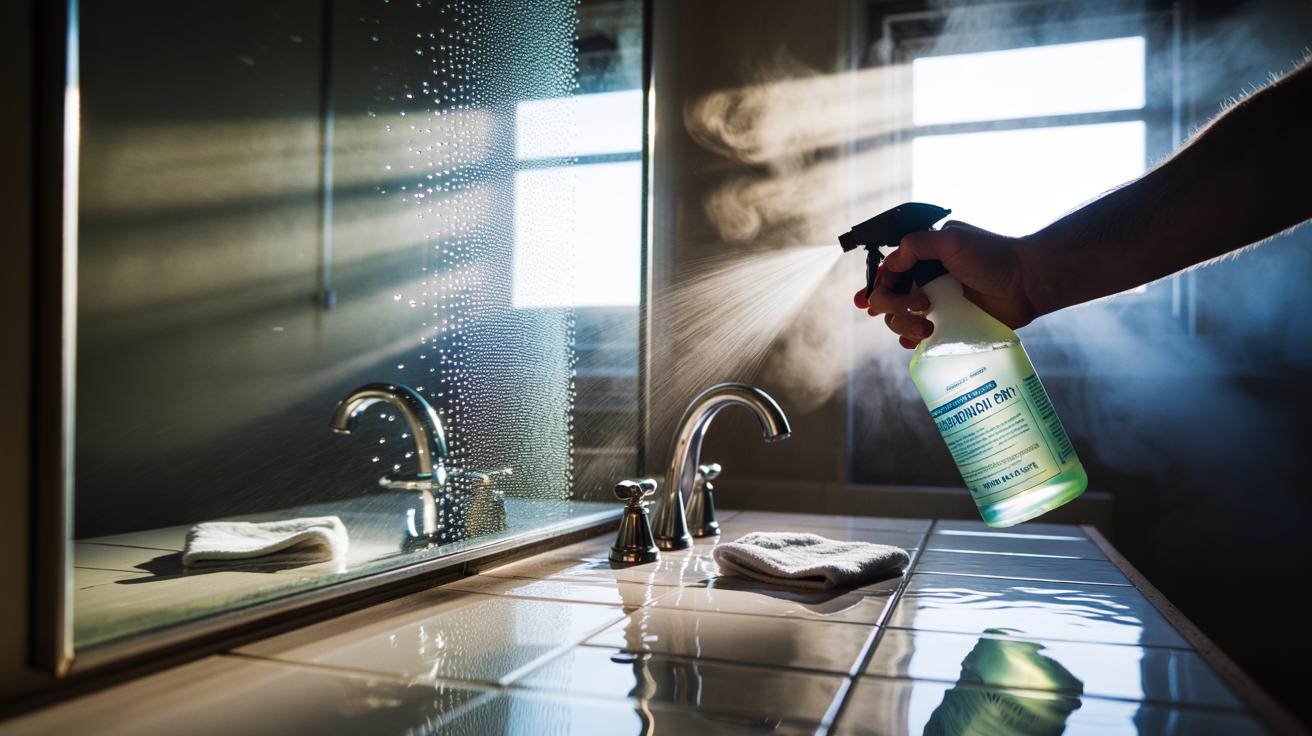
In a nutshell
- 🧪 The science: Acetic acid in white vinegar lowers surface tension, turning beading into a clear hydrophilic film while lifting soap scum and mineral residues that encourage fog.
- 🧴 The recipe: Mix 1 part white vinegar + 1 part deionised water; optional 0.5 part isopropyl alcohol and 1 drop washing‑up liquid per 250 ml for extra surfactant.
- 🪞 Application: Clean once, then lightly mist 2–3 sprays, spread and buff with a microfibre cloth until dry; let it cure 10–15 minutes—thin coverage is key.
- ⏱️ Longevity & upkeep: Expect two to four weeks per coat; reapply when water beads; run the extractor fan, crack the door, and in hard‑water areas use deionised water for clearer results.
- ⚠️ Safety & smell: Safe on glass; avoid natural stone and exposed mirror edges; Never mix vinegar with bleach; scent dissipates quickly (a drop of essential oil is optional).
A steamed‑up bathroom may feel cosy, but a fogged mirror slows mornings to a crawl. The simplest fix sits in the pantry: a light mist of white vinegar that leaves glass bright and clear long after the shower runs. Applied correctly, a quick spray can keep mirrors fog‑free for weeks, cutting the need for frantic wiping that smears toothpaste and lint across the pane. Below, we explain the science, the precise recipe, and the small tweaks that make this low‑cost trick reliable in British bathrooms—whether you favour power showers or long, restorative baths.
Why Vinegar Stops Fog on Glass
Fog forms when warm moisture condenses into countless micro‑droplets on a cool surface, scattering light and turning your reflection into haze. Vinegar—more precisely, its acetic acid—acts a bit like a mild surfactant. It lowers surface tension on the glass so that water no longer beads. Instead, the moisture spreads into a thin, even film that transmits light rather than diffusing it. The result looks clear to the eye, even in a steamy room, because you’ve altered how water behaves on the mirror.
There is a second benefit. The mild acidity removes invisible films of soap scum and mineral residue that encourage beading. Once that contamination is lifted, the glass accepts a more uniform, hydrophilic layer. The clearer and cleaner the pane, the longer the anti‑fog action persists. For most households, that means noticeably fewer misty mornings and less temptation to wipe with a towel, which only scratches and redistributes grime.
The Simple Recipe and How to Apply It
You need just a spray bottle, white distilled vinegar, and clean water. Deionised water is ideal in hard‑water areas and helps prevent streaks. A drop of washing‑up liquid can extend the anti‑fog effect by reinforcing the surface tension shift, while a splash of isopropyl alcohol speeds drying. Keep the blend gentle; the aim is a microscopic coating, not a pungent dousing.
| Ingredient | Ratio | Role |
|---|---|---|
| White vinegar | 1 part | Provides acetic acid to reduce surface tension and cut residue |
| Deionised water | 1 part | Dilutes acidity; minimises spotting in hard‑water areas |
| Isopropyl alcohol (optional) | 0.5 part | Faster drying; helps degrease |
| Washing‑up liquid (optional) | 1 drop per 250 ml | Extra surfactant for stubborn beading |
Method: Clean the mirror once with a damp microfibre and a tiny amount of washing‑up liquid to strip waxy films, then wipe dry. Lightly mist the vinegar spray—two or three pulls for a standard mirror—and spread with a clean microfibre cloth, buffing until the glass looks dry and streak‑free. Thin coverage is key; if you can see wetness, you’ve used too much. Let the surface “cure” for 10–15 minutes before running hot water. Top up the bottle monthly and label it clearly.
How Long It Lasts and When to Reapply
Expect an initial application to last from two to four weeks, depending on shower frequency, ventilation, and water hardness. In a busy household with daily hot showers, the film degrades more quickly as droplets and cleaning wipe it away. You will know it’s time to refresh when water starts forming distinct beads rather than a uniform sheet. A 10‑second mist and buff restores performance far faster than a deep clean, which is why this hack works as a low‑effort routine.
For best longevity, run the extractor fan during and after showers, and crack the door open to release steam. Avoid vigorous glass cleaners between treatments, which strip the hydrophilic layer. If you do a full clean for fingerprints, simply finish with a quick pass of the vinegar spray. Households in very hard‑water regions may benefit from using deionised water in the mix and giving the mirror a brief rinse and buff every fortnight.
Safety, Smell, and Surface Compatibility
On glass, vinegar is safe and effective. Keep it off natural stone—marble, limestone, travertine—and cement‑based grout, where acidity can etch or weaken the surface. If your mirror has a damaged backing or exposed edges, avoid soaking and stick to a light mist on the cloth. Never mix vinegar with bleach or products containing chlorine; that combination can release hazardous fumes. The scent is sharp for a minute or two but fades quickly as the alcohol and water evaporate.
To soften the smell, add one or two drops of a neutral essential oil to the bottle, but don’t overdo it or you’ll invite streaks. Store the solution tightly capped, away from direct sunlight; the active balance remains stable for several months. On chrome and stainless fittings adjacent to the mirror, wipe away overspray to prevent dulling. When in doubt, test on a corner first. With a steady hand and a clean microfibre, the finish should look crystal clear.
Small domestic tweaks often deliver the greatest comfort, and this is one of them: a pantry‑price vinegar spray that keeps the morning mirror readable, trims cleaning time, and cuts down on paper towels. After a couple of cycles, you will find the rhythm that suits your household—light layers, a quick buff, and a fortnightly refresh. Once water stops beading and starts sheeting, clarity returns like magic. Will you try the simple mix as is, or tweak the recipe to suit your bathroom’s steam, water, and routine?
Did you like it?4.5/5 (25)