In a nutshell
- 🚿 A vinegar rinse restores weak shower pressure by dissolving limescale in nozzle holes, delivering a fuller spray without damaging finishes.
- 🧪 5% acetic acid reacts with calcium carbonate into soluble salts; warmth and time boost the reaction, and it can disrupt biofilms that trap grit.
- 🛠️ Practical steps: soak 30–60 minutes, flex rubber nozzles, brush gently, backflush, and inspect the washer and flow restrictor; never mix with bleach.
- 🧴 Choose the right acid: standard vinegar for routine scale, citric acid for gentle descaling, or a commercial descaler for heavy buildup; protect plated brass and stone.
- 📉 If flow stays low, check hose kinks, filters, and mixer valves, consider system factors (gravity vs combi), and prevent recurrence with a routine rinse and a softener where needed.
Low shower pressure often begins with a silent culprit: limescale clogging the pinhead holes that shape a satisfying spray. A simple vinegar rinse can reverse that slump in minutes because its mild acidity dissolves mineral crusts where water meets metal or plastic. For households in hard‑water regions of the UK, this is a cheap, safe habit that restores performance without dismantling plumbing. It is not magic, but chemistry in your favour. Used thoughtfully, a vinegar soak clears blocked nozzles, freshens the head, and revives pressure without scratching chrome or harming seals. Here’s how the acid acts, how to apply it, and when to escalate beyond a kitchen remedy.
The Chemistry: How Vinegar Bites Through Limescale
What we call limescale is mainly calcium carbonate left behind as hard water evaporates on the spray plate and in the nozzle channels. Household white vinegar contains about 5% acetic acid, which reacts with that carbonate to form soluble calcium acetate, water, and fizzing carbon dioxide. Those tiny bubbles help break adhesion, loosening debris so it can be rinsed away. The result is freer pathways and a fuller spray pattern through each orifice. Because it dissolves the deposit rather than abrading it, vinegar is gentle on most plastics and stainless steel.
Acetic acid is also disruptive to some biofilms—microbial slime that can trap grit and narrow channels. On modern rubberised spray faces, a wipe after soaking dislodges both the softened scale and the organic film. That said, vinegar has limits: rust and manganese staining may respond slowly, and heavy iron deposits often need a targeted descaler. If poor flow stems from a failing mixer valve or weak mains supply, no amount of vinegar will restore true pressure.
In practice, the chemistry works best with time and contact. Warmer solutions (not boiling) increase reaction rate, and gentle agitation—flexing rubber nozzles or brushing—exposes fresh surface. The goal is to clear the fine channels behind each jet, not just the visible face. Patience for 30–60 minutes usually beats brute force and avoids scratching protective finishes.
Step-by-Step Rinse for a Clogged Showerhead
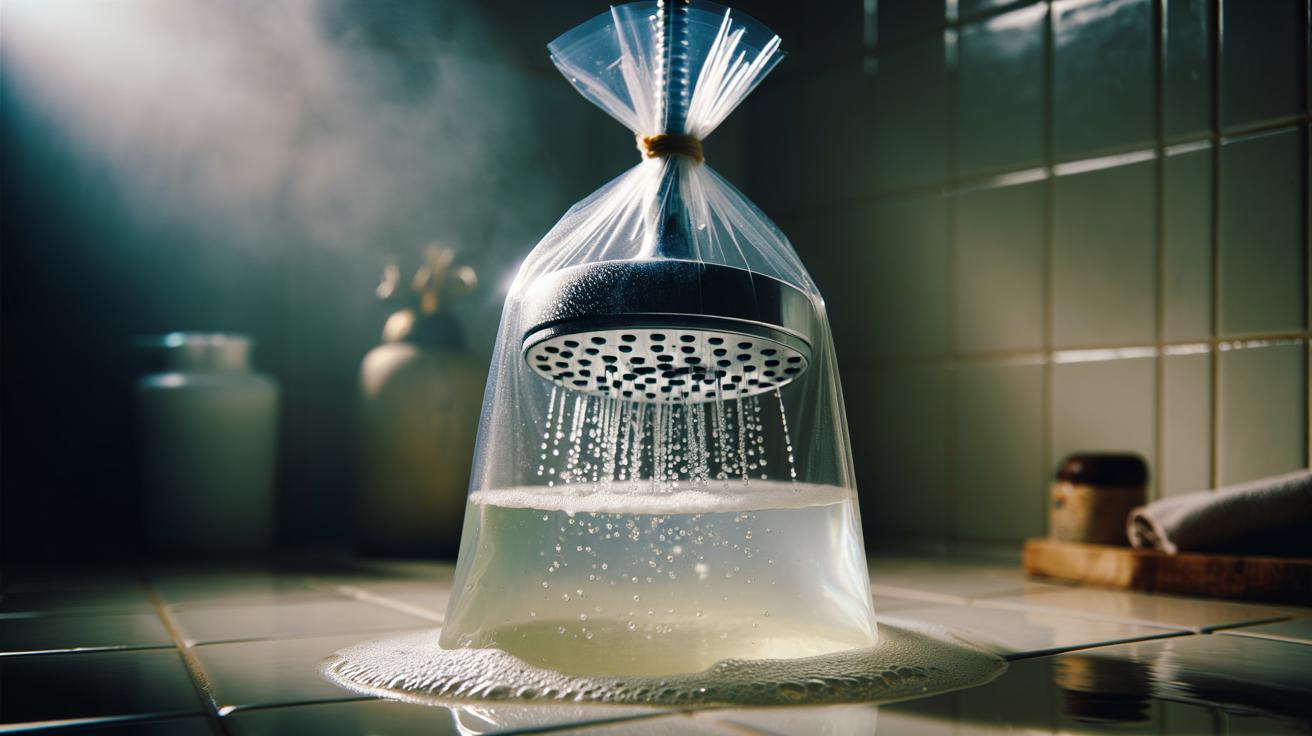
Start with the simplest approach. If the head unscrews, wrap the nut with a cloth to protect chrome and remove it. Submerge the assembly in a bowl of white vinegar (5% acetic) or a 1:1 mix of vinegar and warm water if you’re cautious about plated brass. For fixed heads, fill a sturdy bag with vinegar, lift it over the spray plate, and tie it so the nozzles are immersed. Always test a discreet area first and keep vinegar off natural stone tiles and porous grout.
Allow a soak for 30–60 minutes (stubborn scale may need up to two hours). During the soak, flex any rubber nozzles with your fingers to crack the crust. After soaking, scrub the spray face with a soft toothbrush, then flush thoroughly under running water. If the head was removed, backflush from the hose side to drive loosened grit out of the outlet holes. Never mix vinegar with bleach or chlorine-based products—dangerous gases can form.
Reassemble with a fresh washer if the old one looks flattened and hand-tighten. Open the mixer to purge air and check the spray pattern. If some jets still misbehave, use a wooden cocktail stick to tease out remaining grit—avoid metal pins that can enlarge holes. Finally, examine the flow restrictor and inline filters (often tiny gauze screens) for sediment. A quick rinse here often restores the last few missing jets and stabilises pressure.
Choosing the Right Acid, Time, and Materials
Most households will be fine with standard white vinegar, but choices matter if you have delicate finishes or extreme scale. Cleaning vinegar (6–10% acetic) works faster but needs more care; citric acid is odourless and kinder to chrome; proprietary descalers use stronger acids for severe buildup. Gloves and ventilation are sensible, and nickel or gold-plated brass should not be left soaking for long periods. Use the guide below to match the acid to the job and surface.
| Product | Typical Strength | Contact Time | Notes/Compatibility |
|---|---|---|---|
| White vinegar (acetic) | ~5% | 30–60 mins | Safe on most plastics/stainless; limit on plated brass to 30–45 mins. |
| Cleaning vinegar (acetic) | 6–10% | 15–45 mins | Faster; spot-test on finishes; rinse promptly. |
| Citric acid solution | 5–10% | 30–90 mins | Low odour; gentle on chrome; good for routine maintenance. |
| Commercial descaler | Varies | 10–30 mins | Effective on heavy scale; follow manufacturer guidance strictly. |
Keep acids off marble, limestone, and cement-based grout; wipe splashes immediately. Rinse thoroughly, then run the shower on hot for a minute to flush residues. A light coat of washing-up liquid on a cloth afterwards helps bead water and slows future deposits.
When Vinegar Won’t Fix Low Pressure
If the shower still wheezes after descaling, widen the search. A kinked hose, a collapsing inner liner, or a clogged inline filter can throttle flow. Thermostatic mixer valves collect grit on their mesh screens; isolating the water and cleaning those often makes a dramatic difference. If multiple taps are weak across the home, you likely have a supply or boiler issue rather than a showerhead problem.
On gravity-fed systems, the head height relative to the tank matters; a booster pump may be the real solution. For combi boilers, low flow can trigger temperature instability, so clearing restrictions is doubly important. Sediment in cartridges or a partially closed isolating valve will mimic scale, as will a blocked aerator on handsets. Diagnose by swapping in a known-good head—if performance is unchanged, the fault lies upstream.
Resistant scale inside fittings may need a sulphamic or formic acid descaler or professional service. Consider long-term prevention: a whole-house softener, a point-of-use filter, or simply a monthly vinegar wipe to stop deposits hardening. Claims for “magnetic conditioners” are debated; look for measurable hardness reduction instead. The goal is consistency—clear pathways, stable temperature, and a spray that wakes you up, not wears you down.
A vinegar rinse is not a miracle, but it is smart maintenance: quick to do, gentle on materials, and backed by straightforward chemistry. By dissolving calcium carbonate where it matters—the fine channels and nozzles—you restore the spray pattern and perceived pressure without spending a pound on new hardware. Keep a bottle by the cleaning kit, schedule a soak every month or two, and your shower will repay you with reliable performance. Pair regular descaling with an occasional filter check and you’ll prevent most flow complaints before they start. What’s your plan for tackling hard water where you live, and which part of your bathroom would benefit most from a science-led clean?
Did you like it?4.4/5 (27)