In a nutshell
- 🧪 White vinegar softens by using ~5% acetic acid to dissolve mineral and detergent residues, creating real softness without coating fibres—keeping towels absorbent and tech fabrics effective.
- 💷 Big on savings and sustainability: costs only a few pence per wash, avoids cationic surfactants and heavy fragrances, and helps keep the washing machine cleaner and septic-friendly.
- 📊 Cleaner finish vs fabric softener: less residue, reduced static, brighter colours, and neutral scent after drying—though it won’t deliver a strong, lingering perfume.
- 🧺 Best uses and cautions: shines in hard water, on towels, bedding, baby clothes, and gym kit; do not mix with bleach, check appliance guidance, and spot test delicate or specially finished fabrics.
- 🧴 How to use: add 100–150 ml to the softener drawer (up to 200 ml in very hard water), 1 tbsp per litre in hand rinses, run occasional maintenance cycles, and avoid mixing with bicarbonate at the same stage.
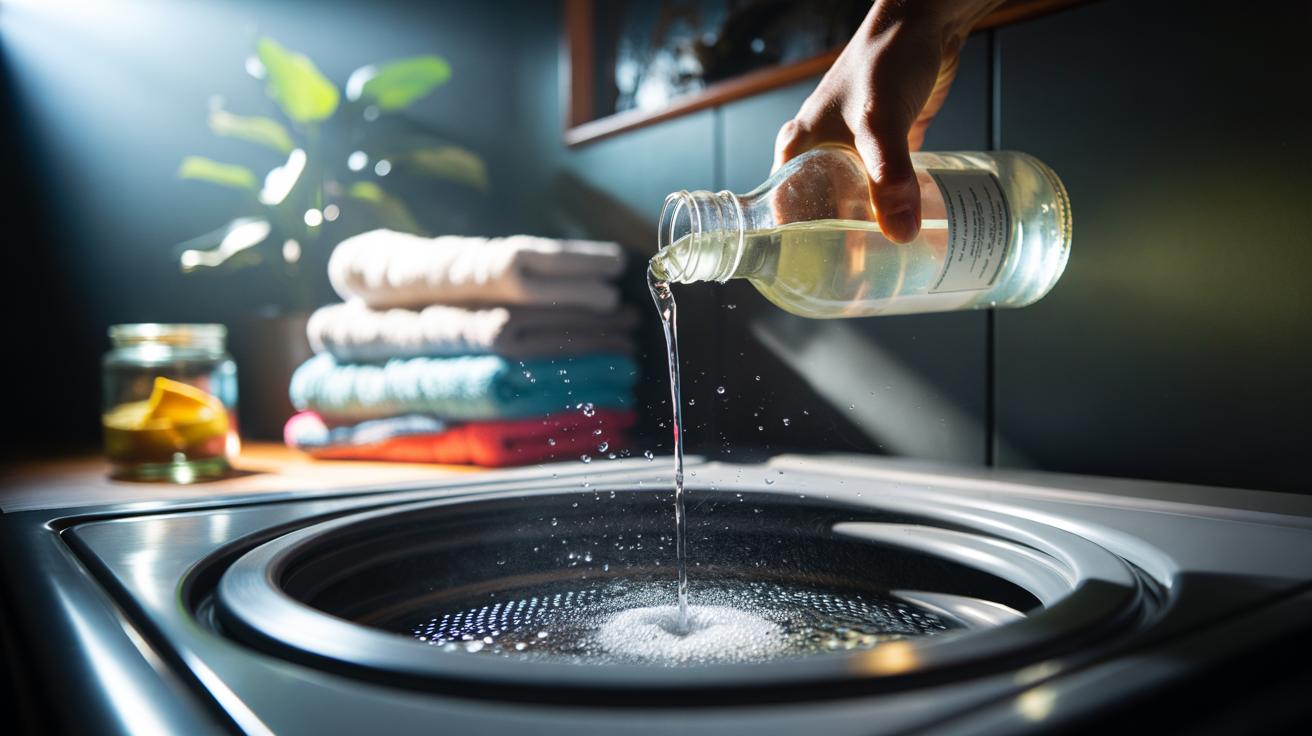
From student flats to family homes, the quiet hero of many British laundry rooms is a bottle of white vinegar. It sounds counterintuitive, yet this pantry staple can replace commercial fabric softener with remarkable ease. A small dose in the rinse drawer leaves clothes supple, reduces static, and helps colours stay bright. The secret is not perfume but chemistry: vinegar’s mild acetic acid neutralises alkaline residues and tackles hard-water minerals that roughen fibres. It softens without coating fabrics, so towels stay absorbent and technical kit keeps performing. For households looking to save money, trim plastic waste, and keep the washing machine fresher, vinegar is a straightforward, low-cost switch.
How White Vinegar Softens Fibres
The softness we associate with freshly laundered garments often disappears when detergent residue and hard-water deposits cling to fibres. White vinegar contains around 5% acetic acid, which gently dissolves mineral build-up and brings the rinse water back towards a neutral pH. That shift helps loosen soap scum so it washes away cleanly, leaving cotton loops and synthetic filaments free to move. The result is real softness created by cleaner fibres, not a perfumed coating. Because there is no layer of cationic surfactant, materials that rely on their surface structure—like microfibre and wicking sportswear—retain their performance.
Vinegar’s action also assists with odours. By neutralising alkaline residues that can trap smells, it improves freshness without heavy fragrance. Static often falls too, because fewer residues mean fewer charged hotspots that make garments cling. Crucially, this approach is gentle on colours: fewer deposits mean less greying and less stiffening over time. In short, white vinegar delivers tactile softness and a cleaner finish with minimal fuss.
Cost and Environmental Advantages
In UK supermarkets, distilled white vinegar typically costs about 40–80p per litre. At 100–150 ml per load, you’re paying just a few pence each wash—often far less than branded fabric softeners. Beyond savings, the environmental case is strong. Vinegar’s simple chemistry breaks down rapidly, and it avoids the cationic surfactants and encapsulated fragrances that can linger in waterways and on skin. Less residue means cleaner drains and a washing machine that stays freer of film and odour. For households on septic systems, plain vinegar is generally regarded as a friendly choice when used in normal laundry quantities.
| Aspect | White Vinegar | Fabric Softener |
|---|---|---|
| Typical cost per wash | Low (pence) | Low–medium |
| How it softens | Dissolves residues; balances pH | Coats fibres with quats |
| Residue on fibres | Minimal | Often present |
| Scent | None after drying | Perfumed |
| Static control | Good | Very good |
| Impact on machine | Helps reduce film | Can build up |
| Septic friendly | Yes (normal use) | Varies by formula |
There are trade-offs. If you love a strong, lingering fragrance, vinegar won’t deliver that salon-clean perfume. Yet for many households, the combination of cost control, lower residue, and simpler chemistry is compelling. Softness without buildup is a win for both textiles and the machine.
When Vinegar Works Best—and When It Doesn’t
White vinegar shines in areas with hard water, where mineral deposits can leave towels crunchy and dark knits dusty. It’s particularly helpful for towels, bed linen, baby clothes, gym kit, and microfibre cloths—items that benefit from clean fibres rather than a waxy finish. The rinse compartment is the right place: vinegar activates when detergent has done its job, lifting leftover residues without interfering with wash chemistry. You’ll often notice brighter whites and fewer musty notes in drying cupboards, simply because less residue means less odour retention.
There are limits. Never mix vinegar with chlorine bleach; the reaction releases hazardous chlorine gas. If your machine’s warranty discourages acidic additives, keep doses modest and check guidance. Don’t rely on vinegar to fix dye bleeding or to soften heavily starched new textiles in one go—pre-soaking and repeated washes help more. For delicate materials (silk, acetate) or garments with special finishes, test on a small section first. As with any laundry tweak, observe how your fabrics respond and adjust.
How to Use White Vinegar as Fabric Softener
For everyday loads, pour 100–150 ml of distilled white vinegar into the fabric softener drawer. In very hard water areas, up to 200 ml can help; in soft water, 75–100 ml is often plenty. Use standard 5% acidity vinegar. If you crave a hint of scent, infuse vinegar with citrus peel for a week, then strain—avoid adding essential oils directly to the drawer as they can mark fabrics and build up inside the dispenser. Most households will find the vinegar aroma vanishes completely as clothes dry, leaving a neutral, fresh result.
For handwashing, add roughly one tablespoon per litre to the final rinse and soak for five minutes. To keep the machine clean, run a maintenance cycle monthly: empty drum, hot wash, 250 ml vinegar in the detergent drawer. Don’t combine vinegar with bicarbonate of soda in the same stage; the fizz neutralises both and reduces cleaning power. Store vinegar tightly closed to avoid evaporation and keep dosing consistent across loads.
In a cost-of-living crunch, it’s hard to ignore a swap that trims bills, protects textiles, and pares back chemical load. With white vinegar in the rinse, laundry emerges supple, colours stay truer, and the machine thanks you with fewer odours and deposits. You may still keep a favourite softener for scented sheets or partywear, but for daily washing, vinegar offers softness without compromise. If you tried it for a fortnight, what subtle changes—on towels, tees, and the drum’s smell—would persuade you to make the switch permanent?
Did you like it?4.4/5 (26)