In a nutshell
- 🧠 The brain’s reward system shifts dopamine from the payoff to the cue, turning anticipation into motivation and using prediction error to tighten habits.
- ⚙️ Repetition moves control to the basal ganglia and dorsal striatum, cutting cognitive load while the prefrontal cortex sets goals—making consistency feel effortless.
- 📅 Certainty stabilises dopamine: circadian anchors, small immediate wins, and the goal‑gradient effect make daily repetition more satisfying than sporadic intensity.
- 🗺️ Key players—VTA, nucleus accumbens, dorsal striatum, prefrontal cortex, and hippocampus—coordinate motivation, execution, valuation, and context to turn routines into reflexes.
- 🚀 Practical momentum: use obvious cues, a tiny ignition action, intrinsic rewards, visible markers, and resilient rules like “never miss twice” and a minimum viable routine.
Routines don’t only reflect discipline; they are built on chemistry. As behaviours repeat, the brain’s reward circuitry links predictability to pleasure, converting actions into automatic loops. The messenger is dopamine, which gradually shifts from responding to the payoff to anticipating the cue that precedes it. That transfer makes the start of a routine feel urgent, the streak feel precious, and a missed day oddly aversive. Meanwhile, the basal ganglia compress effort by automating sequences, freeing attention for other tasks. Consistency, in short, becomes intrinsically satisfying. Understanding this process helps us design routines that are sustainable, humane, and productive—without toppling into compulsion.
Dopamine and the Habit Loop: How Rewards Become Routines
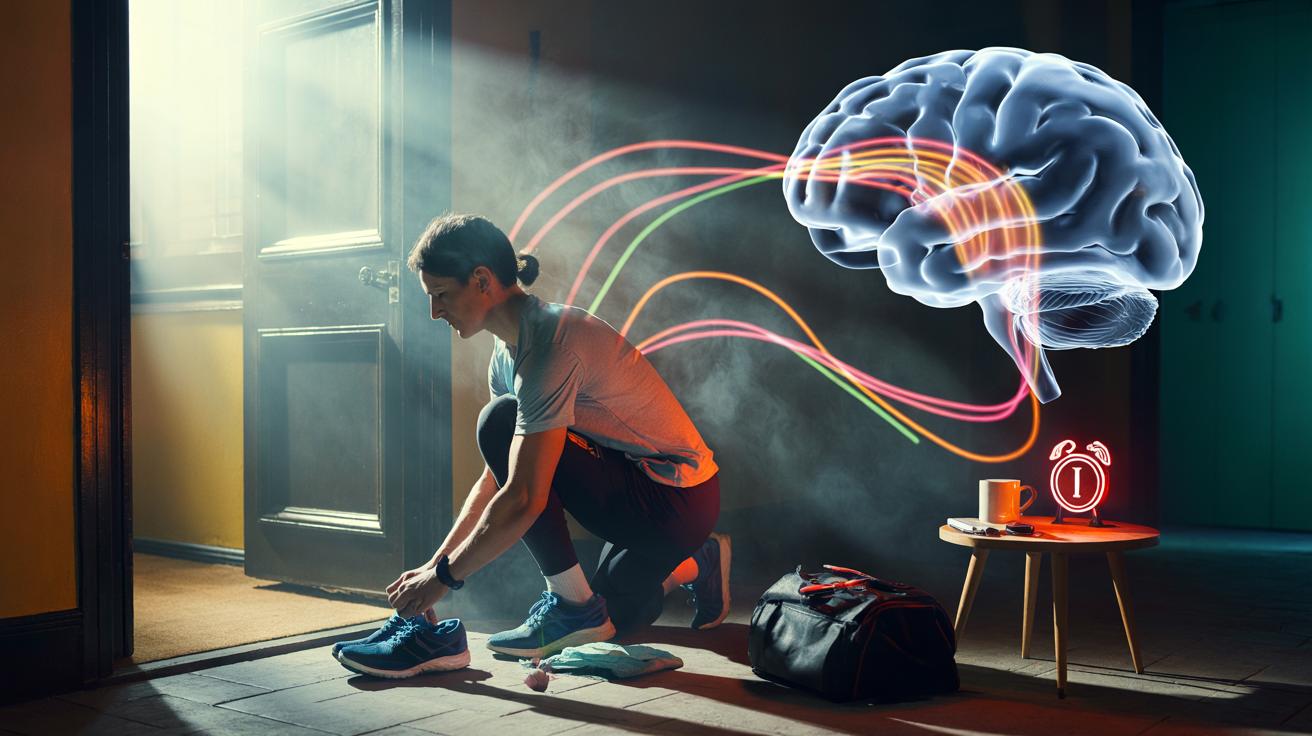
The classic cue–routine–reward model moves from psychology into neurobiology through dopamine. Cells in the ventral tegmental area (VTA) signal novelty and value to the nucleus accumbens, creating a “wanting” that launches action. Initially, dopamine spikes at the reward. With repetition and reliable outcomes, the spike relocates to the cue. Anticipation, not completion, becomes compelling. This is prediction learning: when outcomes match expectations, the brain stores the pattern; when they fall short, a prediction error urges adjustment. The loop tightens around reliable cues, which explains why the first step—a gym bag by the door—feels magnetic.
As repetition hardens, control migrates from the ventral to the dorsal striatum, especially the putamen, where sequences run with less deliberation. The prefrontal cortex still sets goals, but effort drops because the route is cached. That shift transforms “should” into “do.” Once the brain can predict the next step, it accelerates toward it, creating the felt pull of momentum. This is the architecture of a routine: reliable cues, low friction, and a reward the brain can count on.
Why Consistency Feels Compelling, Not Boring
Consistency reduces uncertainty, and the brain prizes certainty because it stabilises dopamine. When timing and effort are predictable, the nervous system relaxes, and repetition becomes its own reward. Reliable cues also lock to our body clocks; morning or evening anchors build circadian coherence that lowers resistance. Progress markers—checklists, streaks, laps—trigger the goal‑gradient effect: as completion nears, motivation rises. Even small, immediate payoffs—stretching that eases tight muscles, a cup of tea after a draft—teach the brain that the routine is safe, useful, and worth repeating.
Less effort helps too. With practice, neural pathways strengthen and communication speeds up, cutting cognitive load. The basal ganglia conserve energy by automating micro-choices, and the anterior cingulate flags fewer conflicts because the next step is obvious. Crucially, consistency doesn’t require huge highs; it thrives on steady returns. A short walk every day often feels more satisfying than a long run once a fortnight because the prediction stays intact and the identity—“I am active”—is reinforced daily.
Brain Regions That Anchor Habits
Routines are not a single circuit but a coalition. Motivation begins in dopamine pathways; execution shifts to motor circuits; evaluation and inhibition live in the cortex. The table below sketches the key players and their roles in turning repetition into reflex.
| Region | Role in Routine Formation |
|---|---|
| Ventral Tegmental Area (VTA) | Dopamine source signalling reward prediction and novelty. |
| Nucleus Accumbens (Ventral Striatum) | Motivation and “wanting”; links cues to action initiation. |
| Dorsal Striatum (Putamen) | Automation of action sequences; habit execution with low effort. |
| Prefrontal Cortex (dlPFC/vmPFC) | Planning, rules, valuation; aligns habits with goals and values. |
| Hippocampus | Context and memory; binds routines to time and place. |
Neurons that fire together wire together: repeated pairing of cue and action strengthens synapses via plasticity and improves transmission through myelination. When stress rises, control can slip back to fast, habitual routes, which is useful for stable routines and risky for unhelpful ones. That’s why designing cues and rewards deliberately matters. The aim is not iron willpower but a brain that makes the helpful choice feel easy, expected, and oddly enjoyable.
Turning Science into Practical Momentum
Start with cues you cannot miss: lay out shoes, open the document, schedule a standing 11:00 slot. Add a tiny “ignition action”—five minutes of movement, a paragraph draft—to cross the friction threshold. Pair the routine with an immediate, intrinsic reward: relief, clarity, warmth, or competence. End each session with a visible marker—tick, tally, or sentence count—so your brain finishes on a win. Use “if–then” plans: “If it’s 7:30, I brew tea and open the brief.” Keep conditions consistent; the predictability is the point.
Protect against compulsion by designing for resilience, not perfection. Build a “minimum viable routine” for busy days to keep the cue–action link alive. Avoid fragile streaks by adopting the rule: “never miss twice.” Introduce light variety inside stability—new route, different playlist—to maintain interest without breaking the structure. Plan recovery rituals after disruptions so momentum returns quickly. In time, the identity becomes self‑fulfilling: I am the person who shows up, and the brain happily follows.
Consistency feels addictive because it shifts effort from deliberation to expectation, and the brain rewards fulfilled predictions. That synergy can serve learning, health, and creative work—as long as we choose routines that reflect our values rather than just our anxieties. The art is to make the first step obvious, the next step easy, and the finish emotionally satisfying. When the environment does the prompting, grit becomes optional. Which routine could you rewrite today so that your cues, rewards, and identity align—and what small change would make showing up feel inevitable?
Did you like it?4.5/5 (29)