In a nutshell
- 🧴 Fragrance chemistry: Dryer sheets release volatile aroma compounds via fixatives and microencapsulation, with lasting base notes that cling to fibres for week-long freshness.
- 🧳 Suitcase headspace: A low-airflow, enclosed microclimate creates a stable scent equilibrium where clothes absorb and slowly re-emit fragrance, sustaining a clean-laundry aura.
- 🧠 Smart packing: Position sheets near air pockets, use two for longer trips, roll garments, isolate dirty kit, and pair with silica gel to control humidity and prevent mustiness.
- 🧵 Fabric matters: Cotton absorbs evenly, polyester holds certain notes longer, and wool traps odours deeply—affecting how scent projects and persists.
- 🌱 What works (and what doesn’t): Dryer sheets give calibrated release; activated charcoal can mute desired scent; opt for hypoallergenic or plant-based sheets and avoid direct contact with silk or leather.
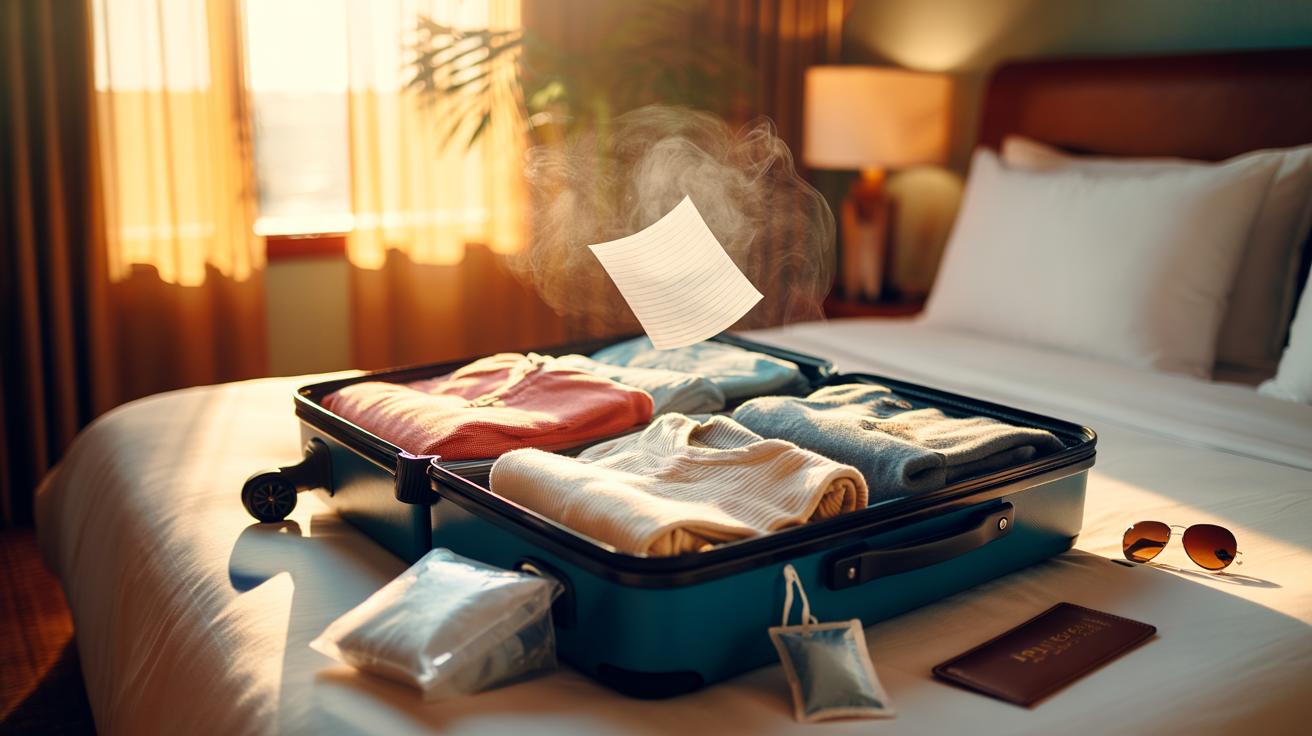
Holidaymakers swear by slipping a single dryer sheet into their suitcase to keep outfits crisp and pleasant. The trick works far beyond the flight: many travellers report a whisper of clean-laundry scent even after two or three weeks on the road. Why does that fragrance survive cramped compartments, temperature swings and hotel-hopping? The answer sits at the crossroads of fragrance chemistry, fabric physics and the unique microclimate inside luggage. Understanding how volatile molecules move, stick and release allows you to pack smarter, prevent mustiness and choose products that won’t overwhelm fellow passengers. Here’s how a humble sheet turns your case into a portable wardrobe that smells like wash day, long after you’ve left the laundry.
The Chemistry Behind That Fresh-Laundry Smell
Dryer sheets carry blends of volatile aroma compounds that evaporate slowly into the air, then settle on fibres. Many formulas use fixatives and plasticisers to moderate evaporation, creating a measured, long tail rather than a heady blast. Some even include microencapsulated fragrance: microscopic capsules that rupture or soften with friction and warmth, releasing perfume little by little. In a packed suitcase, the steady seep of these molecules sets up a gentle concentration gradient, moving from the dryer sheet towards your garments. Fabrics behave like a sponge for smell; cellulose in cotton and viscose shows a strong affinity for fragrance, while synthetics hold on differently through hydrophobic interactions.
Perfumers design blends with a pyramid of top, heart and base notes. Lighter citrusy tops vanish fast, but resinous and musky bases cling for days, acting as anchors. That’s why socks may empty out the lemon first while coats keep a soft musk for ages. The secret isn’t brute strength; it’s controlled volatility paired with surfaces that welcome scent. When the case opens, a portion dissipates, yet a reservoir remains in the fibres, ready to rebalance the air each time you close the zip.
How a Suitcase Turns Into a Scent Chamber
A suitcase is a low-airflow environment: limited ventilation, moderate humidity from packed clothes and occasional heat during transit. This microclimate creates a stable headspace—the small volume of air where perfume molecules circulate. With little fresh air to sweep aroma away, equilibrium forms between the dryer sheet, the air and your garments. Textiles act as both adsorbents and emitters, slowly trading molecules with the headspace. Think of the case as a miniature diffusion lab where scent seeks balance rather than blasting out. The result is persistent, uniform freshness rather than a fleeting spritz.
Material matters. Cotton accepts fragrance readily and releases it evenly. Polyester clings to certain notes, sometimes muting brightness but extending endurance. Wool traps odours deeply, good for holding freshness but harder to purge if a sour note creeps in. Heat accelerates diffusion; a sunny car boot intensifies aroma, while a cool cabin slows it. Moisture is the wild card: a slightly dry environment preserves clarity; dampness risks a musty undertone. Pairing a dryer sheet with moisture control (like silica gel) keeps the balance on your side.
Smart Packing Strategies to Extend Freshness
Placement counts. Slip one dryer sheet near the largest air pocket—often the lid compartment or the top of a packing cube—so vapour can circulate, not hide. For trips over ten days, use two sheets: one among heavier knits, one near underwear and tees. Roll garments to maximise exposed surface area and avoid compressing the sheet against delicate fabrics. Gentle diffusion beats direct contact for a clean, consistent scent. Refresh mid-trip by resealing one sheet in a zip bag during the day, then reopening at night to restore that fragrant headspace.
Shape the microclimate. Adding a few silica gel sachets counters humidity and discourages stale notes. Separate used gym kit in a sealed pouch to stop malodours hijacking the headspace. If you’re sensitive to perfume, choose unscented softener sheets paired with a tiny cotton pad dabbed with essential oil inside its own breathable envelope; this localises strength and reduces exposure. Keep sheets away from pure silk and leather to avoid residue, and never place them directly on dark synthetics that can develop a faint waxy sheen.
What Works, What Doesn’t, and Why
Not all hacks are equal. Scent booster beads can be intense and messy, especially if they break, while bar soaps imprint a singular note that clings stubbornly. Dryer sheets excel because they release a calibrated mix that travels well and resists souring. Activated charcoal absorbs odours superbly yet also steals some fragrance; use it only if mustiness is a risk. Balance neutralisation with controlled perfume release for the longest-lived freshness. For families or shared rooms, opt for lighter, laundry-like profiles over heavy florals to minimise fragrance fatigue.
Consider sustainability and skin. Look for plant-based sheets with readily biodegradable softeners, or cut a sheet in half to reduce load. Those with sensitive skin should avoid direct fabric contact and choose hypoallergenic lines. Security-wise, dryer sheets are travel-safe in cabin and hold luggage. When you unpack, hang items briefly; a small waft disperses any initial concentration while the fibre-held base notes remain. The aim is a gentle, laundered aura—fresh, not perfumed.
| Item | Role in Scent Longevity | Notes |
|---|---|---|
| Dryer sheet | Controlled fragrance release | Place near air pockets, not pressed on clothes |
| Silica gel | Humidity control | Keeps notes clear; use 2–4 small sachets |
| Packing cubes | Uniform diffusion | One sheet per two cubes on long trips |
| Activated charcoal | Odour removal | May reduce desired scent; deploy sparingly |
| Zip pouches | Isolation of dirty items | Prevents malodour from invading headspace |
A single sheet can turn a cramped case into a calm, laundered refuge, thanks to the slow dance between volatile molecules, welcoming fabrics and an enclosed headspace. Manage humidity, position the sheet for airflow and choose balanced fragrance profiles to tip the physics in your favour. Freshness that survives weeks isn’t luck; it’s design. As you plan your next escape, which small tweak—placement, humidity control or fabric choice—will you test to keep your clothes smelling like home from departure lounge to final sunset?
Did you like it?4.6/5 (29)