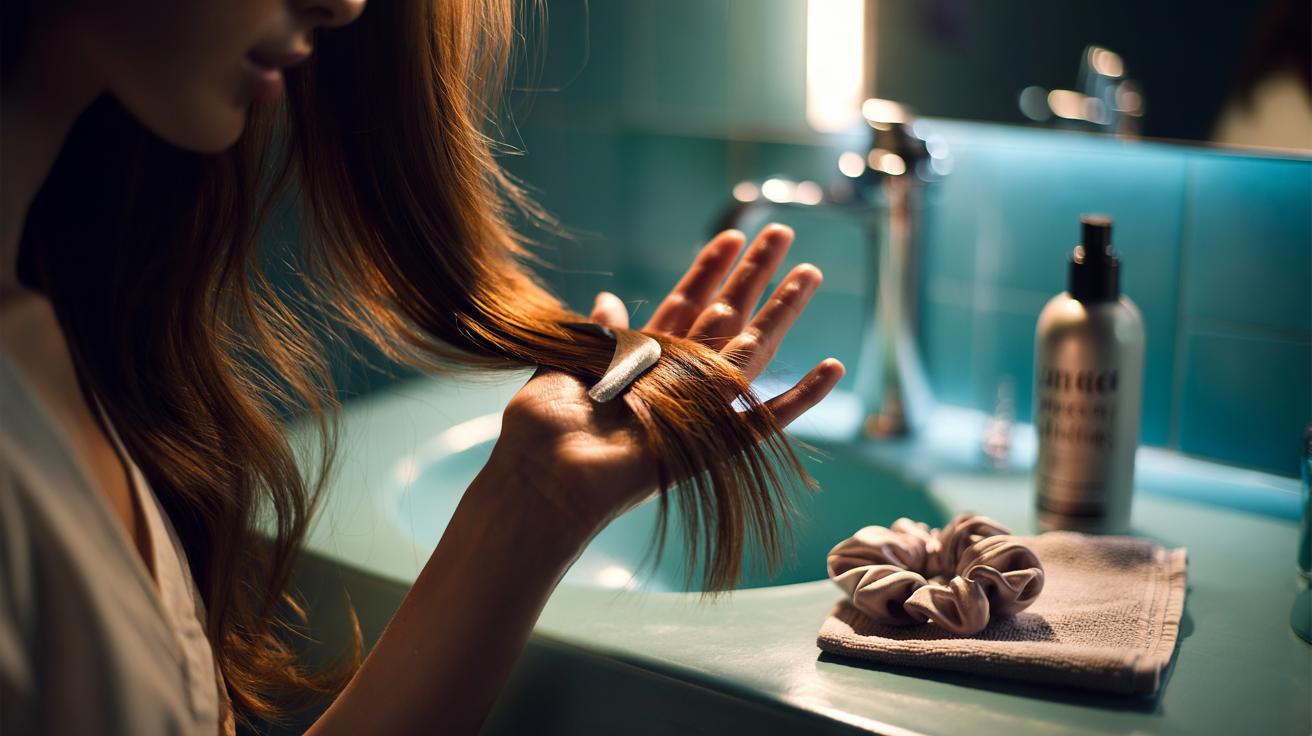
In a nutshell
- ✂️ You can’t permanently mend split ends; focus on sealing, smoothing and shielding frays to stop them travelling and improve appearance.
- 🧴 Seal, don’t strip: use sulfate‑free, mildly acidic shampoos and slip‑rich conditioners (amodimethicone, polyquats, fatty alcohols), plus weekly protein/ceramide masks and gentle detangling.
- 🛡️ Leave‑ins do the heavy lifting: bond builders, silicones and heat protectants “zip” frays flat; apply to damp ends first and reapply lightly—consistency beats quantity.
- 🧷 Style to prevent new splits: wide‑tooth combs, silk scrunchies, satin pillowcases, low‑and‑slow heat, strategic air‑drying and post‑swim rinsing reduce friction and thermal stress.
- 🥗 Inside‑out care matters: prioritise protein, check iron/vitamin D, add omega‑3s; shield from UV, tackle hard‑water build‑up with chelating washes, and manage stress for stronger new growth.
Split ends make hair look frayed, thin and dull. They snare on brushes. They travel upward if ignored. Yet many of us postpone a trim for months, whether for length goals or budget. So what can you do in the meantime? Hair experts say you can’t weld fibres back together, but you can disguise damage, slow progression and prevent new splits forming. Think of it as damage management. Smart cleansing, targeted treatments, and gentler styling make a visible difference within days. You’re not fixing forever; you’re sealing, smoothing and shielding. With the right routine, your ends can look neater, shinier and far less fragile between salon appointments.
Why Split Ends Happen and What ‘Fixing’ Really Means
Trichologists describe split ends as a breakdown of the hair’s outer cuticle that exposes the inner cortex. Repeated heat, rough towel‑drying, tight elastics, and UV all chip at that armour. Chemical services—bleach, permanent colour, relaxers—accelerate the process. Once the fibre is cleaved, the damage is structural. No topical can fuse a split back into a single, intact strand. That’s the hard truth.
But you can improve function and appearance. Hydrolysed proteins and peptides fill micro‑gaps, adding temporary strength. Silicones such as dimethicone and amodimethicone form flexible films that “glue” frays flat and reduce snagging. Ceramides help re‑lipidate the cuticle, enhancing slip and shine. These effects rinse out gradually, so consistency is key. Think seal and shield, not cure. Regular use means splits catch on fewer things, break less and appear smoother—often the difference between straw‑like ends and a believable, glossy finish.
Cleansing and Conditioning: Seal, Don’t Strip
Your wash routine can either worsen splits or calm them. Choose a gentle, sulfate‑free shampoo with a mildly acidic pH (around 4.5–5.5) to keep the cuticle lying flat. Massage the scalp, then let suds glide over lengths; don’t rough up the ends. Follow with a conditioner rich in amodimethicone, polyquaterniums, and fatty alcohols (cetyl, cetearyl). These provide slip and a light, sealing film. A cool rinse helps compact the cuticle. Every wash is a chance to either erode or protect.
Once or twice a week, add a nourishing mask featuring ceramides, hydrolysed keratin or wheat protein. Leave it on for at least 10 minutes, then detangle gently from the ends upward with a wide‑tooth comb. Blot with a microfibre towel—no twisting. If your hair is fine, apply conditioner mid‑length to ends only to avoid flat roots, then layer a light leave‑in for extra slip. The aim: reduce friction at every step so weakened tips don’t fray further. Less friction equals fewer new splits.
Leave‑In Treatments That ‘Zip’ Frays Temporarily
Leave‑ins do the heavy lifting between washes. Look for bond‑building actives (like bis‑aminopropyl diglycol dimaleate or maleate technology) to reinforce weakened bonds, plus silicones and quats for surface smoothing. Fine hair? Opt for cyclopentasiloxane‑based serums that evaporate to a weightless film. Coarse or curly hair benefits from richer blends with argan, coconut, or baobab oils to soften the cuticle. Heat‑activated primers can “melt” micro‑chips flat during blow‑drying while offering thermal protection. Apply to damp ends first, always.
Consistency beats quantity. A pea‑sized amount, daily on dry tips or after every wash, keeps the seal intact. Reapply before outdoor exposure to wind, sun or salt. Below is a quick guide to help you choose:
| Product Type | Key Actives | What It Does | Longevity |
|---|---|---|---|
| Bond Builder | Maleate/Dimalete, peptides | Reinforces internal bonds; reduces future breakage | Builds with use |
| Smoothing Serum | Dimethicone, amodimethicone | Seals frays; adds gloss and slip | Until next wash |
| Cream Leave‑In | Ceramides, fatty alcohols, oils | Softens, reduces friction on coarse hair | 1–2 days |
| Heat Protectant | Film formers, quats | Shields from thermal stress; smooths cuticle | Per styling session |
Styling Strategies That Prevent New Splits
Handle ends like silk. Start detangling from the last two inches, then move upward, using a wide‑tooth comb or flexible detangling brush. Swap tight elastics for silk scrunchies. Sleep on a satin or silk pillowcase. These small changes remove hundreds of daily micro‑snags. Fewer snags mean fewer splits. When heat styling, adopt a “low and slow” approach: the lowest effective temperature, minimal passes, and always a heat protectant.
Air‑dry strategically. Blot, apply a leave‑in, then clip hair at the crown for lift while lengths dry undisturbed. If you must blow‑dry, rough‑dry to 70% on cool, then finish with a nozzle and brush in one direction to keep cuticles aligned. Avoid metal brushes that overheat. Protect hair at the gym with a loose braid; post‑swim, rinse out chlorine promptly and re‑seal with serum. Protection is a routine, not a single product.
Nutrition and Lifestyle for Stronger Ends
Strands are built from protein, so adequate dietary protein supports resilience as hair grows out. Include eggs, fish, legumes or tofu daily. Low iron or vitamin D status can worsen shedding and fragility; speak to your GP if you suspect a deficiency. Omega‑3s help scalp health, indirectly supporting quality growth. Hydration matters too. Healthy new growth sets you up for fewer splits later.
Outside the kitchen, think environment. UV breaks down pigment and weakens the cuticle, so wear a hat or spritz a UV‑filtering mist in summer. Hard water? A weekly chelating wash can remove mineral build‑up that makes ends rough. Smoky, polluted air also oxidises hair; sealing serums help here. And stress? It shows on your hair months later—build restorative sleep and movement into your week. Sustainable habits today mean stronger ends tomorrow.
While you can’t permanently mend a split, expert strategies can mask, manage and markedly slow the damage until you’re ready for a dusting. Build a gentle wash routine, layer smart leave‑ins, and treat your ends like delicate fabric. Over a few weeks, hair looks shinier, behaves better and tangles less. That’s a win without scissors. The secret is consistency, not miracle fixes. What change will you make first—your shampoo, your towel, or the way you detangle before bed?
Did you like it?4.6/5 (23)