In a nutshell
- 🌾 The oatmeal bath scrub marries gentle exfoliation with hydration: beta-glucans draw water in, avenanthramides calm itch/redness, and oat lipids/starches add an emollient shield.
- 💧 Hydrate before you polish: warm water softens the stratum corneum, while swollen oat particles glide to lift flakes with minimal friction and zero sting.
- 🧪 Technique essentials: choose a fine grind, use slow circular strokes with light pressure for 60–90 seconds per area, limit to 2–3 baths weekly, and finish with a ceramide-rich moisturiser on damp skin.
- 🛁 DIY method: blitz oats into colloidal oatmeal, steep in a muslin bag, and optionally add glycerin, sunflower oil, or honey; soak 10–15 minutes, rinse lightly, and pat dry.
- ⚠️ Smart safety: go fragrance-free for sensitivity, patch-test if you have grain allergies, enjoy mild oat saponins for gentle cleansing, and watch for a slippery tub.
Across Britain, central heating and biting winds can turn skin papery by nightfall. One timeless remedy sits quietly in the larder: oats. When ground into a fine powder and swirled through warm water, they create a silk-soft slurry that polishes without scratching. This is the bath-time oatmeal scrub: a blend that buffers the skin, lifts dull flakes, and leaves a protective film that keeps water where you want it—locked in. The trick is simple: pair gentle exfoliation with smart hydration so the barrier stays calm, not compromised. Think of it as a spa treatment engineered by nature, then perfected in your tub.
Why Oatmeal Calms Parched Skin in the Bath
Oats carry a trio of benefits that reads like a skincare wish list. First, beta‑glucans, long-chain sugars, act as skilled humectants, drawing water into the upper layers of skin. Second, unique oat compounds called avenanthramides help quiet redness and itch, a boon for tight, winter‑stressed faces and limbs. Third, a mix of lipids and starches lays down an emollient, cushioning film. In water, finely ground, so‑called colloidal oatmeal blossoms into a cloud that softens rough patches while reducing friction between your fingertips and fragile skin. This is hydration by design, not chance.
Unlike harsh scrubs, oats polish because their edges are rounded and their particles swell. Mild oat saponins provide feather‑light cleansing, lifting debris without stripping. As bath water hydrates the stratum corneum, the oatmeal slurry helps loosen compacted flakes so they slide away with minimal coaxing. Gentle friction removes the old, while a breathable oat veil guards the new. The effect is twofold: smoother texture on stepping out, and a primed surface that holds on to your moisturiser with far greater efficiency.
The Science of Gentle Exfoliation Without Irritation
Healthy glow depends on respect for the stratum corneum, a wafer‑thin armour of corneocytes glued by lipids. When it dries, microscopic “shingles” lift and snag. The smartest move is to saturate first and buff second. Warm—not hot—water plasticises those cells, easing them from their bonds. In this softened state, mechanical exfoliation becomes a whisper, not a scrape. Oat particles, with their hydrated gel coating, glide across skin, minimising drag. Hydration makes exfoliation safer and more effective, in that order.
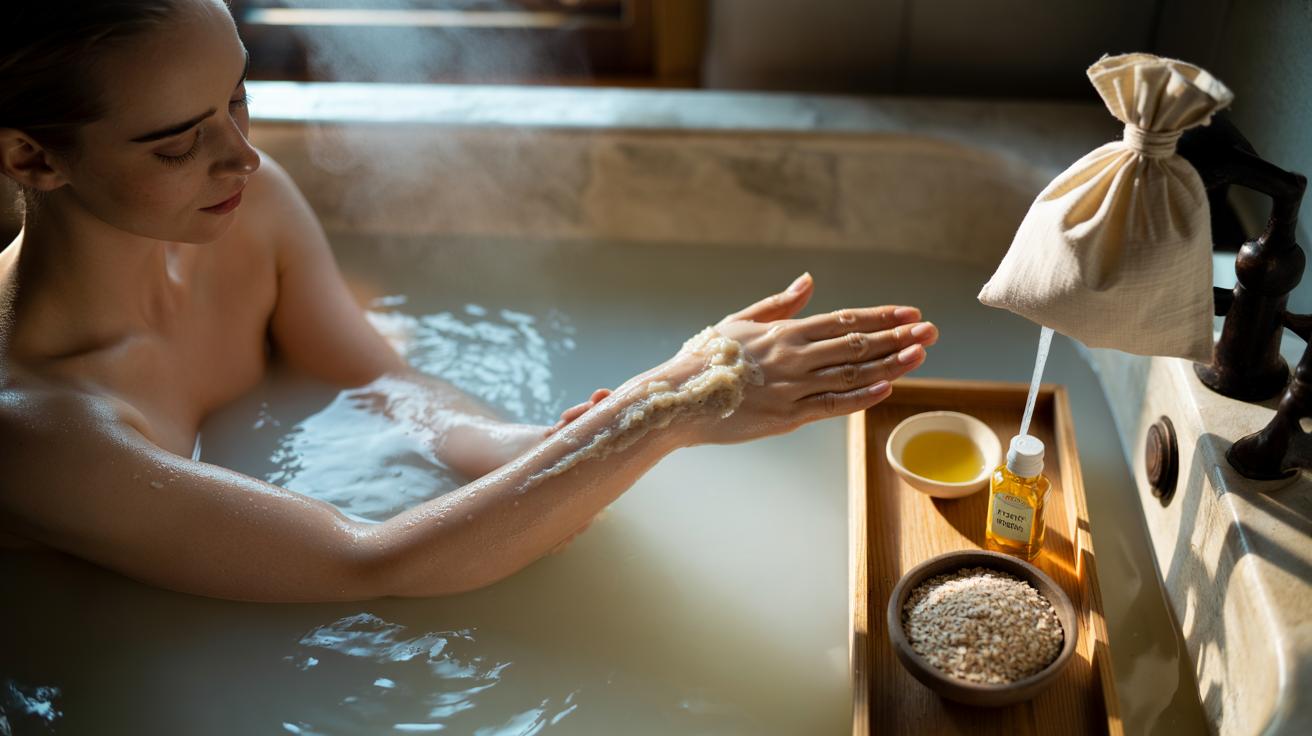
Technique matters. Work in slow, circular strokes using your palm, not nails, for 60–90 seconds per limb. Keep pressure low; let the slurry’s slip do the job. Choose a fine particle size (think flour, not grit) and skip nut shells or pumice. Fragrance‑free add‑ins are safest for sensitive types. Limit to two or three baths a week, then lock moisture in with a ceramide‑rich moisturiser while skin is still damp. Polish, don’t punish—skin remembers every pass you make.
How to Make and Use an Oatmeal Bath Scrub at Home
Blitz plain porridge oats in a blender until they resemble soft flour; this is colloidal oatmeal. A muslin bag or clean sock keeps the bath water tidy while you squeeze out the milky liquid. Optional helpers include a teaspoon of glycerin for extra humectancy, a splash of sunflower oil for emollience, and a drizzle of honey for glide. Stir the mix into warm water, then scoop a little of the slurry to massage over rough zones—knees, shins, elbows—before soaking back and letting the rest of the oat bath do its work.
| Component | Purpose | Suggested Amount |
|---|---|---|
| Finely Ground Oats | Humectant, soothing polish | 1 cup (about 90–100 g) |
| Glycerin (optional) | Extra water-binding | 1–2 tsp |
| Sunflower Oil (optional) | Emollient slip | 1–2 tsp |
| Honey (optional) | Viscosity, glide | 1 tsp |
| Muslin Bag | Easy cleanup | 1 |
Soak for 10–15 minutes, massaging gently for the first few. Rinse lightly, pat—never rub—then seal the gains within three minutes using a fragrance‑free moisturiser. Mind the tub; oats can make surfaces slick. If you have known oat or grain sensitivities, patch‑test on a small area first. Keep it simple, keep it soft, and your skin will repay you with quiet, pliant comfort.
The allure of an oatmeal scrub is its elegance: a kitchen staple that reads your skin’s mood and responds with care. It hydrates, calms, and refines in one unhurried ritual, leaving you with a satin finish that endures beyond the bath. When exfoliation serves the barrier, not the bin, radiance follows naturally. Whether you opt for pure oats or add a dash of glycerin and oil, the rule is the same—less force, more patience. What tweak will you try first to make your bath a sanctuary for thirsty skin?
Did you like it?4.4/5 (22)