In a nutshell
- 🧂 Why brown sugar hardens: dehydration of molasses-coated crystals causes clumping; airtight storage slows moisture loss and prevents dense lumps.
- 🍋 Lemon peel’s edge: trace moisture rehydrates surfaces while natural oils (limonene, citral) form a light hydrophobic film that reduces caking with only a subtle aroma.
- 🫙 Safe method: use a dry, unwaxed peel strip; place in an airtight jar 6–24 hours; remove and refresh as needed to avoid over-humidifying or mould risk.
- 🔄 Smart alternatives: bread (fast), apple (gentle), terracotta disk (steady buffering), marshmallows (evaporation barrier); choose based on speed and flavour neutrality.
- 📦 Prevention first: decant on day one, minimise headspace, store away from heat, and portion into smaller jars; use citrus peel as a low-effort booster when needed.
Open any British cupboard and you’ll find a bag of brown sugar welded into a brick just when you need it for crumble or cookies. A cook’s trick says to slip a piece of lemon peel into the jar and wait. The result feels like magic: the sugar loosens, sifts, and measures as if newly opened. Behind the folklore is smart kitchen chemistry. Natural oils and gentle moisture from citrus peel stabilise sugar crystals and slow the drying that leads to hard lumps. Used properly, this method preserves flavour, maintains texture, and saves waste—without additives or expensive gadgets. Here’s how it works and how to do it safely at home.
Why Brown Sugar Hardens
Brown sugar is refined sucrose coated with molasses, a syrup rich in invert sugars and minerals that makes the crystals soft and clumpable. Over time, exposed sugar loses moisture to the air. As surface water evaporates, crystals lock together into dense masses. The culprit is dehydration, not contamination. Warm kitchens and loosely rolled bags accelerate the process; even a day or two on the counter can draw off enough moisture to create a stubborn block.
Reversing the problem is simply about returning controlled humidity to the crystals. A small, localised source of water softens the bridges between particles, while preventing the surface from getting wet enough to dissolve and re-crystallise into new lumps. Airtight storage slows this cycle; a rehydrating aid—bread, apple, marshmallow, or citrus peel—finishes the job. Keep the environment stable and the sugar stays spoonable.
How Lemon Peel Keeps Sugar Soft
A fresh strip of lemon peel contributes two things: trace water from the pith and a cocktail of natural oils (notably limonene and citral) from the zest. The gentle moisture rehydrates crystal surfaces, loosening the bonds that form lumps. Meanwhile, the oils volatilise and lightly coat particles. This ultra-thin, hydrophobic film slows evaporation and reduces the chance of crystals fusing into hard bridges. Think of it as a breathable raincoat for sugar grains—enough protection to keep them separate, not so much that they become greasy.
There’s a second advantage: citrus oils slightly reduce static and friction, helping granules flow. Any aroma transfer is subtle; most bakers report a faint freshness rather than lemon-flavoured desserts. “Forever” is marketing bravado—peel needs refreshing—but the effect is enduring when the jar is properly sealed. Used in moderation, lemon peel is a tidy, food-safe anti-caking aid that aligns with a low-waste pantry ethos.
Step-By-Step: Using Citrus Peel Safely
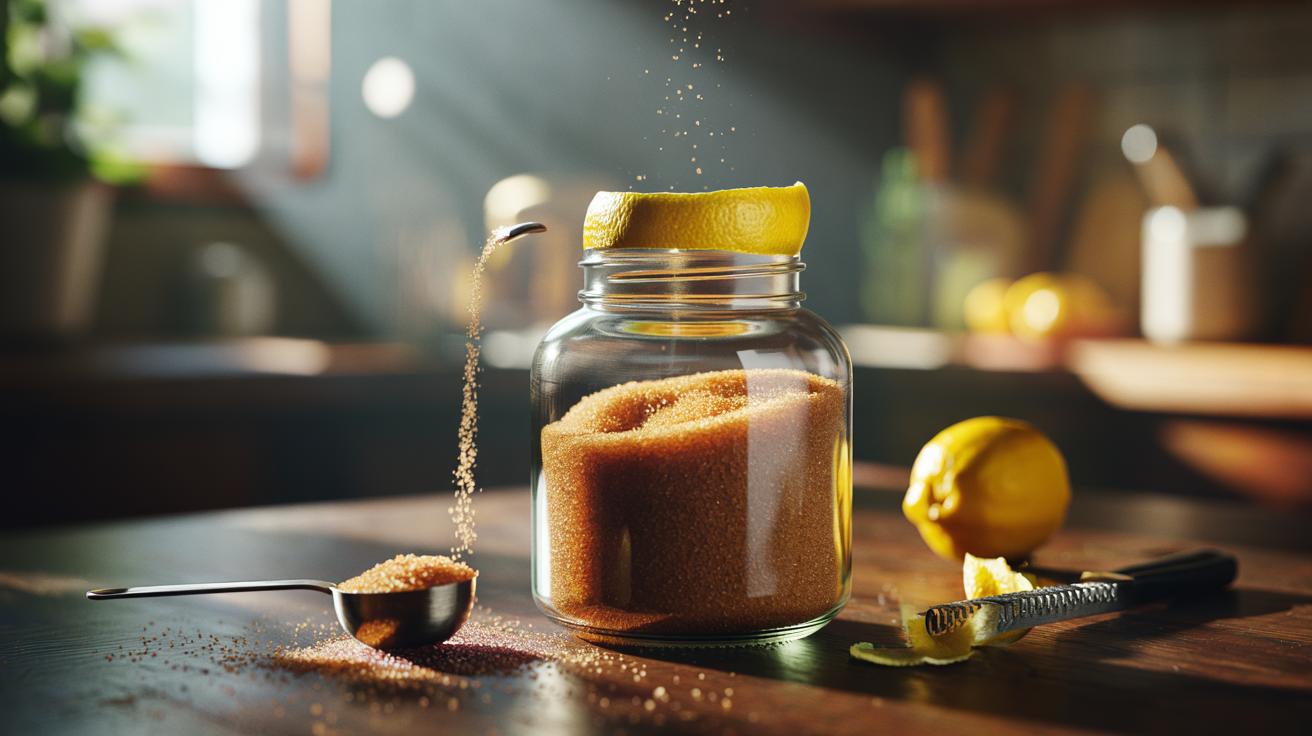
1) Select a firm, unwaxed lemon. Rinse and dry thoroughly. Cut a strip of peel about 3–5 cm long, keeping some white pith for moisture but avoiding thick wedges. The peel should be dry to the touch on the outside before it goes in. 2) Place it atop the sugar in an airtight container, seal, and leave for 6–24 hours. Check texture: if the sugar crumbles under light pressure, you’re done.
Remove the peel once the sugar softens to avoid over-humidifying or imparting stronger citrus notes. If your kitchen is very dry, add a fresh peel every week or two, but do not leave a damp piece indefinitely. Sugar itself resists microbial growth, yet a wet organic add-in can mould if neglected.
For a gentler approach, briefly air-dry the peel or use a thin strip of zest only. If you need rapid rescue, crumble the hardened block into a bowl, tent with the peel and a saucer, and wait an hour; transfer to the jar and seal immediately.
Alternatives and Storage Best Practice
A lemon isn’t your only ally. Bread and apple slices donate moisture quickly, while a soaked-and-dried terracotta disk regulates humidity over weeks. Marshmallows work by slowing evaporation rather than rehydrating aggressively. The best choice depends on how fast you need results and how neutral you want the aroma. Whatever the method, the container matters more than the gadget: choose a snug jar with minimal headspace and a tight seal.
| Method | Main Mechanism | Typical Time | Pros | Cons |
|---|---|---|---|---|
| Lemon peel | Trace moisture + citrus oils reduce caking | 6–24 h | Natural, clean aroma, light anti-caking effect | Must remove/refresh; slight flavour risk |
| Bread slice | Fast moisture transfer | 2–12 h | Very quick, widely available | Can stale/mould if left too long |
| Apple slice | Moisture + mild acidity | 6–24 h | Gentle, pleasant aroma | Higher mould risk; flavour transfer |
| Terracotta disk | Slow humidity buffering | 1–48 h | Reusable, predictable | Needs periodic soaking |
| Marshmallows | Evaporation barrier | 1–3 days | No added moisture, low risk | Slower; adds sweetness if mixed |
For prevention, decant fresh sugar into a jar on day one, compress out excess air, and keep away from heat sources. If you bake often, portion sugar into smaller containers so each opening exposes less volume. Stable humidity plus a citrus peel “booster” is a low-effort insurance policy.
The quiet genius of the lemon-peel trick is that it respects your ingredients. Natural oils from the zest help keep crystals independent, while a whisper of moisture from the pith restores softness—no pounding with a rolling pin required. With airtight storage and occasional refreshes, your brown sugar stays ready for crumble tops and caramel sauces whenever inspiration strikes. Simple physics, fragrant chemistry, and thrifty habits add up to reliable results. What’s your go-to method for keeping pantry staples in peak condition, and which kitchen science hack are you keen to test next?
Did you like it?4.5/5 (21)