In a nutshell
- 🍎 Apples brown when polyphenol oxidase (PPO) reacts with oxygen; a lemon half blocks this by lowering pH, chelating copper in PPO, and using vitamin C to reduce brown-forming quinones.
- 🍋 For best results, rub a fresh lemon half lightly over all cuts, wait 30–60 seconds, then blot; pack slices airtight with a cool pack for 6–8 hours of fresh-looking fruit.
- 🧪 Evidence shows PPO activity crashes in acidic conditions; lemon provides both acidification and antioxidant power, while safety notes include potential citrus sensitivity and mindful dental care.
- 📊 Compared with other hacks—diluted lemon, honey water, or salt water—the full-strength lemon half offers the longest colour protection with manageable flavour impact, outperforming oxygen-limiting containers alone.
- 🧺 Taste tips: use sweeter apples, dilute juice 1:1, or add a tiny sugar pinch on the lemon; keep slices in a separate compartment to protect flavours and preserve a crisp texture.
Every parent knows the sinking feeling: you pack a pristine apple, only to find mottled brown wedges by lunchtime. The fix sits in your fruit bowl. A freshly cut lemon half delivers a compact punch of citric acid and vitamin C that slows the reactions turning crisp white flesh rusty. A quick swipe across each slice can keep apples looking fresh all day, without elaborate gadgets or preservatives. The science is elegantly simple. By tweaking pH, binding key metals, and donating electrons, lemon juice blocks the oxidation pathway responsible for discolouration. Here is how it works, how to use it, and what to try if citrus isn’t your child’s favourite.
Why Apples Brown And How Lemon Prevents It
Apple browning starts the moment cut cells meet air. A copper-dependent enzyme called polyphenol oxidase (PPO) converts natural apple phenolics into o-quinones, which then polymerise into brown pigments. Oxygen is the fuel; pH and temperature are the accelerants. Enter the lemon half. Citric acid drops the surface pH toward 2–3, a zone where PPO activity collapses. It also chelates the enzyme’s copper, hobbling its machinery. Meanwhile, the lemon’s ascorbic acid (vitamin C) acts as a sacrificial antioxidant, reducing newly formed quinones back to their colourless form.
There’s a physical element too. A thin film of juice slows oxygen diffusion into the cut face, buying precious time in a lunchbox environment. Lowering surface pH and binding PPO’s copper cofactor effectively shut the browning pathway before it takes hold. Together, these chemical and barrier effects explain why a simple citrus swipe often outperforms fancy containers or dips, keeping slices pale, crisp, and appealing.
The Best Way To Use A Lemon Half In Lunchboxes
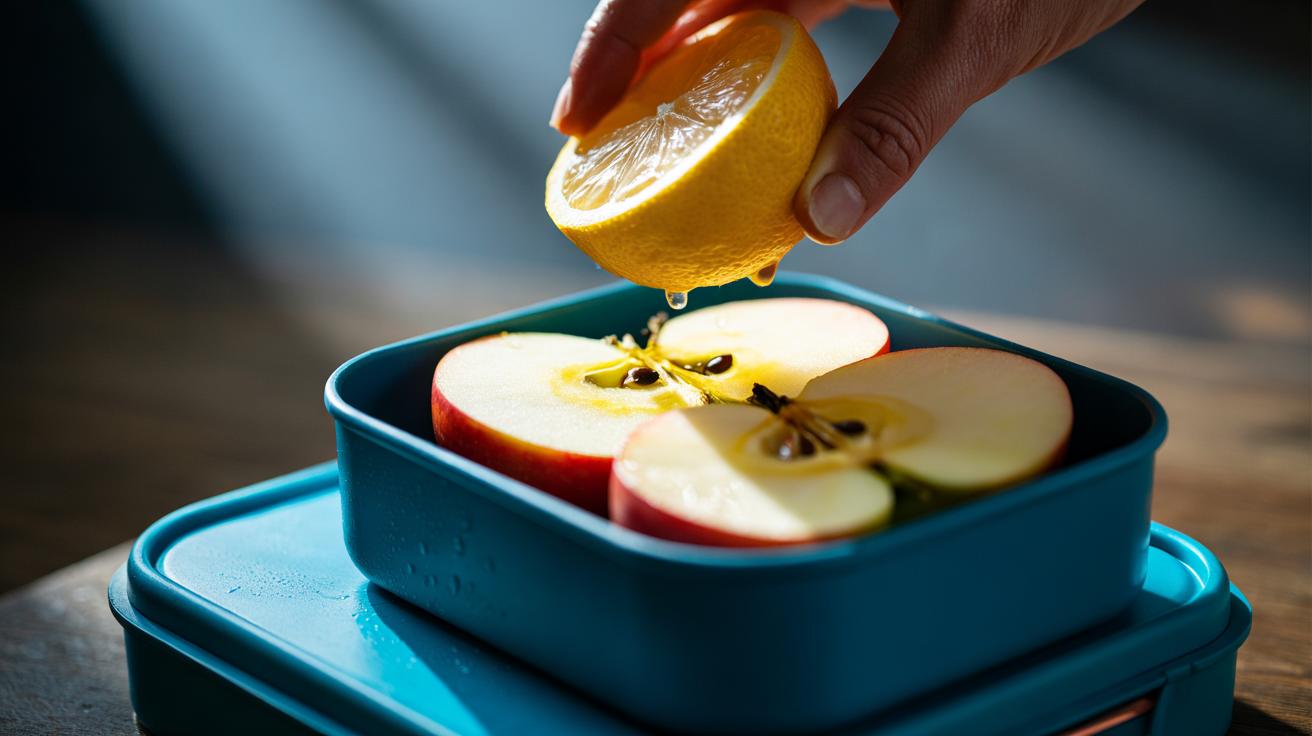
Work quickly. Slice the apple just before packing, then rub the cut side of a fresh lemon half across every exposed surface. You’re aiming for a whisper-thin sheen, not a drench. For a milder taste, mix lemon juice 1:1 with cold water and brush it on, or spritz with a small spray bottle. Coat evenly, let the slices sit for 30–60 seconds, then blot any pooling droplets to prevent sogginess. Pack in a snug, airtight tub with a cool pack to keep enzymes sluggish and texture snappy.
Worried about tartness? Choose sweeter varieties such as Gala or Pink Lady, or balance with a tiny pinch of sugar on the lemon half before rubbing. You can also pair lemon-treated apples with cheese or nut butter, which rounds the acidity. For whole lunchboxes, place citrus-slicked slices in a separate compartment so flavours don’t migrate. Done right, the treatment is barely perceptible, yet it reliably guards colour for school-day stretches of 6–8 hours.
Evidence, Taste, And Safety Considerations
In lab settings, PPO operates best near neutral pH; activity plunges as acidity increases. Lemon juice provides both acidification and antioxidants, so its anti-browning effect is robust at lunchbox timescales. Taste panels often prefer light application: a near-invisible coat minimises sourness while maintaining protection. Airtight packing and cool temperatures amplify lemon’s effect, producing a belt-and-braces solution for long mornings. Safety-wise, citrus allergies are uncommon, but avoid if sensitive; a quick water sip after eating helps neutralise lingering acidity on teeth. The acid film discourages microbes but doesn’t replace basic hygiene: use clean knives and containers.
Here’s how lemon compares with other popular hacks at home and in school settings.
| Method | How It Works | Flavour Impact | Typical Duration |
|---|---|---|---|
| Lemon half | pH drop, copper chelation, antioxidant action | Citrus brightness; mild if thin | 6–8 hours |
| Diluted lemon (1:1) | Gentler acid film, lighter antioxidant load | Subtle tartness | 4–6 hours |
| Honey water dip | Low pH and peroxide-forming enzymes slow oxidation | Sweet note | 4–6 hours |
| Salt water rinse (0.5%) | Ionic effects inhibit PPO; rinse after | Can taste saline | 3–5 hours |
| Airtight container only | Reduces oxygen exposure | Neutral | 2–4 hours |
| Pre-chilling | Slows enzyme kinetics | Neutral | 2–3 hours |
The lunchbox trick turns kitchen chemistry into a weekday ally. A humble lemon half lowers pH, ties up copper in polyphenol oxidase, and donates electrons that keep apple slices snow-pale without additives or faff. It’s a compact, low-cost method that stands up to a school day, especially when paired with airtight packing and a cool pack. If taste is a concern, dilute or blot — you still get the protective science without a puckering finish. What will you experiment with next: a lemon swipe, a honey dip, or your own twist on keeping fruit bright and appetising?
Did you like it?4.5/5 (22)