In a nutshell
- 🧪 A slightly damp newspaper boosts grip by swelling cellulose fibres, increasing real contact, and creating capillary adhesion, which raises static friction to stop slips instantly.
- 🛠️ Safe setup: crumple-then-flatten, dampen and wring (not dripping), clean/dry counter, press board and test with a firm diagonal shove; keep paper off food per UK guidance, and watch for ink on pale stone.
- ⚠️ Limitations: oil or fat reduces friction; avoid freshly oiled wood and porous limestone; use minimal moisture on wooden worktops, replace soggy sheets, and wipe any ink smudges promptly.
- ♻️ Alternatives and trade-offs: damp tea towel (strong but bulky), paper towel (convenient, can shred), silicone mat (washable, consistent), and rubber feet (good on clean, dry counters).
- 🍳 Outcome: instant, low-cost stability for safer, faster prep on stone, laminate, and stainless; in professional settings, washable non-slip pads or silicone are the compliance-friendly choice.
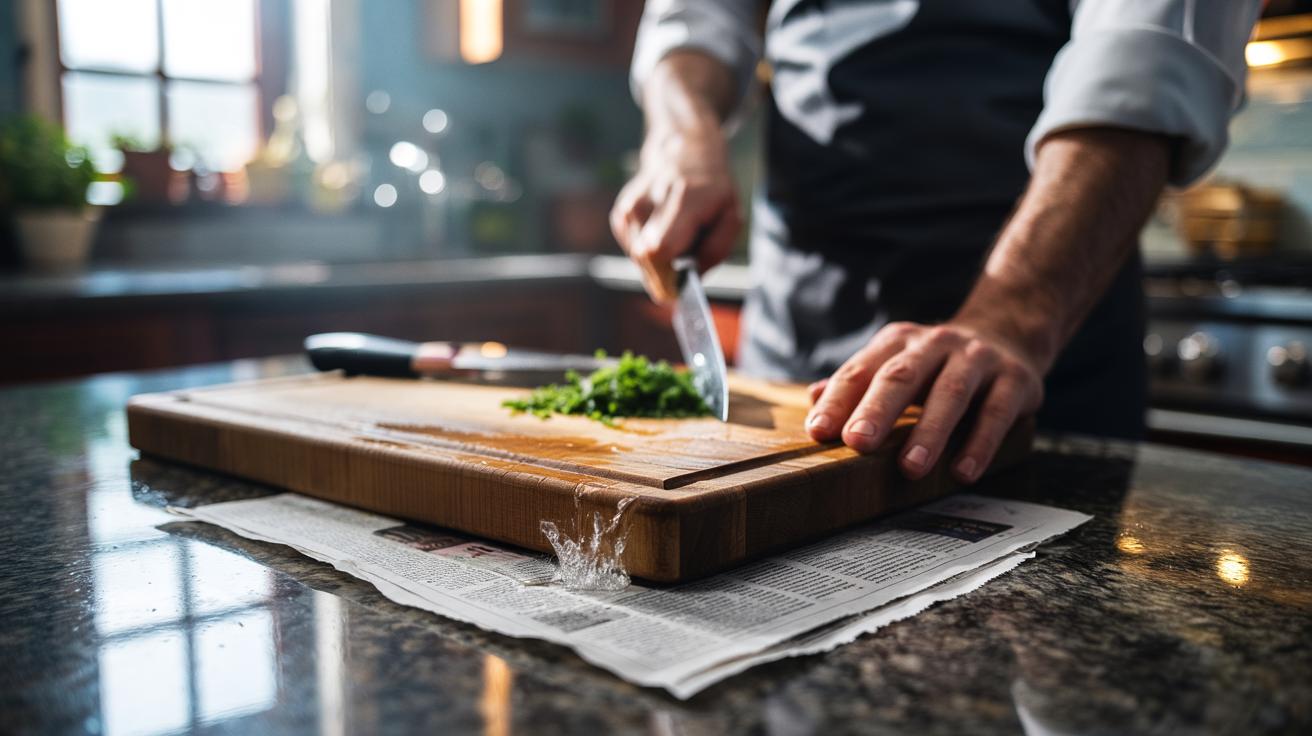
Every cook has a moment when the cutting board skates across the worktop at the worst possible time. A scrunched, damp newspaper slipped underneath can stop that slippage instantly, turning a risky surface into a steady platform for prep. The trick works on stone, laminate, and stainless steel, and it takes seconds to set up. A single, moistened sheet creates a quick, reliable grip without special gear. Below, we explain the science behind the stick, how to do it safely in a UK kitchen, and when a purpose-made non-slip mat or silicone pad might still be the smarter choice.
Why Damp Newspaper Grips Instantly
When newspaper gets slightly wet, its cellulose fibres swell, soften, and mold to microscopic bumps on the counter. That conformity increases the real area of contact, boosting friction. A thin film of water between fibre and worktop generates capillary adhesion: tiny bridges that behave like micro-suction, especially when you press the board down. The paper’s compressibility spreads pressure evenly, helping it resist sideways movement when you chop. In practice, the damp layer acts like a custom-fitted gasket that locks the board to the bench.
Friction has two parts here: the paper-to-surface interface and the board-to-paper interface. The fibres provide “tooth” for the board, while the water film adds stick to the counter. As long as the sheet is damp, not dripping, you get high static friction that resists the first nudge—the critical factor that stops a slip. Excess water lowers performance by creating a lubricant, so wringing the sheet until it’s merely moist is essential for instant grip and control.
How to Set It Up Safely
Start with two to three sheets of standard newspaper. Crumple lightly, then flatten; this adds texture for extra mechanical grip. Run the paper under the tap, then squeeze until it’s evenly damp, not wet. Wipe the counter clean and dry—grit or pooled water undermines the effect. Lay the paper flat, set the board on top, and lean your weight through the centre. Test with a firm diagonal push. If the board doesn’t budge under that shove, it’s service-ready. If it slides, re-wring or add a second layer.
On granite and quartz, the method is rock solid. Laminates also perform well. Stainless steel can be slick; pressing for a second or two helps capillary bonds form. For wooden worktops, keep moisture minimal to protect the finish. Keep the paper strictly under the board to satisfy hygiene expectations—UK guidance discourages newspaper as a food-contact surface due to inks. Swap the sheet when it turns soggy, and wipe any ink smudges from pale stone immediately to prevent staining.
Alternatives, Trade-offs, and When to Avoid It
Damp newspaper excels for speed and thrift, but it has limits. Oil or fat spills reduce static friction, so wipe the counter before setting up. Avoid on freshly oiled wood or porous limestone where moisture and ink may mark the surface. Butchers’ blocks with substantial mass may already be stable—or need a dedicated silicone mat for hygiene and routine washing. In professional kitchens, washable, non-porous anti-slip pads are the safer compliance choice, though the newspaper trick remains handy in a pinch for home cooks.
Choose your grip aid based on cleaning, durability, and worktop material. Newspaper is single-use and recyclable. A damp tea towel grips well but can harbour odours if left wet. Silicone mats deliver consistent performance and machine-wash convenience, while rubber-footed boards are tidy but can skate on oil. The matrix below summarises the main options so you can pick the right stabiliser for your space and prep style.
| Method | Grip Performance | Hygiene/Cleaning | Cost/Reuse |
|---|---|---|---|
| Damp newspaper | Excellent when just moist; weaker with oil | Single-use; keep non-contact with food | Minimal cost; recyclable |
| Wet paper towel | Good; can shred under pressure | Single-use; low mess | Low cost |
| Damp tea towel | Strong; bulky under smaller boards | Wash after use; can trap smells | Reusable; already in most kitchens |
| Silicone mat | Consistent even with light oil | Dishwasher-safe; food-safe surface | Upfront cost; long-lived |
| Rubber feet / non-slip pads | Good on clean, dry counters | Wipeable; can collect debris | Low cost; reusable |
With a splash of water and yesterday’s headlines, you can turn a wobbly board into a rock-steady station that protects fingers and speeds prep. The physics—swollen fibres, capillary adhesion, and pressure distribution—explain why it works immediately, while a few simple precautions keep it safe and tidy in a UK kitchen. Think of it as a pop-up gasket you can recycle after service. Whether you stick with newspaper or invest in silicone, the goal is the same: unwavering stability. What’s your go-to method for a no-slip board, and how does it perform when your counter gets busy and a little greasy?
Did you like it?4.4/5 (21)