In a nutshell
- 🧪 The trick: a pinch of baking soda raises water pH, weakening the albumen–membrane bond so shells release in broad, clean sheets.
- 🥚 Method and ratios: use 1/2 teaspoon per litre of water; simmer eggs and shock in an ice bath for easy peeling and pristine whites.
- ⏱️ Timings: aim for 6 min soft, 8 min jammy, 10–11 min hard-boiled; peel from the air-cell end and under a thin stream of water.
- ⚠️ Pitfalls: do not exceed 1 tsp per litre to avoid soapy notes; a green ring comes from overcooking—cool fast to prevent sulphur–iron discolouration.
- 🔬 Alternatives: salt reduces cracking and vinegar firms whites, but bicarbonate is the most reliable for peelability; store boiled eggs up to a week in the fridge.
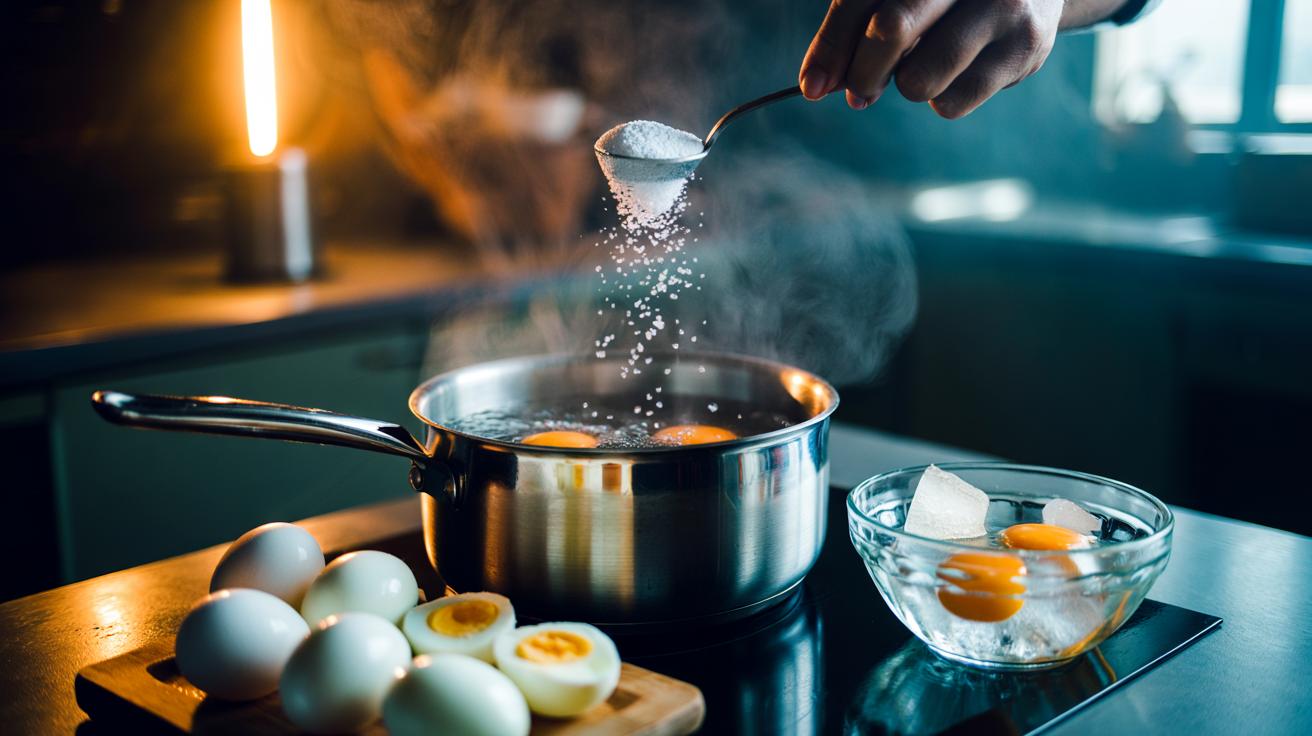
Every cook has fought a stubborn shell. A simple, chef-approved trick solves it with almost magical consistency: a pinch of baking soda in the water. By gently raising the water’s pH, the humble bicarbonate loosens the bond between the egg white and the inner membrane, so shells release in clean, broad sheets. The method is quick, inexpensive, and kind to your nerves when prepping brunch or a platter of devilled eggs. Add the soda to the pan, not the egg, and let chemistry do the heavy lifting. The result is neat halves, glossy whites, and yolks that take centre stage, not a bin full of ragged shards.
The Science Behind a Pinch of Baking Soda
Egg whites start slightly acidic, especially when the eggs are very fresh. That acidity is why new-laid eggs cling fiercely to their membranes after boiling. When you add baking soda (sodium bicarbonate) to the cooking water, you nudge the environment to the alkaline side. A higher pH weakens the bond between the albumen and the membrane, so the white sets as a cohesive gel rather than gluing itself to the shell’s inner lining. The effect mimics what happens naturally as eggs age and their internal pH rises, but on a timetable you control.
There’s more at play than pH. A brief, vigorous boil drives off dissolved carbon dioxide, which also helps the white set cleanly. The shell’s matrix of calcium carbonate remains intact, yet the interface at the membrane becomes less adhesive, giving you those gratifying large flakes of shell. Keep heat gentle after the initial boil to avoid overcooking, since very high heat and long cooking can trigger a green-grey ring from iron and sulphur reactions around the yolk.
Step-by-Step: How to Boil and Peel Eggs Like a Pro
Use a pan that allows the eggs to sit in a single layer. For every litre of water, stir in about 1/2 teaspoon baking soda. Bring to a rolling boil, lower in fridge-cold eggs with a spoon, and keep at a lively simmer. Timings: 6 minutes for soft, 8 minutes for jammy, 10–11 minutes for hard-boiled. Shock eggs immediately in an ice bath for at least 10 minutes; rapid cooling firms proteins and pulls the contents slightly away from the shell, compounding the peeling advantage.
To peel, crack the base (the air-cell end) and roll gently to craze the shell all over. Peel under a thin stream of water to let water creep between membrane and white. If an egg resists, start from another edge or return it to the ice bath briefly. Measure the soda—more is not better. Excess alkalinity can push flavours toward soapy and increase sulphur aromas.
| Water | Baking Soda | Cook Time | Result | Peelability |
|---|---|---|---|---|
| 1 litre | 1/2 tsp | 6 min | Soft-boiled | Easy |
| 1 litre | 1/2 tsp | 8 min | Jammy yolk | Very easy |
| 1 litre | 1/2–1 tsp | 10–11 min | Hard-boiled | Consistently easy |
Safety, Taste, and Common Pitfalls
Baking soda is food-safe, but moderation is crucial. Do not exceed 1 teaspoon per litre of water or you risk a faintly soapy note and amplified sulphur aroma. If you notice a green halo around the yolk, the cause is almost always heat and time, not the soda alone. Reduce cooking time slightly, and keep that ice bath ready. Older eggs peel even more readily with this method; for very fresh farm eggs, the soda evens the odds without waiting a week.
Salt and vinegar are popular alternatives, yet they act differently: salt helps control cracking and seasoning, vinegar can firm the white but doesn’t consistently improve peeling. Bicarbonate remains the most reliable lever because it directly shifts pH at the membrane. Store boiled eggs in the fridge for up to a week, unpeeled for maximum freshness. If batching for salads or sandwiches, peel while still slightly warm after the ice bath; the membrane is most cooperative at that moment.
This small tweak turns a fiddly task into a repeatable kitchen win. By precisely nudging pH and controlling temperature, you get pristine whites and neat halves ready for mayo, curry powder, or a dusting of paprika. The method scales beautifully for party platters or weekday meal prep, saving both time and frustration. A measured pinch of baking soda is all you need, a quiet bit of science delivering everyday elegance. What other simple, science-led adjustments would you like to see demystified for home cooks who want chef-level results without the stress?
Did you like it?4.6/5 (22)