In a nutshell
- 🧪 The science: sodium bicarbonate absorbs moisture; a controlled fizz with diluted vinegar agitates the finish, opening pathways to lift white ring marks.
- 🥣 Method and ratios: Mix 3:1 baking soda to water to a yoghurt-like paste; apply 2–5 minutes, light circular rub, wipe, repeat; spot test first and avoid soaking.
- 🪵 Surface guidance: Works well on polyurethane and laminate; go gentle on hardwax oil; high risk on shellac/French polish; for stone, skip vinegar—use paste only.
- 🛠️ Troubleshooting: If rings persist, add brief low heat with a hairdryer, then reapply; stop immediately if tacky, smeared, or sheen changes; darker stains may need oxalic acid or pro help.
- 🛡️ Aftercare: Finish by drying, even the sheen with mild polish or matching oil, and prevent repeats with coasters and refreshed sealants.
The humble jar of baking soda in your cupboard holds a quiet superpower: it can lift those ghostly ring marks that appear after a damp mug is parked too long on a table. While furniture experts argue about oils and oxalic acids, a simple baking soda paste often coaxes out trapped moisture without harsh solvents. The secret lies in the gentle fizz that loosens water at the surface and draws it into the paste, sparing delicate finishes. Below, we unpack the science, set out a careful method, and map which surfaces respond best. Used patiently, this low-cost remedy can rescue a coffee table, sideboard or worktop before you’re forced into a full refinish.
The Science of Fizz: How Baking Soda Lifts Moisture
At the heart of this remedy is sodium bicarbonate, a mild alkali with a crystalline structure that’s superb at absorbing moisture. When mixed into a paste and applied to a white ring, it creates a micro-environment that encourages water to migrate away from the finish. Add a tiny splash of a weak acid—such as diluted white vinegar—and you’ll see a controlled fizz that agitates the top layer. Those minute bubbles help disrupt the boundary where moisture is trapped, creating pathways for diffusion into the paste.
On wood, white rings are usually moisture in or just beneath the finish, while darker rings suggest deeper staining in the fibres. The paste excels with the former: capillary action in the porous paste, coupled with mild alkalinity, helps nudge moisture outward. The result isn’t abrasion but a subtle cleansing. Because the chemistry is gentle, you’re less likely to burnish or polish a shiny halo into surrounding areas, a common risk when people over-rub with oils or toothpaste.
Making the Paste: Ratios, Tools, and Safety
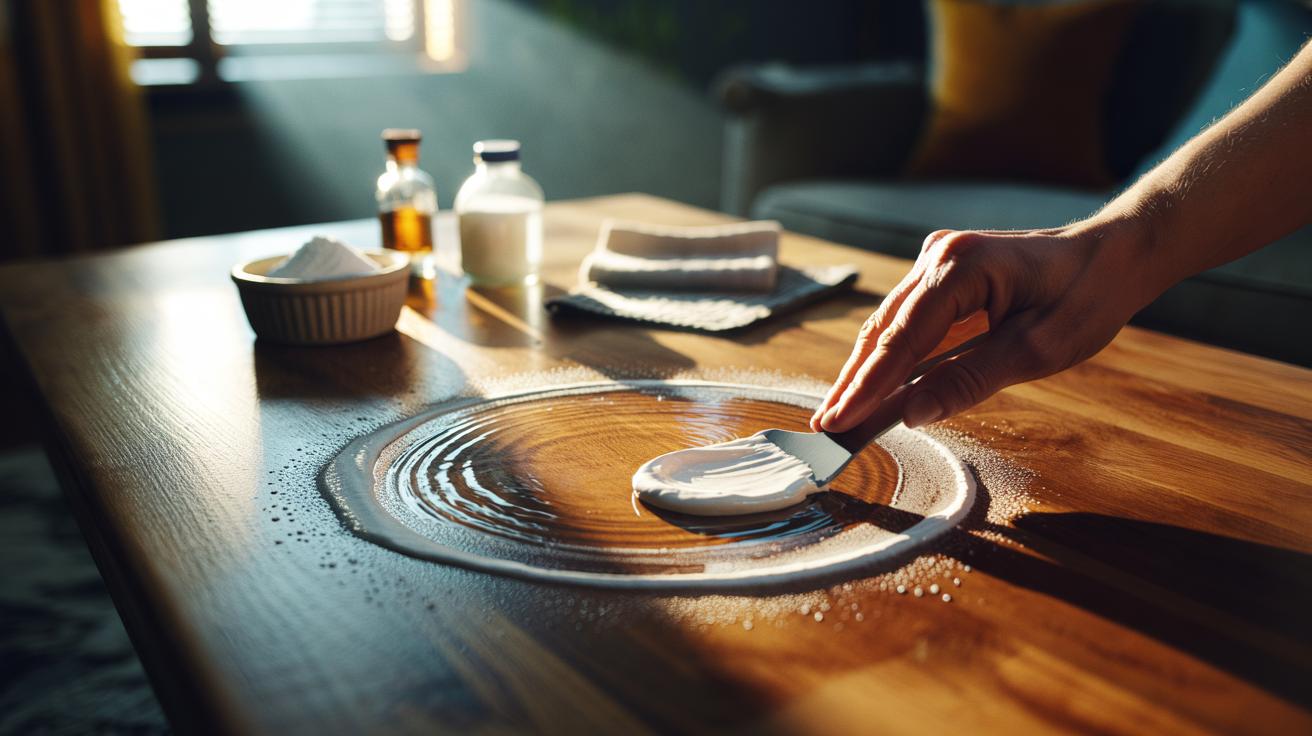
Measure roughly 3 parts baking soda to 1 part water to form a spreadable paste—think yoghurt, not slurry. For extra lift on stubborn rings, introduce a few drops of 1:1 diluted white vinegar directly on the paste to produce a soft fizz. Resist the urge to soak the area; excessive liquid can drive moisture further into a finish. Use a soft, lint-free cloth or a cosmetic spatula to avoid scratching, and keep microfibre on hand to buff gently afterwards.
Start with a spot test in an inconspicuous area. Apply a pea-sized blob to the mark, spread it to cover, and let it sit for 2–5 minutes. With light, circular motions, massage the paste for 20–30 seconds, then wipe clean and assess. Repeat in short cycles rather than one long session. If the finish dulls or feels tacky, stop and re-evaluate. Avoid aggressive pressure on high-gloss lacquers or French-polished antiques, and never mix in strong acids or bleach—this is a gentle fix, not a chemical strip.
Applying on Different Surfaces
Different finishes react in different ways to moisture and mild alkalinity. Wood with modern polyurethane or hardwax oil often tolerates the paste well, whereas soft, old shellac needs exceptional care. Stone worktops can benefit from the absorbency but dislike acids; laminate responds reliably but is vulnerable to abrasion if you rub too hard. The trick is to let the paste do the work rather than your elbow. Below is a quick reference for common household surfaces and the preferred approach to minimise risk while maximising moisture lift.
As a rule of thumb, work in short intervals, observe after each pass, and stop at “good enough.” If a ring hasn’t improved after three cycles, changing tactics is wiser than pressing on. Prolonged rubbing can create sheen differences that are more noticeable than the original ring. For any sealed surface, complete the process by wiping with a slightly damp cloth, then dry thoroughly to prevent new marks as the area equilibrates.
| Surface | Typical Ring Cause | Risk Level | Paste Method | Dwell Time |
|---|---|---|---|---|
| Polyurethane-finished wood | Condensation under glasses | Low | 3:1 soda to water; gentle rub | 2–5 minutes |
| Hardwax oil wood | Light moisture, heat | Medium | Very light pressure; no vinegar | 1–3 minutes |
| Shellac/French polish | Steam from cups | High | Tiny test area only; dab, don’t rub | 30–60 seconds |
| Laminate | Surface condensation | Low | Standard paste; soft cloth | 3–5 minutes |
| Granite/Quartz | Water traces under sealer | Medium | Paste without acids; avoid vinegar | 5–10 minutes |
Troubleshooting and When to Stop
If a white ring fades after one or two passes, you’ve likely drawn out shallow moisture. If it remains, switch to a heat method—briefly warming the area with a hairdryer on low can mobilise trapped moisture, then reapply the paste. Never apply direct, high heat. Should the mark be grey or brown, you may be looking at deeper fibre staining rather than finish haze; baking soda is not a stain remover. At that point, oxalic acid wood bleach or professional refinishing might be the ethical next step for a valuable piece.
Watch for red flags: smearing, tackiness, or a sudden change in sheen. Stop immediately if any appear, and switch to a clean, dry cloth. On glossy surfaces, finish with a mild furniture polish to even the lustre. On oiled wood, a drop of matching maintenance oil can restore uniformity after treatment. This is a conservation-minded technique—small, careful, and reversible beats bold and irreversible. Document your steps so you can replicate what worked and avoid what didn’t.
Used judiciously, a baking soda paste is a quiet ally against white ring marks, relying on absorbency and a whisper of fizz rather than brute force. The method respects finishes, costs pennies, and often averts more invasive repairs. After you’ve lifted the mark, protect the surface: use coasters, refresh sealants, and keep a lint-free cloth nearby for quick wipe-downs after a cuppa. The best restoration is the one you don’t need to repeat. What piece in your home is quietly asking for this gentle rescue—and how might you adapt the technique to suit its specific finish?
Did you like it?4.6/5 (24)