In a nutshell
- 🥶 A quick cold-water crisping shock reverses wilting by restoring turgor pressure through osmosis, tightening membranes and re-inflating vacuoles.
- 🧊 Method: Use water at 1–5°C for 5–15 minutes, trim stems, swish to remove air, then spin dry thoroughly—drying is crucial for lasting crispness.
- 🌿 What works: Lettuce, spinach, rocket, watercress, and soft herbs revive well; use caution with basil and microgreens; discard any leaves that are slimy or malodorous.
- 🧼 Safety and storage: Choose drinking-quality water, clean tools, avoid long soaks, and store revived greens at 0–4°C in ventilated containers for 24–48 hours.
- 🧪 Pro tips: For robust leaves, a tiny pinch of salt or sugar can tweak osmotic pull; pre-chill plates, and use revived greens the same day to minimise waste.
When lettuce, spinach, or herbs slump into a limp heap, it feels like money and flavour slipping away. Yet the remedy is deceptively simple: a brisk cold-water dip that jolts cells back into shape. Known in kitchens as a crisping shock, this quick soak taps into plant physiology to restore the leaf’s internal pressure and the snap we crave in salads and sandwiches. Cold water does not “freeze” freshness; it rebuilds it by refilling microscopic water reservoirs in plant cells. With a bowl, ice, and ten minutes, you can recover texture, aroma, and colour while cutting waste. Here’s how the science works—and how to do it right at home.
Why Leaves Wilt and How Water Moves Back In
Leaf tissues rely on turgor pressure—water pushing against sturdy cell walls—to stay crisp. After harvest, respiration and transpiration continue, water leaks from vacuoles, and membranes loosen. Fridge air is dry, accelerating loss, while damaged cut ends vent moisture faster. The result is a flexible, drooping lamina that feels tired on the tongue. Wilt is not usually decay; it’s dehydration. Because the walls remain elastic, lost pressure can often be restored if the cells are given clean, cold water and time to rehydrate.
The cold-water dip works through osmosis. Chilled water encourages stomata to close, slows metabolism, and tightens fragile membranes so vacuoles can draw water back in. Natural salts and sugars inside the cell create an osmotic gradient that pulls water through aquaporins into storage spaces, re-inflating the tissue. Calcium-linked pectins in the middle lamella regain tension, and blades of lettuce or rocket recover their spring. Give the leaf water, not heat, and the architecture returns.
The Cold-Water Crisping Shock, Step by Step
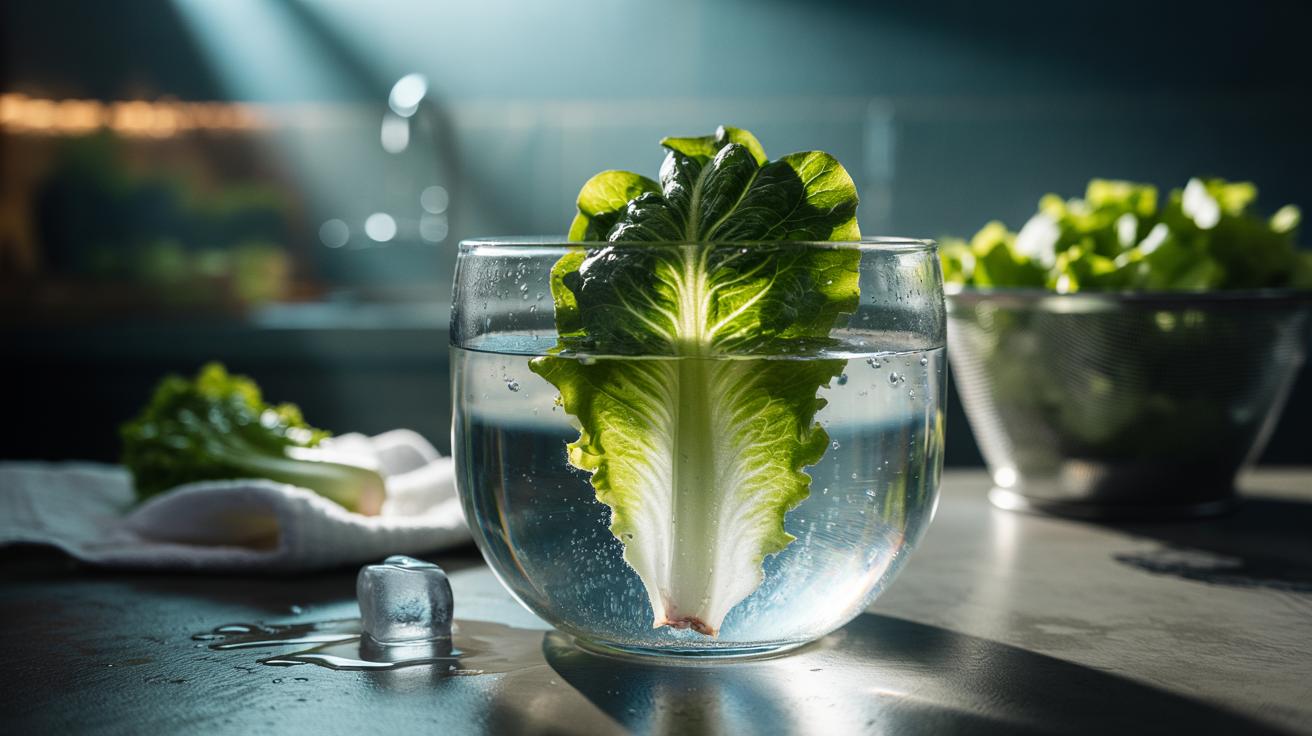
Set up a deep bowl with very cold water—ideally 1–5°C, using plenty of ice. Trim a sliver from the stems of whole leaves to open fresh pathways. Submerge for 5–15 minutes, swishing occasionally to dislodge air and allow uniform contact. For very tender greens, 5–8 minutes is ample; sturdier leaves may benefit from the full quarter-hour. If leaves are slimy or smell sour, do not revive them—discard instead. Drain, then spin or shake dry thoroughly; surface moisture invites rapid deterioration. Chill the revived greens in a ventilated container with a dry paper towel.
A tiny pinch of salt or sugar (about 0.25–0.5%) can very slightly tweak the water’s osmotic potential for sturdier greens, but plain water is usually best for tender leaves. Use potable water and clean equipment to avoid contamination. Gentle handling matters: bruising ruptures cells and sabotages crispness. Drying is as crucial as soaking—remove as much surface water as possible before storage.
| Parameter | Guideline |
|---|---|
| Water temperature | 1–5°C (ice bath cold) |
| Soak time | 5–15 minutes (check at 5-minute intervals) |
| Optional additions | Pinch of salt or sugar for robust leaves; none for delicate greens |
| Drying | Spin or pat dry until no visible droplets remain |
| Storage | Refrigerate at 0–4°C in ventilated container with absorbent liner |
What Works, What Doesn’t: Matching Methods to Greens
Loose-leaf lettuces, spinach, rocket, watercress, young kale, chard, and many soft herbs (parsley, coriander, chives, dill) respond well to a crisping shock. These species have flexible walls and intact cuticles that tolerate brief soaking. Hearts of romaine, butterhead, and baby gem revive reliably if cores and outer bruised leaves are trimmed. Expect most improvement when wilting is recent and leaves are cleanly harvested.
Some plants need caution. Basil blackens in prolonged cold and prefers cool—not icy—water for a shorter dip. Mint revives briskly but bruises easily. Tough brassicas and cabbage hold structure already; soaking gives marginal gains. Microgreens, once limp, rarely recover pristine texture. Pre-cut, bagged mixes can be revived if clean and within date, but rough edges brown faster after soaking. Do not attempt to rescue leaves with slime, off-odour, or dark waterlogged patches—these are signs of spoilage, not dehydration.
Safety, Quality, and Storage After Revival
Use drinking-quality water and clean bowls, knives, and salad spinners. Wash hands before handling, and keep greens away from raw meat boards. Replace the water if it clouds. Soaking beyond 20–30 minutes adds little crispness and risks nutrient leaching and microbial growth. If in doubt, shorten the soak and extend the drying. For herbs with woody stems, stand them upright in cold water like flowers for 10 minutes, then shake dry; this targets hydration where it’s needed most.
After drying, line a container with a clean paper towel and leave the lid slightly ajar, or use perforated bags to maintain high humidity without condensation. Store at 0–4°C and use within 24–48 hours for peak snap. Revived greens are best eaten raw or added at the end of cooking to keep texture. A quick pre-chill of plates accentuates crispness at the table. Crispness fades with time; plan your meals to celebrate revived leaves the same day.
The cold-water dip is a small domestic ritual that joins kitchen craft with plant science, turning near-waste into fresh, lively food. By restoring turgor pressure and respecting the leaf’s structure, you rescue flavour, colour, and nutrition while trimming your shopping bill. It’s fast, frugal, and repeatable, and it encourages a calmer approach to the vegetable drawer. Once you’ve seen limp lettuce spring back, you’ll never give up on greens too soon. Which leaves in your kitchen will you test next—and how will you tweak temperature, timing, and drying to suit their character?
Did you like it?4.7/5 (25)