In a nutshell
- 📱 Rice is mildly hygroscopic, lowering humidity in a sealed container and drawing vapour—not liquid—out of a wet phone’s small crevices.
- 🛠️ Step-by-step: power off, remove case/SIM, blot and drain, seal with rice overnight (ideally 24–36 hours), and avoid charging until fully dry.
- ⚖️ Comparison: silica gel dries faster and cleaner; open air with a fan is a solid alternative; rice is a last-resort stopgap.
- ⚠️ Risks: rice dust can contaminate ports, and corrosion may start within hours—no drying method reverses previous damage.
- 💡 Best practice: act quickly, keep the phone off, prioritise purpose-built desiccants, and consider professional checks after submersion.
It’s the oldest pub tip in mobile rescue: drop a drowned handset into uncooked rice and hope for a miracle by morning. The logic seems simple—grain absorbs moisture, so why not the droplets lodged inside a soaked device? In practice, the “overnight-rice” method sits in a grey zone between folk wisdom and physics. It can draw vapour from cracks and ports, yet it isn’t a cure-all for water damage. The crucial truth is that rice acts slowly and cannot reverse corrosion once it begins. Still, understanding how grains interact with humidity inside a sealed container reveals why some owners report partial recoveries, and why professionals usually recommend faster, purpose-built desiccants.
Why Rice Absorbs Moisture in Tight Phone Crevices
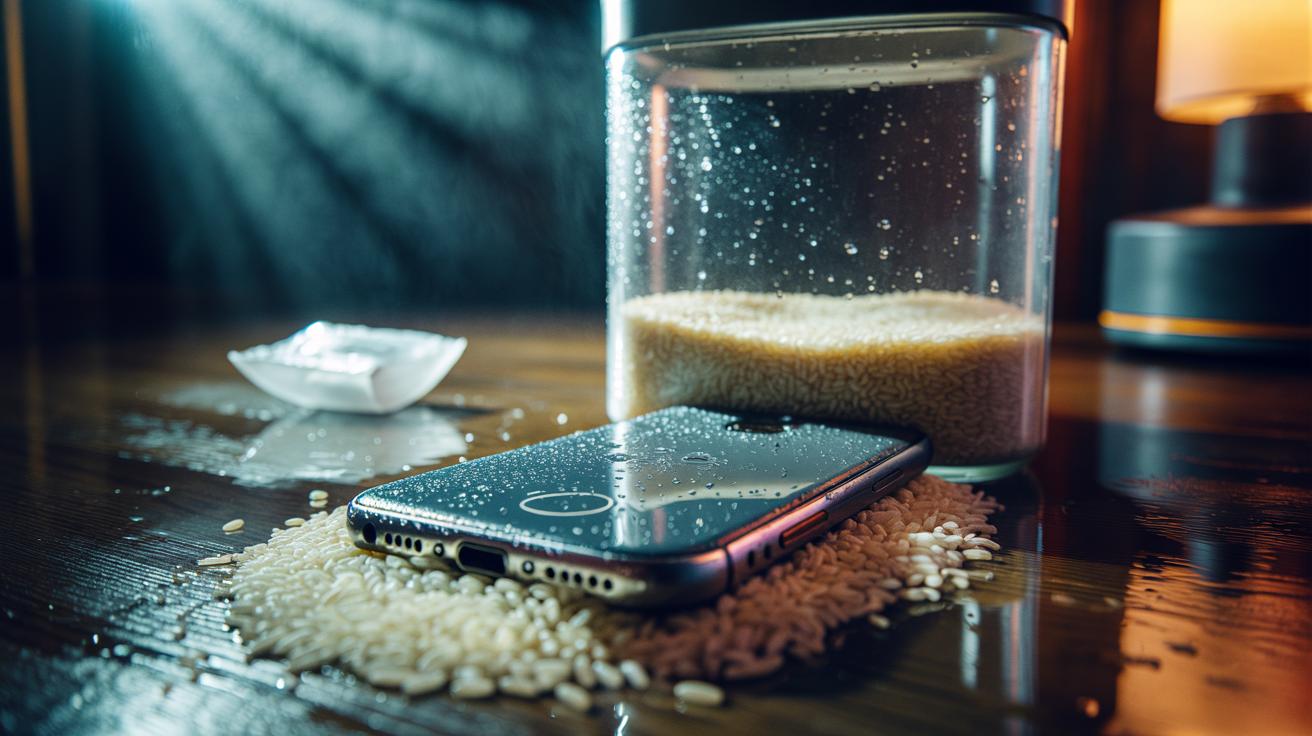
Uncooked rice is mildly hygroscopic, meaning it attracts water molecules from the air and holds them on its surface. In a sealed tub, grains reduce the local relative humidity, creating a gradient that gently pulls vapour from the phone’s ports, seams and small crevices. The effect isn’t direct “sucking” of liquid; it’s vapour-phase removal. Droplets trapped in tricky spots—under button membranes, around the SIM tray well, near speaker meshes—slowly evaporate, then adsorb onto the rice. This is a vapour-driven process, not a vacuum, which is why visible puddles should be blotted before the device goes into any drying setup.
Grain structure matters. Standard white rice has more exposed starch surfaces than polished aromatics; broken grains add surface area, nudging the humidity lower. Still, rice’s capacity is modest compared with silica-based packs. It won’t penetrate adhesives or displace water sitting below shields on a modern smartphone motherboard. If the handset was immersed, internal oxidation can begin within hours. Rice can help with the last traces around gaskets and grills, but it’s not a surgical solution.
Step-by-Step: The Overnight-Rice Method, Explained
First, act quickly. Power the device off, remove the case and SIM tray, and gently shake out excess liquid with the ports facing down. Blot the exterior; avoid heat guns or hairdryers. Do not charge the phone while any moisture may remain. Place the handset in a clean, breathable pouch or paper towel to reduce dust transfer, then submerge that bundle in a container of uncooked white rice. Seal the container and leave it undisturbed on a level surface. The semi-sealed environment lets the grains lower humidity, encouraging evaporation from tight spaces.
Time is the hidden ingredient. Overnight helps; 24–36 hours is better for stubborn ingress around speakers and microphones. Check progress by inspecting for fog under the camera glass or distortion in audio. If rice dust enters ports, clear it carefully with a soft brush. Be aware that some manufacturers advise against rice due to particulate contamination; a desktop fan plus patience, or silica gel packs in a sealed box, is often cleaner and faster. Think of rice as an emergency stopgap when proper desiccants aren’t at hand.
How It Compares With Better Desiccants and Open Air
Rice works through slow, broad humidity reduction. Purpose-made desiccants, such as silica gel, use structured pores to capture water rapidly, dramatically lowering the container’s humidity. A fan-driven open-air approach speeds evaporation without adding dust, though it relies on ambient conditions. For electronics, the trade-off is speed versus contamination risk. Faster drying reduces the window for corrosion and short circuits, which is why professionals favour silica sachets or controlled airflow over a bowl of basmati.
| Method | Mechanism | Relative Speed | Risks | Best Use |
|---|---|---|---|---|
| Uncooked Rice | Moderate hygroscopic adsorption | Slow | Dust in ports; uneven results | Last-resort, overnight attempt |
| Silica Gel Packs | High-surface-area desiccation | Fast | Needs sealed container | Preferred home remedy |
| Open Air + Fan | Forced evaporation | Moderate | Ambient humidity dependent | Clean, low-cost option |
If you must choose quickly, pick silica if available, then controlled airflow, and rice only if neither is on hand. Regardless of method, leave the phone off until you’re confident it’s dry, and consider a professional evaluation if it was submerged. The real contest isn’t rice versus silica; it’s time versus corrosion.
The “overnight-rice” method endures because it sometimes helps—and because it’s sitting in most kitchen cupboards. Yet the science suggests it’s a compromise: effective at nibbling away at humidity in small crevices, but slower and messier than purpose-built options. No drying method can reverse damage already caused by shorts or corrosion, so the smartest move is prevention—water-resistant cases, cautious beach habits, and a stash of silica gel for emergencies. Given your own experience and local climate, would you trust rice again, or will you build a faster, cleaner drying kit for the next inevitable splash?
Did you like it?4.5/5 (26)