In a nutshell
- 🍃 The paper towel trick wicks away excess moisture, creating a drier microclimate that slows mould and bacteria, keeping produce fresh for up to twice as long.
- 🧻 Practical routine: line containers with a towel, dry leafy greens thoroughly, add a top layer for delicate leaves, store berries unwashed, and replace damp towels every 2–3 days.
- 🍎 Manage ethylene and airflow: separate apples/bananas from greens, use vented containers, and set crispers to high humidity for greens and low humidity for fruit.
- 📊 Produce-specific wins: greens extend from 3–4 to 6–8 days, berries from 1–3 to 4–6, mushrooms in a paper bag last ~7 days, while tomatoes stay at room temperature for best flavour.
- ♻️ Save money and cut waste: swap to reusable cloth towels or muslin, compost used paper when possible, and enjoy a fresher fridge with a modest, repeatable habit that boosts your budget.
It sounds disarmingly simple: a sheet of kitchen roll tucked into your salad box or berry punnet. Yet this small tweak can radically extend freshness and slash waste. In British homes where a weekly shop must stretch to Friday, the paper towel trick works because it manages moisture, the invisible saboteur of crisp leaves and delicate fruit. Done right, you’ll see fewer slimy spinach leaves, fewer mushy raspberries, and fewer sad cucumbers sweating in their wrappers. Absorb the condensation and you choke off mould before it starts. The result? Produce that often lasts up to twice as long, with minimal fuss, minimal cost, and surprisingly big savings.
Why Paper Towels Keep Produce Fresh
Moisture is life-giving for plants, yet ironically it’s the enemy once produce is harvested. Water pooling on surfaces invites bacteria and fungi to proliferate. The humble paper towel acts as a wick, capturing droplets and vapour so they don’t resettle on leaves and skins. This creates a drier microclimate inside the container while maintaining ambient humidity that prevents wilting. Keep surfaces dry; keep cells hydrated. That balance is everything.
There’s also ethylene, the ripening gas. Apples, pears and bananas emit it; lettuces and herbs suffer from it. When a container fogs with condensation, ethylene lingers, accelerating breakdown. A towel reduces fogging, encourages gentle airflow, and prevents bruised spots from staying wet. Think of it as shock absorbers for moisture. It won’t resurrect limp rocket, but it will slow spoilage dramatically. Paired with a cool fridge and the right crisper setting, the effect compounds. Small changes in humidity control yield big differences in shelf life.
Step-By-Step: The Simple Kitchen Routine
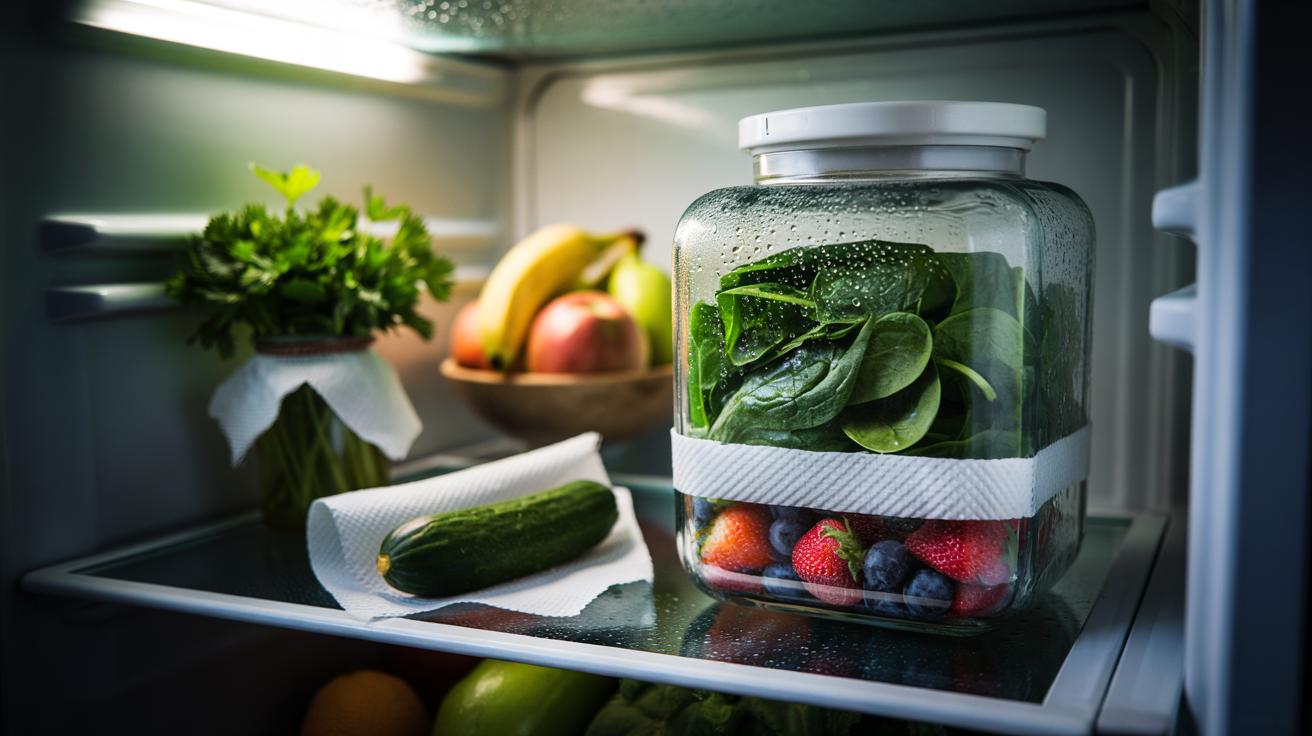
First, choose a clean, lidded box that isn’t airtight. Line the base with a folded paper towel. Add produce in a single loose layer where possible; don’t cram. For leafy greens, rinse, spin or pat very dry, then lay another towel over the top before closing. For berries, store unwashed; wash just before eating. If you prefer a preventive rinse, use a quick 1:3 vinegar-water dip, rinse lightly, and dry thoroughly on a towel before packing. Wet fruit equals fast spoilage.
Replace the towel when it feels damp—every two to three days in a busy fridge, sometimes sooner during heatwaves. Flip the contents gently when you swap towels to redistribute pressure points and avoid bruising. For cucumbers and courgettes, wrap each loosely in a sheet and place in the crisper. For herbs, trim stems, stand in a jar with a little water, and tent with a towel held by an elastic band. Label boxes with the date. It takes seconds. The payoff is days.
What Works Best for Different Fruits and Veg
Some produce loves a drier nest; others want a slightly damper cocoon. The aim is to absorb free water without desiccating tender tissues. Mushrooms prefer breathability and darkness; tomatoes rarely belong in the fridge at all. The table below summarises quick wins for common UK staples, plus realistic gains.
| Produce | Prep | Towel Placement | Storage | Approx. Life Extension |
|---|---|---|---|---|
| Leafy greens (spinach, lettuce) | Wash, dry thoroughly | Base + top layer | Fridge, high-humidity drawer | 3–4 days to 6–8 days |
| Fresh herbs (soft: parsley, coriander) | Trim, jar in water | Tent over jar | Fridge door or shelf | 4–5 days to 7–10 days |
| Berries (raspberries, strawberries) | Do not wash first | Base only, change often | Fridge, shallow box | 1–3 days to 4–6 days |
| Cucumbers, courgettes | Unwashed | Loose wrap per item | Fridge, high humidity | 5–6 days to 9–10 days |
| Mushrooms | Unwashed | Paper bag lined with towel | Fridge, main shelf | 3–4 days to ~7 days |
| Tomatoes | Unwashed | None | Room temp, away from sun | Less shrivel; better flavour |
Ethylene is the stealth factor. Keep apples and bananas away from greens and berries, ideally in a separate drawer or a counter fruit bowl. Separation slows ripening, towels slow rotting. Use both and you stretch a shop into next week.
Smarter Storage: Containers, Crispers, and Ethylene
Not all boxes are equal. Choose containers with a little headroom and a vent or imperfect seal to encourage gentle airflow. Add a towel to the base and, for delicate leaves, a second on top. If your fridge has adjustable crisper sliders, set one drawer to high humidity (vents mostly closed) for greens and herbs, and the other to low humidity (vents open) for fruit that emits ethylene. Trap moisture for wilting-prone veg; vent gas for ripening fruit.
Supermarket plastic often traps condensation. Pierce a few tiny holes and slip in a cut-to-size towel; it’s a quick rescue when you don’t want to decant. For meal-prep boxes, avoid deep stacks that compress produce; pressure plus moisture equals bruising. Rotate older items to the front, and refresh towels midweek. Dedicated produce boxes with raised grids are excellent, but a standard tub and a square of kitchen roll achieves most of the benefit at a fraction of the cost.
There’s a thrift angle and a green one. A single sheet of kitchen roll, changed a couple of times, pays for itself when it saves a punnet of raspberries. If you’d rather cut waste, swap to washable cloth “paper” towels or a piece of clean muslin—same principle, less bin-bound paper. Compost used paper towels if they’re only damp with water. The habit is tiny, repeatable, and quietly transformative. Keep the moisture moving and your food budget stretches further. Which item in your fridge will you test with the paper towel trick tonight, and how will you tweak the setup to suit your kitchen?
Did you like it?4.5/5 (20)