In a nutshell
- 🌿 A thyme sprig tie—often as part of a bouquet garni—adds subtle aromatic depth without clouding the broth, with the tied bundle preventing leaf-shed and easing timely removal.
- 🔬 Flavour comes from volatile oils like thymol and carvacrol; extraction hinges on temperature, time, and fat, so a gentle simmer protects bright top notes and avoids bitterness.
- 🕰️ Smart timing by stock type: add thyme early for beef & veal, mid-cook for chicken, and later for vegetable broths; remove as soon as piney lift turns woody, or use a two‑stage infusion.
- 🧰 Techniques for clear, fragrant broths: lightly bruise the bundle, skimming keeps aromas vivid, manage salinity and acidity, add a touch of fat to dissolve oil‑soluble compounds, then chill to defat.
- ⚙️ Equipment tweaks: in a pressure cooker reduce thyme and add later; in a slow cooker use slightly more and infuse shorter; finish with a brief flash infusion of fresh thyme on reheating.
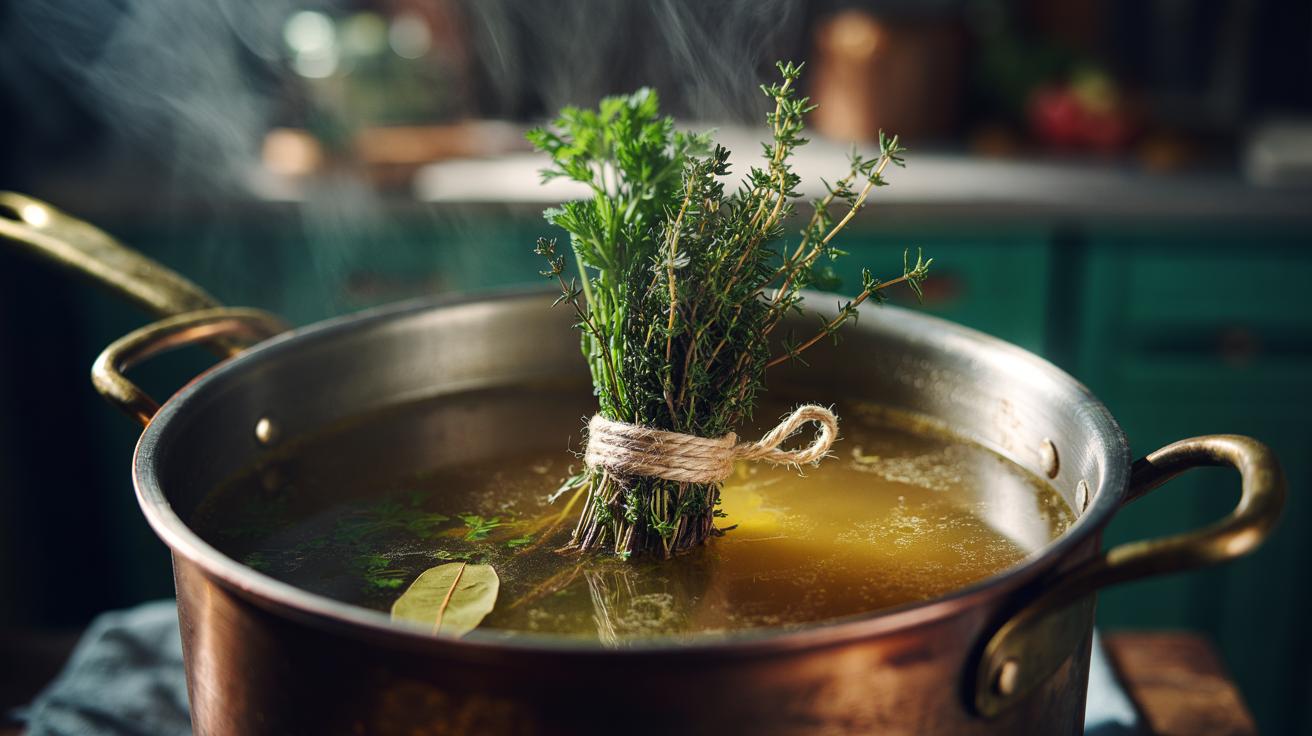
Ask any cook the secret behind a broth that lingers in memory, and you’ll often hear about a simple tie of thyme sprigs slipped into the pot like a whisper. A neat bundle—often part of a classic bouquet garni—doesn’t shout; it lends aromatic depth that feels inevitable rather than imposed. Thyme’s tiny leaves hide essential oils that unfurl under gentle heat, coaxing layered flavours without muddling the liquid. Simmered patiently, a thyme sprig tie transforms water, bones, and vegetables into something quietly complex, the culinary equivalent of good journalism: clear, balanced, and revealing more with every sip.
The Science of Herbal Infusion
Herbs impart flavour through volatile oils—compounds like thymol, carvacrol, and linalool—that dissolve into broth as heat loosens their cell walls. The pace of extraction hinges on temperature, time, and fat presence. Water lifts delicate floral notes; fat captures resinous, woody tones. Keep the pot at a gentle simmer to preserve the brightest aromatics, because overly vigorous boiling can drive off the lightest molecules and coarsen the final profile. The goal is balance: enough time for structure, not so much that bitterness creeps in from stems or oxidised oils.
A tied sprig helps manage this chemistry. Bundling thyme with other herbs reduces leaf-shed, preventing murky broths and simplifying removal at peak flavour. Bruising the bundle lightly releases oils without shredding the leaves. In meat stocks heavy with collagen and fat, thyme provides lifted, piney clarity; in vegetable broths, it knits sweeter roots and alliums together. Think of it as a calibrated infusion: fragrance first, structure second, dominance never.
Thyme’s Quiet Power in Stockpots
Thyme brings a cool, woodland note that cuts through richness while knitting disparate flavours. For classic stocks, tie 6–8 sprigs with kitchen string, anchoring them to a stalk of parsley and a bay leaf. Add at the start for beef or veal, where long cooking tempers intensity, and a bit later for chicken or vegetable broths to keep things buoyant. If your kitchen smells powerfully of thyme early on, you’re extracting too hard: lower the heat. A tied bundle ensures removal in seconds, letting you fine‑tune the line between buoyant aroma and woody overstay.
Pairing matters. Parsley stalks contribute freshness, bay leaf adds camphor and backbone, while leek greens lend sweetness without clouding. Peppercorns, corralled in muslin, contribute warmth without grit. In lean broths, a modest splash of fat enhances capture of thyme’s resinous compounds; in richer stocks, skimming keeps flavours transparent. The result is quiet authority, not herbal graffiti—thyme that speaks up precisely when the spoon reaches your lips.
| Herb | Key Aromatics | Ideal Time in Stock | Notes |
|---|---|---|---|
| Thyme (tied sprigs) | Thymol, carvacrol | 45–180 min | Earlier for beef/veal; later for veg/chicken |
| Bay leaf | Eucalyptol | 60–180 min | One or two leaves suffice |
| Parsley stalks | Apiol | 30–90 min | Removes grassy edge if overcooked |
| Leek greens | Sulphur aromatics | 60–120 min | Sweetness without clouding |
Balancing Aromatics: When to Add, When to Remove
Timing guards against bitterness and muddiness. For beef and veal stocks, add the thyme bundle at the outset; the long simmer and higher gelatin content buffer intensity, producing a rounded result. For chicken stock, add after skimming—about 30 minutes in—so the light floral top notes aren’t boiled off. Vegetable broths benefit from restraint: introduce thyme only after roots soften, then taste every 20 minutes. Remove the bundle the moment thyme moves from piney lift to woody insistence. That blink‑and‑you’ll‑miss‑it change is your cue to preserve clarity.
More variables play a part. Salinity accelerates perception of bitterness, so season late or sparingly while herbs are steeping. Acidity—say, from tomatoes or a splash of wine—can sharpen herbal brightness; add the thyme slightly later in acidic broths. Surface management matters: frequent skimming of scum and emulsified fat keeps volatile aromas vivid rather than trapped. Consider a two‑stage approach: early thyme for structure, then a brief late infusion for perfume, removing both bundles on time to leave the pot tasting focused and clean.
Techniques for Clear, Fragrant Broths at Home
Start with fresh, dry herbs; moisture on leaves encourages grassy, boiled flavours. Assemble a compact bouquet garni with cotton string or a strip of leek green, and bruise it once against the board. Keep the pot just trembling, never roaring; turbulence emulsifies fat, dulling aromatics. In lean broths, add a teaspoon of neutral fat per litre to help dissolve thyme’s oil‑soluble compounds, then chill and lift the set cap to regain clarity. Taste on a schedule, not by the clock—aromatic infusions are done when they smell complete, not when a timer rings.
Pressure cookers and slow cookers need tweaks. Under pressure, reduce thyme quantity by a third and add in the second half of cooking; closed systems intensify extraction. Slow cookers require the opposite: a touch more thyme and a slightly shorter overall infusion to avoid sogginess. For finishing, strain, then flash‑infuse with a fresh, minute‑long thyme sprig for a top‑note halo. Store broth cold and unseasoned; salt and a new, brief herbal kiss at reheating restores lift. The aim is layered fragrance that reads as natural, not “herby.”
A tied sprig of thyme is modest kit with outsized impact, guiding broth from agreeable to articulate. It respects the ingredients already in the pot, binding them with resinous lift and a lingering, savoury hush. The craft lies in heat you can barely see, attention you can taste, and removal at precisely the right moment. From a Monday chicken carcass to a weekend veal stock, the principle holds: measured infusion, clean extraction, confident restraint. How might your next pot change if you treat herbs not as seasoning, but as a timed narrative—what would your broth say then?
Did you like it?4.5/5 (30)