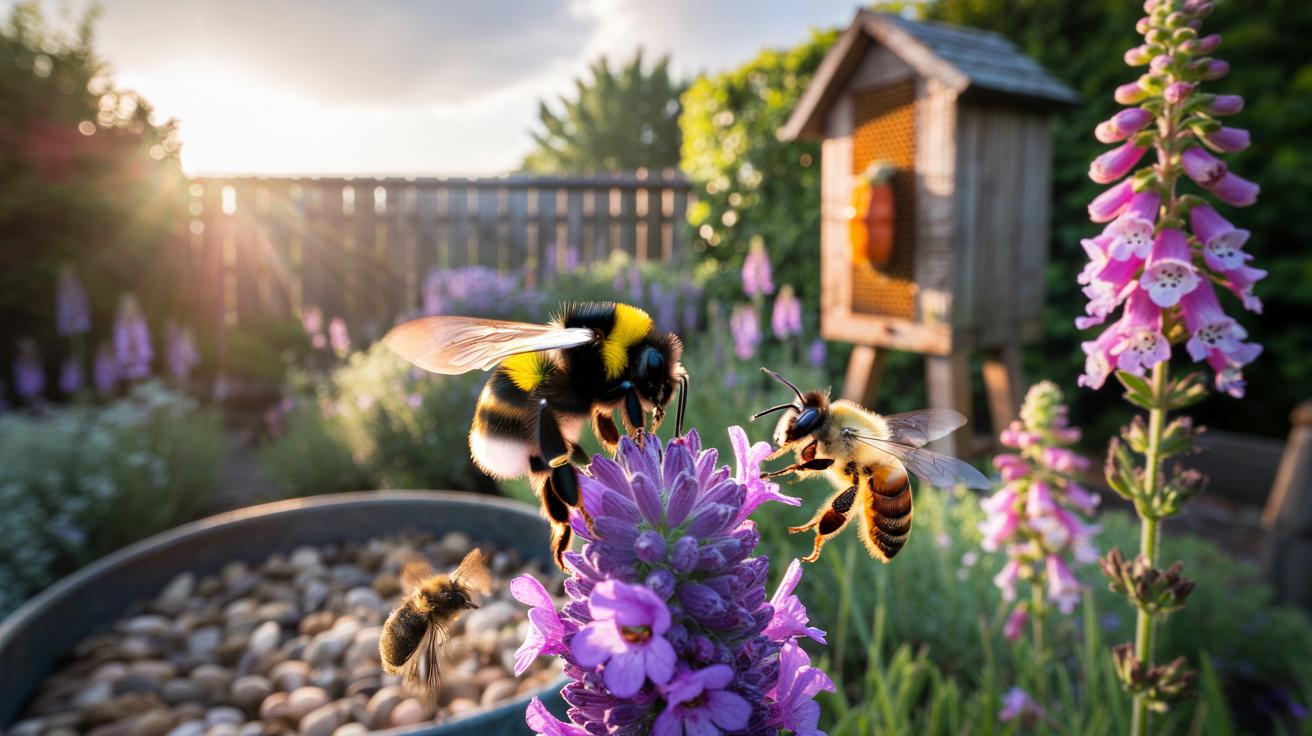
In a nutshell
- 🌸 Plant for every season with nectar-rich, single flowers in sunlit drifts to ensure continuous bloom from early spring to autumn.
- 🏡 Create nesting habitat: leave bare, south-facing soil; keep dead stems and log piles; maintain clean, dry bee hotels with 3–8 mm cavities.
- 💧 Provide safe water sources: shallow dishes with pebbles, a rain butt, and damp clay for mason bees; refresh weekly to keep them returning.
- 🛡️ Go pesticide-free and use integrated pest management: hand-pick pests, grow buffers with hedges, dim night lights, and mow less to protect pollinators.
- 🌿 Rethink lawns and edges: embrace wildflower-rich turf, clover, and unmown strips, plus hedges, bramble, and fruit cordons to boost connectivity.
Britain’s gardens can be powerhouses for wildlife if we tune them to the rhythms of bees. From shaggy bumblebees to tiny metallic solitary species, these tireless workers supercharge pollination, raising fruit set, boosting yields, and thickening borders with seed. You don’t need acres. A window box helps. A terrace helps more. Small changes create big results. Think in seasons, structure, water, and shelter. Choose nectar-rich flowers, avoid chemical shortcuts, and let a little wildness creep in. Your reward? A garden that hums, and harvests that swell. Here’s how to entice bees and keep them coming back.
Plant for Every Season
Plant for every season is the simplest, most powerful rule. Bees require uninterrupted forage from early spring right through autumn. In March and April, offer willow catkins, crocus, hellebore, lungwort, and even dandelions; these feed queens waking from hibernation when food is scarce. Summer should erupt with lavender, thyme, foxglove, catmint, cornflower, and comfrey. For the year’s final push, rely on Hylotelephium (sedum), asters, ivy flowers, and single-flowered dahlias. Choose single blooms over doubles; double petals can bury nectar and pollen. Mix flower shapes so long tongues and short-tongued bees both feast.
Site matters. Sun warms flight muscles, so cluster plants in bright, wind-sheltered patches and repeat favourites in drifts of three for easy targeting. Use peat-free compost, mulch to lock in moisture, and water newly planted perennials until established. Continuous bloom wins; gaps lose bees. If space is tight, stack seasons in pots: spring bulbs beneath summer herbs beneath autumn asters. Consistency beats occasional abundance.
| Season | Star Plants (UK-friendly) | Why Bees Love Them |
|---|---|---|
| Early Spring | Willow, Crocus, Hellebore, Lungwort | Protein-rich pollen for queens; early nectar when little else flowers |
| Late Spring–Summer | Lavender, Thyme, Foxglove, Comfrey | High nectar flow; tubes and spires suit different tongue lengths |
| Late Summer–Autumn | Sedum, Asters, Ivy, Single Dahlias | Critical late-season energy; fuels new queens and overwintering |
| Year-Round Structure | Hawthorn, Bramble, Herbs left to flower | Food, shelter, and nesting nooks in one living framework |
Create Nesting and Water Sources
Flowers lure, but homes make bees stay. Many UK species are solitary nesters, using hollow stems, beetle holes, or sunlit soil. Provide nesting habitat by leaving bare, well-drained, south-facing patches for mining bees and a log pile or bundled bamboo for cavity nesters. If you use a “bee hotel”, ensure smooth, 3–8 mm holes of varying depths, kept dry and cleaned each winter. Line tubes with paper for easier hygiene. Leave some mess: dead stems, leaves, and tidy chaos harbour larvae, carder bees, and overwintering queens.
Every thriving pollinator garden includes safe water. Set a shallow dish with pebbles so bees can land without drowning, or let your birdbath host a sloped stone beach. Refresh weekly to prevent mosquitoes. A rain butt offers cool, chemical‑free water; a damp clay patch supplies mud for mason bees. Plant thyme or marjoram near water to create a fragrant “wayfinder”. Simple hydration dramatically increases bee residency.
Garden Practices That Protect Pollinators
Avoid pesticides. It’s blunt because it matters. Systemic chemicals, including some neonics, can contaminate nectar and pollen; even many “natural” sprays are broad-spectrum and knock out allies alongside pests. Commit to pesticide-free gardening and switch to integrated pest management: hand-pick offenders, time sowings to dodge peak infestations, and net brassicas rather than spraying. Encourage ladybirds, lacewings, and hoverflies by planting fennel, yarrow, and marigolds. Healthy soil raises plant resilience; compost and leaf mould outcompete many problems before they start.
Reduce chemical drift from neighbours by growing hedges or trellised climbers as a buffer. Lights confuse nocturnal pollinators and predators, so dim or shield fittings. Mow less, and raise the blade: short, frequent cuts starve bees of lawn flowers. Let ivy bloom; don’t shear it in September when nectar is most needed. Choose warm, sheltered beds with dark mulch to create “bee suntraps”. Protection is a practice, not a product.
Rethink Lawns and Edges
Lawns can become life without losing charm. Try “No Mow May”, then settle into a mosaic plan: some paths short, some patches long, some left to flower. Sow UK-provenance wildflower mixes or stitch plugs of oxeye daisy, knapweed, and birdsfoot trefoil into existing turf. Scatter yellow rattle to curb vigorous grasses and give flowers space. Leave clover and selfheal; they’re free nectar. Less lawn, more life. The result is not scruffy, but textural, seasonal, alive with movement and sound.
Edges are corridors. Soften fences with hawthorn, hazel, dog rose, and hebe; allow a modest, managed run of bramble for spring blossom and summer berries. Train fruit cordons along sunny boundaries to double as nectar sources. Stack habitat with a “dead hedge” of prunings for shelter, and keep an unmown 30–50 cm strip as a sunny lane. These linear features connect foraging sites, giving pollinators a safe route through your plot and the wider neighbourhood. Connectivity keeps bees on the wing.
Watch what arrives, then tune your planting to the visitors you see: big bumbles on foxglove, tiny furrow bees on marjoram, ivy bees in autumn sun. Log sightings with local schemes, swap seed with neighbours, and encourage the allotment to go pesticide-free. As patches multiply, the benefits compound, fruit by fruit and season by season. Your garden becomes part of a larger safety net. Every flower, every gap filled, shifts the balance. What’s the first change you’ll make this week to welcome more bees and boost natural pollination?
Did you like it?4.3/5 (21)