In a nutshell
- 🧦🍶 Use an old sock with white vinegar for a low-cost, eco-friendly way to make stainless steel shine, with the sock acting as a fitted mitt that lifts residue without abrasives.
- ⚗️ The acetic acid in vinegar dissolves oils and limescale while preserving the metal’s chromium oxide layer; use 1:1 for daily smudges, stronger near sinks, and always finish with a dry buff.
- 🧼 Technique is key: lightly dampen the sock, work with the metal’s grain, allow 30–60 seconds on stubborn spots, then switch to a fresh dry sock for a streak-free polish.
- 📋 Practical workflow: dust first, mist the cloth not the surface, re-fold to a clean area, pinch handles and edges, and for heavy deposits use neat vinegar briefly, rinse, then dry-buff to a streak-free sheen.
- 🌿 Sensible care: avoid vinegar on natural stone, rubber gaskets, and screens; wash socks without softener; a pinhead of food-safe mineral oil along the grain adds fingerprint resistance and extends the clean finish.
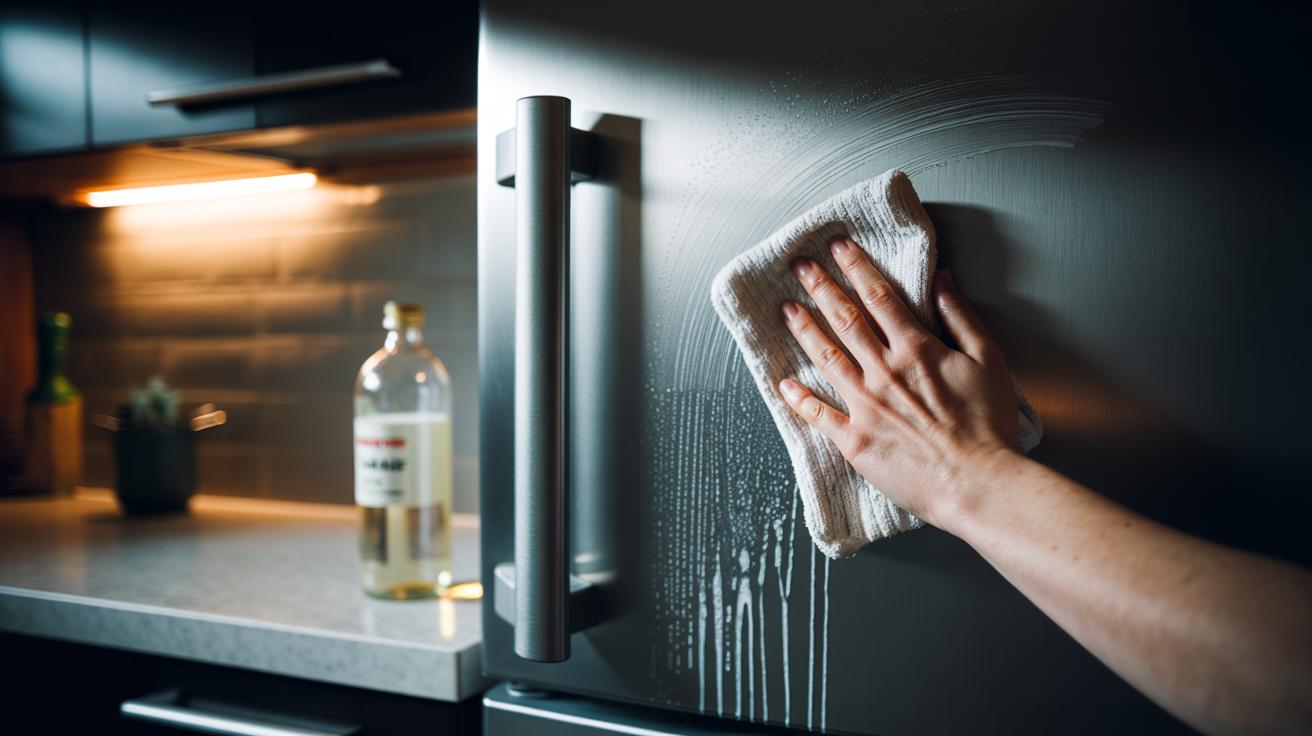
There is something quietly brilliant about turning a forgotten drawer relic into a cleaning ally. Pair an old sock with everyday white vinegar and you unlock a low-cost polish that makes stainless steel gleam without smears or heavy fragrances. The knit fabric acts like a fitted mitt, spreading solution evenly and lifting residue, while the mild acid breaks down grease and limescale. Used correctly, this duo can banish streaks and restore a showroom sheen in minutes. It is a thrifty fix that suits busy homes and rented kitchens alike, and it leaves appliances looking cared for rather than scoured.
Why Vinegar Works on Stainless Steel
Vinegar owes its cleaning clout to acetic acid, typically around five per cent in household bottles. That gentle acidity dissolves mineral spots from hard water, cuts fingerprint oils, and neutralises soap film that makes appliances look cloudy. Crucially, it does this without gritty abrasives that can haze a polished finish. This mild chemistry is often enough to release the dirt causing streaks, allowing a cloth to move smoothly and polish the metal instead of smearing residues across it.
Stainless steel protects itself with a microscopically thin chromium oxide film. Harsh chlorides and abrasive powders can damage that passive layer, inviting corrosion. Vinegar is milder than bleach-based sprays and contains no ammonia, so it loosens grime while leaving that protective skin intact when used briefly and wiped dry. For routine care, a 1:1 mix of vinegar and water works well; for stubborn splashes around a sink, use it nearly neat, then rinse.
Technique matters. Lightly dampen the cloth rather than flooding the surface, let the solution sit for 30–60 seconds on tough spots, and always finish with a dry buff. Avoid vinegar on natural stone, rubber gaskets, or electronic screens, and always patch-test a discreet edge to be sure the finish behaves as expected.
How the Old Sock Becomes a Brilliant Buffing Tool
A retired cotton sock is more than a rag; it is a ready-made glove. Slip it on and you gain fingertip control over curves, handles, and bevelled edges, while the knit loops trap loosened grime instead of pushing it around. Turn the sock inside out and those loops become slightly more textured, ideal for lifting oily fingerprints from brushed panels. That close contact helps you regulate pressure so you clean without scuffing.
The secret to a streak-free finish is marrying chemistry with mechanics. Vinegar frees the residue; the sock supplies the buff. Apply gentle, even strokes along the metal’s grain to align tiny surface lines and avoid crosswise haze. Friction from the fabric warms the surface just enough to speed drying, meaning fewer tide marks. A two-sock method is foolproof: one lightly damp for cleaning, one dry for the final polish.
Choose a clean, colourfast sock—ideally cotton-rich, which is absorbent yet low-lint. Reserve it for metal to prevent grit transfer and wash it without fabric softener to maintain grabby fibres. Microfibre also works, but socks are ubiquitous and form a snug mitt. Buff with the grain for a fast, glassy sheen that resists new streaks, especially on large fridge doors and oven fascias.
Step-by-Step: From Cloudy Door to Streak-Free Shine
Start by dusting the surface so you are not grinding grit into the finish. Mix a simple solution: equal parts white vinegar and water for daily fingerprints, stronger for limescale near sinks. Slip on the sock and mist it lightly—wet cloths leave watermarks. Wipe in long strokes that track the metal’s grain, re-folding the sock to a clean patch as it loads with residue. Let stubborn spots sit for up to a minute before wiping.
Switch to a dry sock for the polish. Using the same grain-following motion, buff until the surface feels dry and slick under your fingertips. Check from an angle: if you see faint arcs, you wiped across the grain; re-buff with the lines. Handles and edges collect oils, so pinch them with the socked thumb and forefinger. Rinse and wring the damp sock midway if it begins to smear.
For maintenance, a weekly quick pass prevents build-up that causes streaks. After heavy cooking, a fast wipe-down removes airborne grease before it bonds. Keep vinegar off touchscreens and control decals; use a slightly dampened cloth with plain water for those. If you prefer a protective finish, a pinhead of food-safe mineral oil on the dry sock can be feathered along the grain after cleaning for added fingerprint resistance.
| Task | Mix | Contact Time | Cloth | Result |
|---|---|---|---|---|
| Light smudges | 1:1 vinegar:water | None | Damp sock, then dry sock | Streak-free refresh |
| Greasy prints | 2:1 vinegar:water | 30 seconds | Damp sock, then dry buff | Clear, even sheen |
| Limescale spots | Neat vinegar | 60 seconds | Damp sock, water rinse, dry buff | Bright, spot-free steel |
In an age of complicated sprays and perfumed polishes, the old sock and vinegar method feels refreshingly grounded. It is frugal, low-waste, and surprisingly effective, delivering that crisp, streak-free finish without mystery ingredients. By working with the metal’s grain and finishing with a light buff, you can keep appliances looking new while avoiding scratches and sticky residues. This is the kind of domestic wisdom that rewards consistency more than force. What other forgotten household items could you press into service for smarter, gentler cleaning in your kitchen?
Did you like it?4.6/5 (30)