In a nutshell
- 🍌 Banana peel compost boosts plant growth by supplying high potassium plus traces of phosphorus and calcium, while feeding the soil food web to build stable humus and structure.
- 🧪 For safe, effective use: chop peels, balance greens and browns, maintain aeration and moisture, or use vermicomposting; avoid “banana peel tea” and apply only well‑finished compost.
- 🌹 Best applications include a 1–2 cm top‑dressing for tomatoes, peppers, courgettes, cucumbers, and roses; mix 10–20% into container media; refresh houseplants lightly; never add raw peels to pots.
- 🧩 Know the limits: peels aren’t a complete fertiliser and are low in nitrogen; prevent myths like quick fixes for blossom end rot, and use periodic soil tests to guide additions.
- 🌍 Wider gains include improved soil structure, better moisture retention, resilience to drought and downpours, and climate‑friendly waste reduction from everyday kitchen scraps.
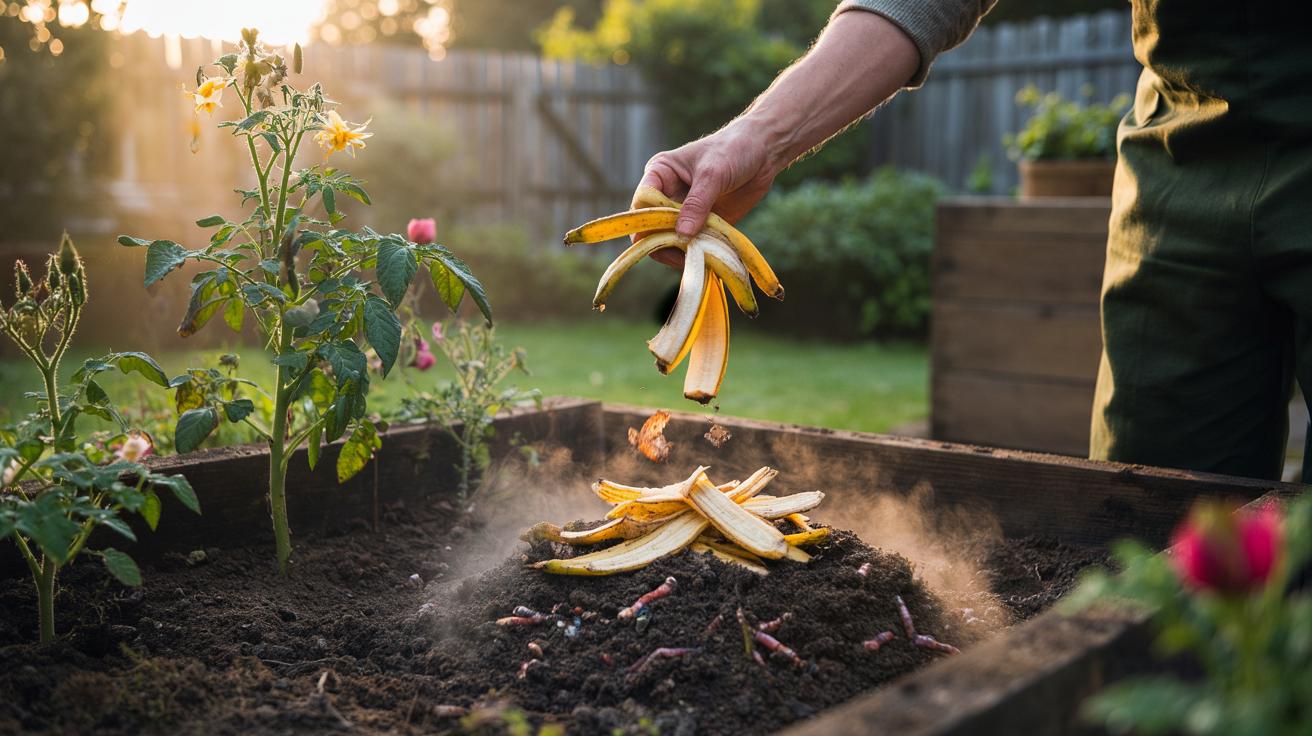
Britain’s bins are brimming with banana skins, yet those leathery leftovers are a quiet powerhouse for the garden. When added to a compost heap, banana peel compost releases a steady trickle of plant-friendly minerals and energises microbes that build crumbly, moisture‑holding soil. Rich in potassium and useful traces of phosphorus and calcium, peels help support flowering, fruiting, and disease resilience. Turning peels into compost is a simple, low‑cost way to recycle kitchen waste into living soil. Unlike quick‑fix additives, the benefits come from biology: peels feed the soil food web, which then feeds your plants. Here’s how and why it works, with practical tips for UK gardens and balconies alike.
Why Banana Peels Enrich Soil
Banana peels are best known for their potassium (K), a nutrient that supports water balance, enzyme activity, and sturdier stems. They also contain modest phosphorus (P) for root development and calcium (Ca) for strong cell walls. Just as importantly, their easily degradable carbon feeds microbes, speeding the creation of stable humus. Healthy soil emerges from microbial teamwork, not from a single nutrient. As peels break down, fungi and bacteria convert their fibres into glues that improve soil structure, creating pore spaces that store air and water. This structure cushions roots against drought and reduces nutrient leaching after heavy rain.
Before you imagine peels as a complete fertiliser, note their limits. They contribute little nitrogen, so they should complement, not replace, a balanced mix of kitchen scraps and garden trimmings. Chopping peels speeds decomposition and deters pests. In a hot, well‑managed heap, they can vanish in a few weeks; in cool bins they take longer. Think of peels as the potassium‑rich “spark plug” within a diverse compost recipe.
| Component | Relative Level | Primary Benefit |
|---|---|---|
| Potassium (K) | High | Flowering, fruiting, disease tolerance |
| Phosphorus (P) | Low–Moderate | Root growth, energy transfer |
| Calcium (Ca) | Moderate | Cell walls, resilience under stress |
| Readily degradable carbon | High | Feeds microbes, builds humus |
| Fibres (cellulose, lignin) | Moderate | Soil structure and moisture holding |
How to Make and Use Banana Peel Compost Safely
Start by saving peels in a lidded caddy. Chop them into postage‑stamp pieces to increase surface area and reduce odour. Layer them into your bin with “browns” (dry leaves, shredded cardboard) and “greens” (veg trimmings, coffee grounds) to keep a breathable mix. Aim for a moist, springy feel—like a wrung‑out sponge—then turn the heap for oxygen. Good aeration is the difference between sweet compost and a smelly, anaerobic mess.
To avoid attracting foxes or rodents, bury peel pieces inside the heap rather than topping it with fresh scraps. In an active pile, expect breakdown within 3–6 weeks; in cool weather, allow 8–12. Vermicomposting (worm bins) can process chopped peels in 1–2 weeks, producing nutrient‑rich castings ideal for pots and window boxes. If you buy non‑organic bananas, composting still helps: microbes reduce many surface residues as material stabilises.
Skip the so‑called “banana peel tea”. It leaches a narrow set of nutrients, can smell, and lacks the microbial diversity plants crave. Always apply well‑finished compost to edible beds and containers. Finished means dark, earthy, and crumbly, with original materials no longer recognisable. Sieve if using in seed mixes or houseplant soils.
Best Ways to Apply for Stronger Growth
For fruiting veg such as tomatoes, peppers, courgettes, and cucumbers, use peel‑rich compost as a 1–2 cm top‑dressing around plants, keeping it off stems. Water in to settle it. The steady release of potassium supports flowering and fruit set, while the organic matter improves moisture buffering during heatwaves. Roses also respond well: mulch in spring and again after the first flush to sustain repeat blooms. A little, applied regularly, beats occasional heavy doses.
For containers, blend 10–20% finished compost into peat‑free potting mix. This boosts cation exchange and microbial life without making mixes too heavy. Houseplants like peace lilies, rubber plants, and monsteras benefit from a thin surface layer every few months; brush away old crusts before adding fresh. Avoid raw peels in pots—they ferment, smell, and can invite fungus gnats. In containers, stability and hygiene matter as much as nutrients.
On lawns and beds, rake a light dusting of fine compost after aeration to improve structure and water retention. Root crops appreciate better soil tilth, though avoid over‑rich mixes that push lush foliage at the expense of roots. For young seedlings, use only mature, sieved compost in modest amounts; strong, unfinished material can scorch tender roots. Coupled with regular watering, this approach turns everyday waste into sustained, season‑long vigour.
Myths, Limits, and Evidence
Peels are not a miracle cure, nor are they a balanced fertiliser. They excel at potassium but fall short on nitrogen, so pair them with leafy “greens” and other kitchen scraps to round out your compost. Blossom end rot in tomatoes is usually about erratic watering and calcium transport, not a simple calcium shortage. A peel won’t fix that overnight; consistent moisture and overall soil health will.
Another myth is that blending peels into soil is faster. In reality, buried whole peels can go anaerobic, drawing down oxygen and attracting pests. Composting first lets microbes pre‑digest fibres, turning them into stable organic matter that plants can actually use. Concerns about heavy metals are generally misplaced in home settings; peels can adsorb metals in lab tests, but typical household compost levels are safe when sourced from clean waste.
To keep claims honest, consider a basic soil test every couple of years, especially in productive veg plots. Results help you decide whether to add extra nitrogen or lime, and prevent both deficiencies and waste. The smartest strategy is diversity: mix peels with varied feedstocks, maintain aeration, and let biology do the heavy lifting. That way, you build resilience into the soil rather than chasing silver bullets.
Turning banana peels into compost is a practical act of climate‑friendly gardening that fits into any UK home, from balcony bins to back‑garden heaps. It strengthens the soil microbiome, adds gentle doses of potassium, and improves structure so plants ride out droughts and downpours with less stress. When you feed soil life, it repays you with healthier plants and more reliable harvests. With a caddy, a sharp knife, and a little patience, you can convert everyday waste into a season’s worth of growth. How will you use your next batch of peels to power the beds, borders, or pots you care about most?
Did you like it?4.5/5 (28)