In a nutshell
- 🌿 Ground cinnamon suppresses soil-borne fungi behind damping-off (e.g., Pythium, Fusarium, Rhizoctonia) via oils like cinnamaldehyde that disrupt spores at the soil surface.
- 🛠️ The one-minute method—dust, water, observe—uses a whisper-thin veil applied with a strainer, gentle bottom watering, and daily checks to protect seedlings, cuttings, and houseplants without shocking tender tissue.
- ⚖️ Apply sparingly: a pinch per 10 cm seed row, ~1/4 tsp for a 15 cm pot, a fine ring for cuttings, and a light bulb dust; repeat only when displaced—consistency beats quantity.
- 🧯 Safety and limits: cinnamon is not a registered fungicide; overuse may affect beneficial fungi. Avoid dust clouds, keep pets away, and pair with clean tools, airflow, and well-drained peat-free compost.
- 🌱 Practical payoff: this low-cost prevention buys time for roots to anchor and reduces early losses, especially in erratic UK growing conditions—an easy habit that strengthens plant health.
On damp spring windowsills and crowded greenhouse benches, one pantry staple quietly outperforms pricier potions. A light sprinkle of ground cinnamon over compost can hold back the fungi that raze seedlings overnight and nibble at houseplant roots. A single dusting takes seconds yet often buys your plants crucial breathing space during the most vulnerable stage of growth. As gardeners grapple with peat-free mixes, erratic weather, and tight budgets, this quick, low-tech step offers rare simplicity. Here’s how cinnamon soil dust works, how to apply it in under a minute, and where its limits lie—so your plants stay upright, perky, and disease-resilient.
Why Cinnamon Works Against Soil-Borne Fungus
Cinnamon’s edge comes from its essential oils, notably cinnamaldehyde and traces of eugenol, which exhibit broad-spectrum antifungal activity. These compounds disrupt fungal cell membranes and interfere with spore germination. In the pot, the fine, hydrophobic powder helps keep the surface drier and less welcoming to the pathogens behind damping-off, including Pythium, Fusarium, and Rhizoctonia. Crucially, cinnamon acts locally at the soil surface, where young stems and emerging roots are most at risk. While it is not systemic and won’t cure deep-root infections, it can tip conditions in the rhizosphere toward health during critical early days.
Think of it as a hygienic barrier plus a biochemical nudge. Unlike harsh fungicides, a light dust seldom bothers seedlings when used sensibly. It won’t fix chronic overwatering or poor airflow, but it can slow disease pressure while you correct those cultural problems. Used promptly after sowing or repotting, cinnamon helps stop problems before they spiral. For many home growers, that modest prevention is the difference between a flat of losses and a tray of robust starts.
The One-Minute Method: Dust, Water, Observe
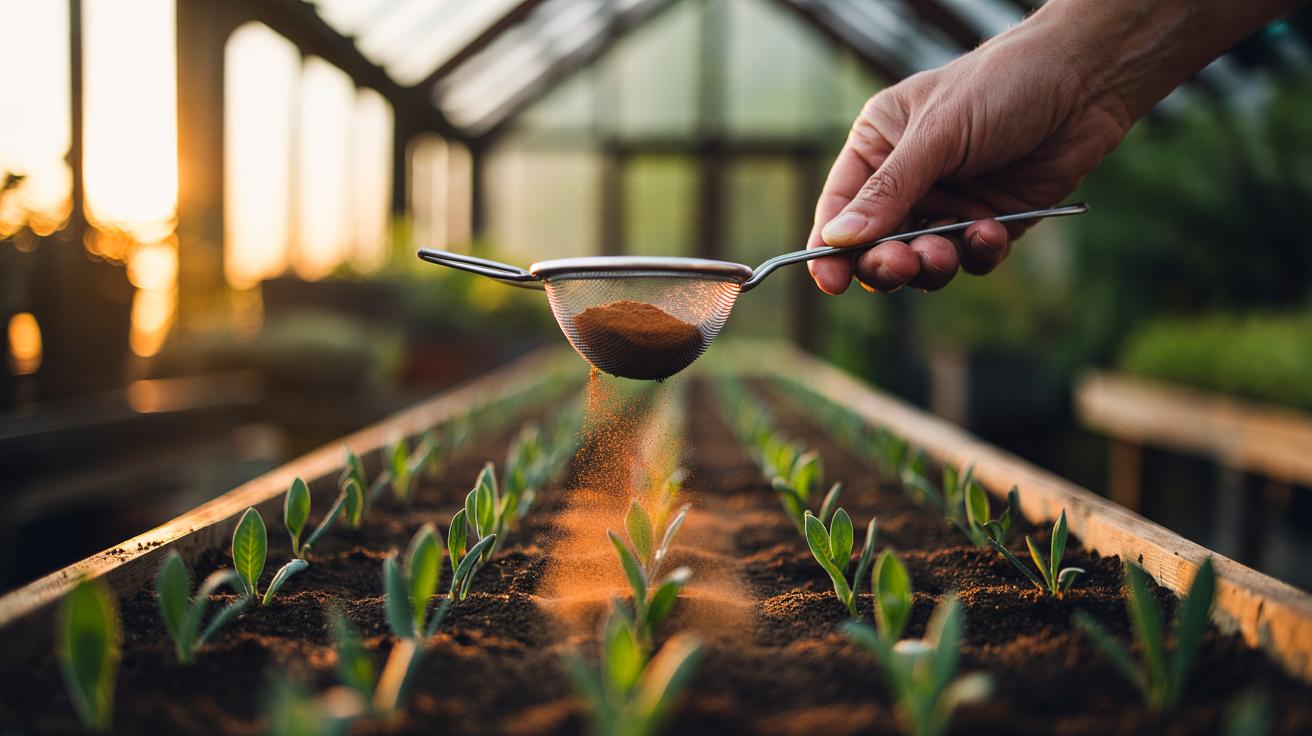
Start with evenly moist compost. Tap ground cinnamon through a tea strainer or pinch between finger and thumb, creating a faint, even veil—no thicker than light cocoa on a cappuccino. Circle the base of each stem and the immediate root zone; avoid burying collars. For flats, dust the rows after sowing and again when seedlings prick out. Water from below or gently at the edge so the powder isn’t blasted into clumps. Keep the top centimetre airy, not soggy, and the cinnamon can do its quiet work.
For houseplants prone to gnats and root nibbling, refresh the dusting after top-dressing or following a wet spell. With cuttings, apply immediately after sticking them into medium to deter opportunists like Botrytis. Watch daily: if you see translucent, pinched stems or grey fuzz, pull affected plants, improve ventilation, and consider a second light dust—never a thick layer. Remember: cinnamon is a guardrail, not a licence to overwater. Pair it with clean tools, spacing, and bright but gentle light.
How Much and How Often
The goal is a whisper-thin coating—visible, yet not clumpy. Heavy applications can dry the surface excessively and may irritate tender tissue. For most uses, one conservative dusting is enough; repeat only after watering has visibly displaced the powder or disease pressure returns. If you can smell a strong waft of cinnamon from a metre away, you probably used too much. Here are quick guide amounts that keep the balance right while minimising any collateral impact on beneficial microbes.
| Plant Stage | Amount of Cinnamon | Frequency | Notes |
|---|---|---|---|
| Seeds/Seedlings | Pinch per 10 cm row or light veil over tray | Once after sowing; again after pricking out if needed | Discourage damping-off at collar |
| Established Houseplants | ~1/4 tsp for a 15 cm pot | After heavy watering or top-dressing; monthly at most | Helps keep surface drier, deters gnats |
| Softwood Cuttings | Fine ring around stem base | Once at insertion | Discourages Botrytis and collar rot |
| Bulbs/Tubers | Dust lightly before potting | Single application | Acts as a dry barrier during establishment |
Store cinnamon dry and sealed; freshness matters. Cassia and Ceylon types both work, though potency varies by brand. Consistency beats quantity: apply sparingly, keep the top layer airy, and let the roots explore a well-drained mix.
Safety, Limits, and Scientific Context
Lab and greenhouse studies consistently show cinnamaldehyde-rich extracts suppress pathogens such as Pythium, Fusarium, and Botrytis, yet in real pots performance depends on moisture, media, and microbial competition. Cinnamon is not a registered fungicide and should be treated as a cultural aid, not a cure-all. Too much can irritate skin, lungs, or pet tummies if ingested; use a strainer, wear a simple mask if sensitive, and keep curious animals away while dust settles. Avoid blowing clouds over leaves; aim for the soil surface.
Because cinnamon’s oils are broad-spectrum, overuse can nudge against some beneficial fungi. Keep doses light and focus on prevention: clean propagation trays, good airflow, and steady temperatures. Pair with sound basics—sterile tools, peat-free compost of consistent quality, and watering that fully saturates then allows proper drainage. The most reliable regime is simple: dust lightly, water wisely, ventilate faithfully. If problems persist, reassess light levels, density, and the health of your starting material before reaching for stronger interventions.
A pinch of cinnamon is not gardening magic; it’s a small, targeted habit that stacks the odds in favour of healthy growth. In practice, it buys time for roots to anchor, stems to toughen, and growers to fix the underlying risk factors of poor airflow and excess moisture. Used with restraint and routine care, this soil dusting prevents a raft of avoidable losses. Will you add a teaspoon to your potting bench, log your results over a month, and see how this tiny tweak reshapes survival rates across your next wave of seedlings and houseplant refreshes?
Did you like it?4.6/5 (25)