In a nutshell
- 🌾 Dissolved starches in boiled rice water act as a prebiotic for soil microbes, improving nutrient availability and promoting leaf growth.
- 🧪 Prepare safely: use unsalted, unoiled water, cool and strain, dilute 1:2 to 1:4, and use within 24 hours to prevent fermentation.
- 📅 Apply every 2–4 weeks in active seasons, alternating with plain water and a balanced fertilizer to keep nutrition complete.
- 🪴 Best suited to foliage plants like Pothos, Monstera, Philodendron, and Peace lily; use sparingly for succulents and cacti.
- 🚨 Watch for risks: avoid waterlogged mixes, discard sour or fizzy batches, and treat rice water as a supplement, not a substitute.
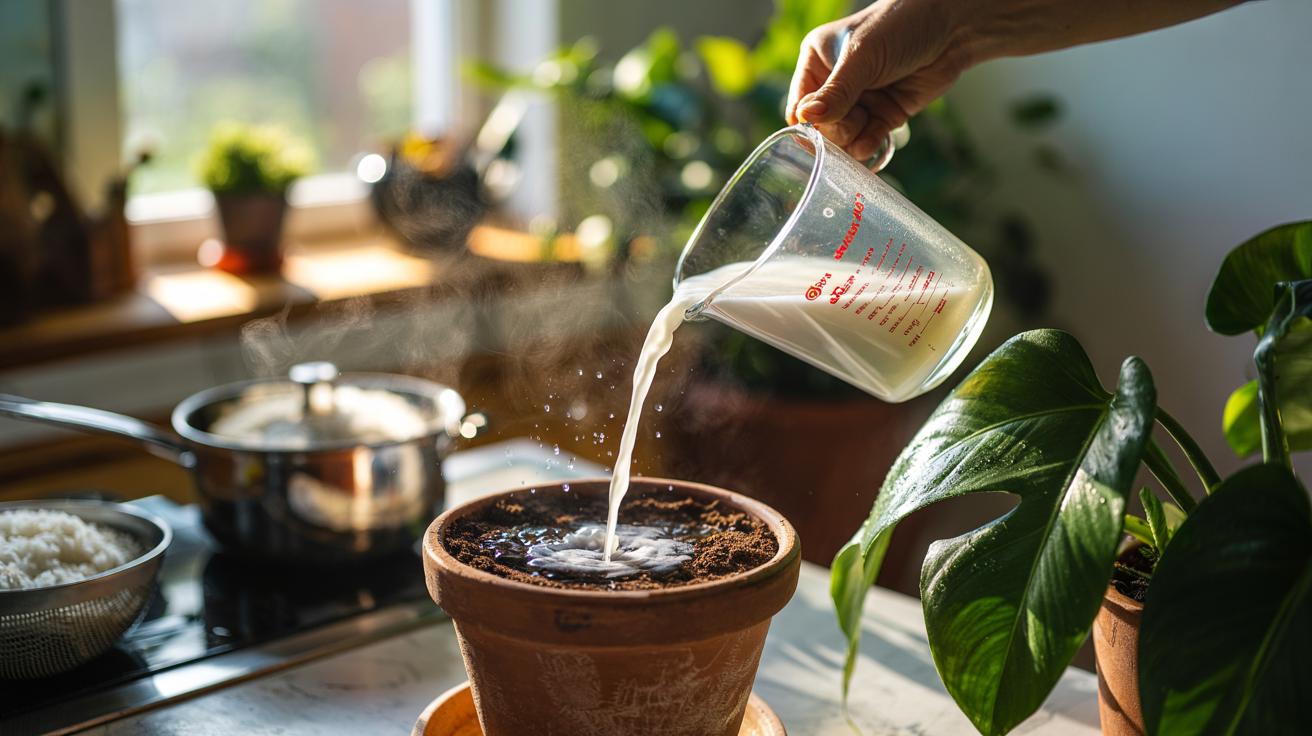
Leftover water from boiling rice, often poured down the sink, can become a quiet ally for your houseplants. Rich in soluble starches and trace minerals, this cloudy liquid supports microbial life in potting mixes and can nudge greener, lusher foliage. Home growers value it as a low-cost, low-waste tonic that complements routine care rather than replacing fertilizer. The key is thoughtful preparation: no salt, no oil, and proper dilution to keep roots safe. Used correctly, rice water recycles kitchen by-product into gentle nourishment, aligning plant care with sustainable habits while encouraging steady leaf growth indoors.
Why Rice Water Boosts Leaf Growth
Rice water owes its greenery-boosting reputation to its mix of complex carbohydrates and trace elements. The dissolved starch acts like a prebiotic for beneficial microbes living in potting soil. As these microbes digest the carbohydrates, they release organic acids and enzymes that make locked-up nutrients more accessible to roots. This microbial nudge translates into steadier nutrient uptake and a visible lift in leaf color and density. In healthy, aerated substrates, that means more chlorophyll production and stronger, more resilient foliage without the harsh spikes that come from heavy feeding.
Alongside starch, small amounts of phosphorus, potassium, and silica leach from rice into the water, while B vitamins and amino acids may appear in trace levels. None of this turns rice water into a complete fertilizer—its NPK is minimal—but it does provide a gentle, complementary boost. The real advantage is its mildness: it supports growth without scorching roots or oversalting the mix. That said, overuse can sour the substrate as microbes bloom and oxygen drops. If a pot smells sour or feels soggy, pause applications and let the soil dry and re-aerate.
How to Prepare and Apply It Safely
Start with unsalted, unoiled rice. You can use either the first rinse or cooled, diluted boil water. Strain out grains, then let the liquid cool to room temperature. For most houseplants, dilute at least 1:1 with fresh water; delicate species prefer 1:3 or 1:4. Water the soil evenly until slight runoff, ideally when the pot is already a touch dry. Never store rice water for long; use within 24 hours to avoid fermentation and off-odors. Apply every two to four weeks during active growth, alternating with plain water and your usual balanced feed to keep nutrition complete.
Keep it off leaves to limit film and mold; if foliar use is desired, wipe rather than spray. Avoid in waterlogged mixes or poorly draining pots. Rice water should smell neutral to faintly starchy—discard anything sour or fizzy. Do not use salted cooking water, and skip water that contains oil or spices, which can coat roots and repel moisture. Think of rice water as a supplement, not a substitute, for your regular fertiliser plan.
| Method | Preparation | Dilution | Frequency | Notes |
|---|---|---|---|---|
| First Rinse | Swirl raw rice in clean water; strain | 1:2 (rice water:fresh water) | Every 2–4 weeks | Mildest; good for sensitive plants |
| Boil Water | Use unsalted cooking water; cool fully | 1:3 for safety | Every 3–4 weeks | Higher starch; monitor for sour odour |
| Brief Ferment | Rinse water rested 12–24h, loosely covered | 1:4 minimum | Monthly | Stronger; stop if smell is sharp |
Best Plants, Timing, and Frequency
Leaf-forward houseplants respond most noticeably. Pothos, Monstera, Philodendron, Peace lily, and many ferns appreciate the gentle nudge, especially in bright, indirect light. Calatheas and marantas can benefit too if the mix drains freely. Use sparingly with succulents and cacti, which prefer lean, fast-drying conditions; excess carbohydrate in damp soil can foster rot. Orchids in bark can receive very dilute applications, but only during warm, active growth and with excellent airflow.
Timing matters. Offer rice water in spring and summer when plants push new leaves and can process extra inputs. Reduce or pause in winter dormancy or under low light. A handy rhythm is to rotate: plain water, rice water, then a balanced fertiliser at label strength, repeating as needed. This keeps nutrients balanced and prevents microbial overdrive. Watch your plants: richer green, plumper petioles, and quicker unfurling signal success. If growth stalls or the potting mix stays wet, lengthen the interval or further dilute. Plant cues should guide your schedule.
Used with care, rice water turns kitchen leftovers into plant energy, cushioning the gap between plain watering and full-strength feeding. The mild starch-driven microbial boost can brighten foliage, provided the substrate stays airy and applications remain occasional. Keep it simple: no salt, proper dilution, prompt use, and attentive observation. When you treat rice water as a supplement rather than a cure-all, it becomes a tidy, sustainable tool in the indoor gardener’s kit. What plant in your collection is first in line for this cloudy tonic, and how will you tailor the dilution to its light, season, and potting mix?
Did you like it?4.5/5 (20)