In a nutshell
- 🌱 Root-pruning resets congested root architecture, stimulates dense feeder roots, boosts water and nutrient uptake, and prevents girdling.
- 🕰️ Prioritise timing (late winter–spring) and watch warning signs: water sheeting, roots from drainage holes, stunted growth; refresh with a suitable peat-free mix.
- 🧰 Step-by-step: pre-water, tease 1–2 cm, make shallow vertical cuts, remove 10–20% of root mass, trim black roots, add mycorrhizal inoculant, repot, water well, and delay feeding 3–4 weeks.
- ⚠️ Risks and aftercare: avoid heatwaves and full bloom, balance canopy and roots, use clean tools, keep even moisture, and water by need while monitoring for wilting.
- 🌿 Long-term payoff: steadier watering, richer growth and flowering, stronger anchorage, and sustainable root maintenance every 2–3 years without constant up-potting.
Pot-grown plants often appear lush above the rim while struggling below the compost line. As containers restrict space, roots can spiral, compact, and exhaust the potting mix, leading to weak growth, erratic watering, and dwindling blooms. That is where root-pruning steps in: a targeted trim that resets the underground architecture, invites fresh feeder roots, and restores balance between canopy and container. Cutting carefully encourages healthier, denser roots that drink and feed more efficiently. With clean tools, sensible timing, and a steady hand, gardeners can prevent plants becoming pot-bound, reduce stress in heatwaves, and extend the productive life of prized specimens, from citrus and olives to Japanese maples and houseplants.
Why Root-Pruning Works
In a pot, roots circle the wall, knit into a tight mat, and begin to strangle themselves. This reduces pore spaces, starves the root zone of air, and limits nutrient uptake. A deliberate trim triggers a repair response: plants allocate hormones to generate fibrous feeder roots close to the cuts, where oxygen and fresh compost are abundant. The result is a younger, more active root system with dramatically improved water and nutrient absorption. By interrupting circling roots, you also stop girdling, which can throttle stems over time. Think of it as pruning shoots—only below the surface—redirecting vigour instead of allowing chaotic growth.
Biologically, pruning nudges the auxin–cytokinin balance, favouring new root tips that explore refreshed media. Those tips partner with beneficial microbes, improving nutrient solubility, especially phosphorus and micronutrients often depleted in long-term potting mixes. Air exchange increases when the root ball is loosened and reduced, curbing anaerobic pockets that harbour rot. After a light trim, plants typically show steadier watering behaviour, fuller foliage, and stronger flowering because a healthier root system supports sustained top growth without the rollercoaster of drought and saturation.
When to Prune and What to Look For
Timing is key. Late winter to early spring in the UK, just as growth resumes, is ideal for most hardy container plants; houseplants can be tackled in spring or early summer. Avoid heavy root work in heatwaves, during peak bloom, or immediately after repotting. Look for warning signs: water sheeting off the surface, roots visible through drainage holes, a pot-shaped root mass, or stunted new growth. Nutrient issues—leaf yellowing despite feeding—often trace back to a congested, air-starved root zone. If a plant dries out suspiciously fast yet wilts between waterings, the root ball is likely overpacked and thirsty for structure, not just moisture.
Inspect by sliding the plant from its pot. If you see thick, circling roots and little compost, it is time to act. Younger plants might only need teasing; older specimens can tolerate removing 10–20% of the root mass. Evergreens prefer lighter work than deciduous shrubs. After pruning, always refresh the outer layer with a free-draining, peat-free mix suited to the species (ericaceous for acid lovers, gritty for Mediterranean plants).
| Indicator | What It Tells You | Action |
|---|---|---|
| Roots circling the pot edge | Root congestion and poor aeration | Trim outer mat; make vertical cuts |
| Water runs off surface | Hydrophobic, compacted mix | Tease, prune lightly; repack with fresh mix |
| Stunted growth despite feeding | Impaired uptake | Reduce root mass 10–15%; refresh compost |
| Roots poking from drainage holes | Pot-bound plant | Trim tail roots; consider a one-size-up pot |
Step-by-Step Method for Safe Root-Pruning
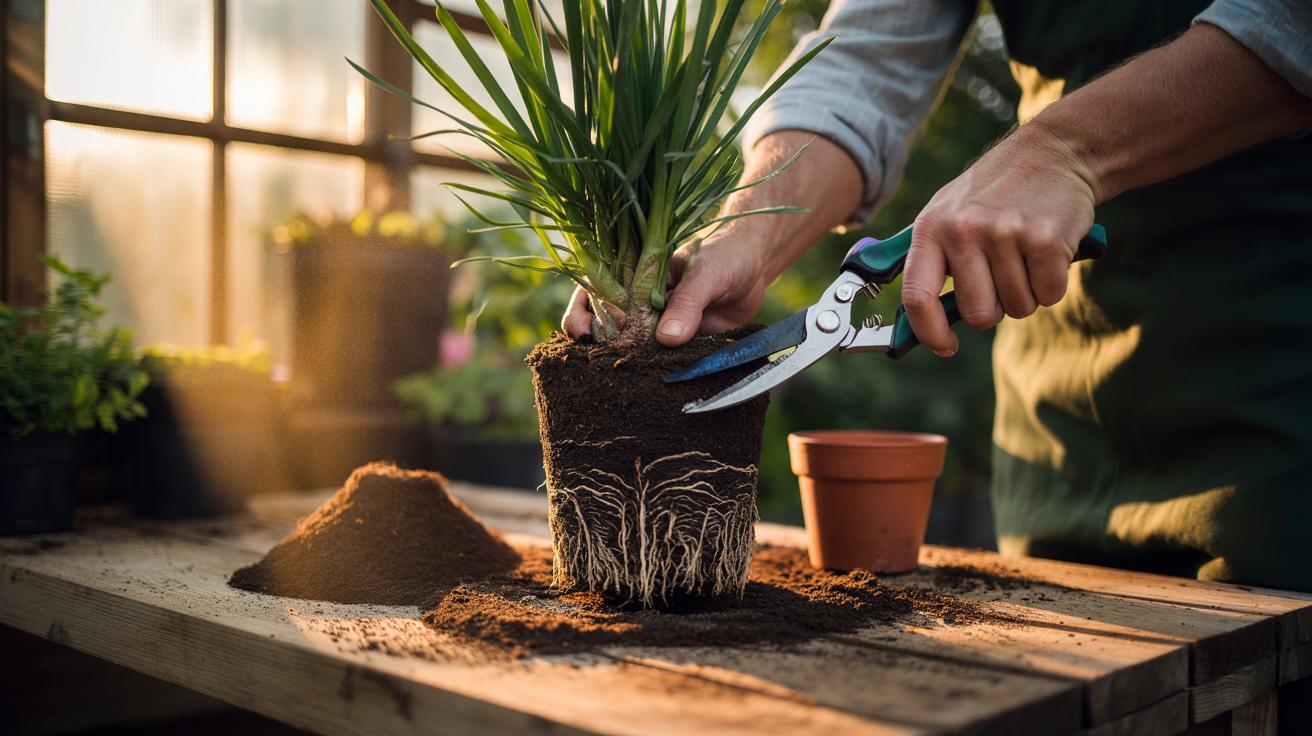
Water the plant a day beforehand so the root ball is moist but not soggy. Knock the plant out gently, laying it on a clean surface. With a hand fork or fingers, tease away the outer 1–2 cm of roots and spent compost. Slice four to six shallow, vertical cuts up the sides of the root ball with a sterilised knife or pruning saw—about 1–2 cm deep for small pots, deeper for larger specimens. Remove up to 20% of the root volume on mature, resilient subjects; keep it to 10% for tender or slow-growing plants. Always prioritise removing thick, circling roots that could girdle stems later.
Trim any blackened or mushy roots back to firm, pale tissue. Dusting cuts with a light sprinkle of mycorrhizal inoculant can support rapid re-establishment in species that benefit. Repot into the same container or one size larger, backfilling with fresh, appropriate mix and a handful of slow-release organic fertiliser. Firm gently to remove air gaps, water thoroughly until excess drains, and keep the plant shaded and sheltered for a week. Delay strong feeding for 3–4 weeks while new roots knit; resume normal light levels gradually to avoid shock.
Risks, Aftercare, and Long-Term Payoff
Over-pruning can set a plant back. If the canopy is much larger than the pruned root system, transpiration outpaces uptake. Lightly thin the top growth on woody plants to balance the equation, and keep humidity steady for houseplants after the operation. Use clean, sharp tools to avoid infection, and never work in saturated compost, which makes roots tear rather than cut. Do not root-prune when plants are in full flower or under heat stress; wait for a cooler spell or early spring. Watch for wilting over the next fortnight and water by need, not habit—aiming for even moisture and good drainage.
The reward is substantial. Root-pruned plants exhibit denser, more efficient roots that anchor better in storms, access water across the pot, and support richer leaf colour and bloom. In the UK’s stop-start seasons, a refreshed root system buffers against erratic rainfall and hosepipe bans by using moisture more efficiently. Expect a brief pause in top growth followed by a noticeable uptick in vigour within 4–6 weeks. Over time, periodic root maintenance every 2–3 years keeps prized containers thriving without constant up-potting, saving space, compost, and money.
Root-pruning is not a drastic rescue but a routine tune-up—one that restores air, structure, and appetite to tired root balls. With modest cuts, clean technique, and species-appropriate timing, containers regain balance and respond with resilient growth, steadier watering, and stronger flowering. A little off the bottom and sides can add years to a plant’s productive life. Which of your potted plants is showing the first signs of congestion, and how might a careful trim change its performance this season?
Did you like it?4.7/5 (20)