In a nutshell
- 🌿 Use cardboard mulch in a no-dig approach to block light, starve weeds, and build richer soil—chemical-free and affordable.
- 🧭 Step-by-step: remove tape and staples, avoid glossy boxes, overlap 10–15 cm, soak thoroughly, add 5–10 cm mulch, peg edges, and plant via X-cuts with a 10–15 cm clear collar.
- ⏳ Timelines: most weeds fade in weeks; cardboard breaks down in 6–12 months; double layer for tough perennials like bindweed and couch grass.
- 🐌 Pitfalls: slugs may shelter under mulch—use predators and grit; don’t exceed 10–12 cm depth; avoid using near Japanese knotweed.
- 🥕 Applications: convert lawns, establish veg beds, paths, and tree rings; improves soil health, retains moisture, cuts watering, and reduces plastic use.
Gardeners across Britain are quietly defeating weeds with a humble household material: cardboard. It’s simple, cheap, and oddly satisfying. Lay it down. Wet it. Mulch over the top. Then let soil life do the heavy lifting while you enjoy a tidier plot. This long-used technique—often called sheet mulching or the no-dig approach—blocks light, starves weed roots, and builds richer ground as the cardboard breaks down. There are no herbicides, no plastic membranes, and far less back-breaking hoeing. Better yet, you can repurpose delivery boxes that might otherwise end up in the bin. Here’s how the cardboard trick works and how to make it last.
Why Cardboard Works as a Weed Barrier
Cardboard shuts weeds down by excluding light. Without photosynthesis, most annuals and many perennials simply give up. The material is porous, too. Rain seeps through. Air circulates. Soil breathes. That’s crucial for healthy roots and microbes. Cardboard mulch also creates a dark, moist layer that attracts worms; they drag fibres into the earth and leave behind nutrient-rich castings. This is weed control and soil-building in one pass, without synthetic chemicals. It’s a natural filter. It slows evaporation. Your beds keep moisture longer during dry spells, so watering demands often drop.
Compared with plastic weed fabric, cardboard decomposes into humus within months, leaving no residue. It suppresses freshly fallen weed seeds by stopping their germination, and it smothers established growth below by denying light to leaves and shoots. Choose it when converting lawn to beds, establishing orchard rings, or reclaiming borders overtaken by opportunists like groundsel and nettles. Weed suppression happens fast; soil improvement follows. That double benefit is why no-dig gardeners swear by it.
Step-By-Step: Laying Cardboard Mulch
Start by choosing plain, brown, corrugated cardboard. Avoid shiny finishes and heavy-colour prints; those often contain plastic films. Remove all tape, labels, and staples to prevent microplastic and metal in your soil. Do not use glossy packaging or frozen-food boxes as they may contain waterproof coatings. If weeds are tall, strim or mow to ground level. Rake off seed heads. Lightly water the soil so the layer below is hospitable to decomposers and won’t wick moisture away from new plantings.
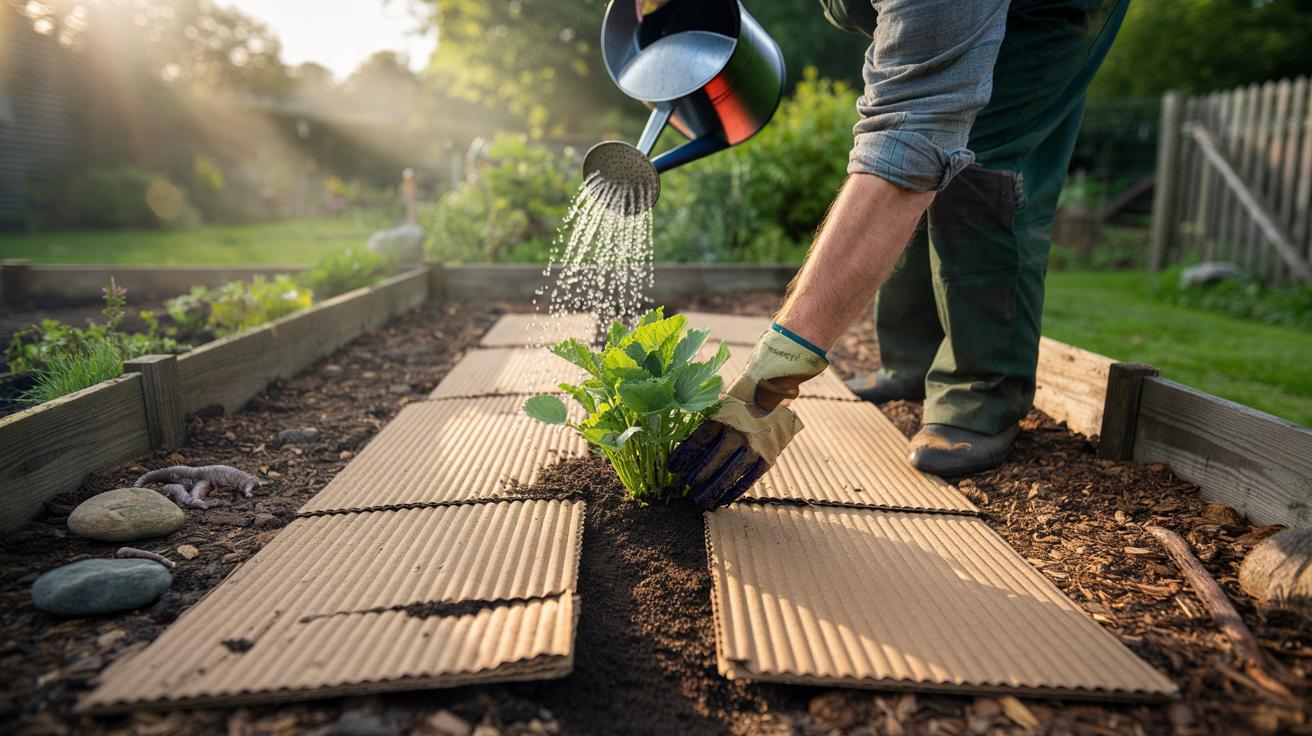
Lay sheets so they overlap by 10–15 cm, with no gaps around edges or stems. Overlap generously to block light; small gaps equal future weeds. Wet the cardboard thoroughly until it softens and sits snugly on the ground. Then cover with 5–10 cm of organic mulch—compost for a bed you’ll plant soon, or wood chips/straw for paths and tree rings. Peg corners with biodegradable pins or weigh down with stones. To plant immediately, cut an X through the cardboard and tuck flaps back, keeping a 10–15 cm clear collar around trunks or crowns. Never bury the base of shrubs or trees.
What to Expect: Timelines, Pests, and Pitfalls
In cool, damp UK conditions, cardboard begins breaking down within 6–12 months. Shallow-rooted weeds fade within weeks, while tougher perennials need patience or a second layer. For bindweed, couch grass, or horsetail, double up the cardboard and extend the smothering period. You can transplant through the mulch on day one, but direct sowing is best once the top layer has settled and the cardboard has softened, usually after a few weeks. In heavy clay, the method shines, reducing compaction and improving tilth as worms mix organic matter downwards.
Slugs may shelter beneath mulch, particularly in wet summers. Raise plant resilience with strong transplants, try rough mineral barriers (like grit), and encourage predators—frogs, beetles, hedgehogs. Don’t pile mulch thicker than 10–12 cm; overly deep layers can turn airless and cause sour smells. Edge vigilance matters: wind lifts corners, so pin well. Avoid using the technique near invasive species like Japanese knotweed; seek specialist control. Cardboard mulch is forgiving, but it isn’t magic. Good edges, right depth, and moisture make it sing.
| Parameter | Recommendation |
|---|---|
| Cardboard Type | Plain brown corrugated; no glossy coatings |
| Overlap | 10–15 cm to exclude light |
| Wetness | Thoroughly soak after laying |
| Mulch Depth | 5–10 cm compost or wood chips |
| Breakdown Time | 6–12 months in UK climates |
| Best For | New beds, paths, tree rings |
| Use Caution With | Bindweed, couch grass, horsetail, knotweed |
Using the Method in Vegetable Beds and Borders
For new veg plots, many UK growers follow no-dig gardening principles: cardboard first, then a generous blanket of compost. Transplants thrive immediately, while seeds do best once the surface has settled and fine material sits on top. Think brassicas, squash, leeks—plants with sturdy root balls. Cut neat slits to plant and tuck cardboard back so soil contacts roots. In borders, place larger sheets around shrubs and perennials, minding a gap around stems to prevent rot. Paths laid with cardboard plus wood chips deliver clean shoes and near-zero weeding for a season.
Beyond weed control, the payback is structural. Soil health improves with a steady trickle of carbon, fewer disturbances, and abundant micro-life. You save time and water. You also reuse packaging that would otherwise be wasted. Every sheet is a small climate action: fewer plastic membranes, more soil carbon. Keep a stash of flattened boxes in the shed for quick repairs or a new bed impulse. The method scales—tiny terrace gardens, sprawling allotments, and community spaces all benefit.
Used well, cardboard mulch is a quiet revolution: less weeding, fewer inputs, softer soil underfoot. It doesn’t need perfection, just attention to overlaps, moisture, and depth. Watch the worms return. Watch the weeds retreat. Then plant boldly. Natural, chemical-free weed control is within reach of any household with a stack of boxes and a watering can. What corner of your garden could you reclaim this weekend with a few sheets of cardboard and a layer of living mulch?
Did you like it?4.6/5 (20)