In a nutshell
- 🐜 White vinegar disrupts ant pheromone trails, acting as a deterrent on hard surfaces rather than a colony killer.
- 🧪 Mix smart: 1:1 for routine use, 2:1 for stubborn trails, and neat for spots; add a drop of washing-up liquid and never mix with bleach.
- 🧹 Apply precisely on paths and cracks, avoid foliage, time for early/late hours, reapply after rain, and test on sensitive stone like calcareous surfaces.
- 🧱 Complement with housekeeping: sweep regularly, seal joints, use diatomaceous earth in dry crevices, and place low-dose boric acid baits safely.
- 🌿 Aim for balance—relocate ants, don’t eradicate; an eco-friendly, low-cost routine keeps UK garden paths clear without harsh chemicals.
British gardens are buzzing with life in spring, and not all visitors are welcome. When ants turn your paving into a motorway, you don’t need harsh chemicals to reclaim the walkway. A humble bottle of white vinegar can shift the balance. It’s cheap. It’s quick. It works with a light touch rather than a sledgehammer. The trick lies in how you mix and apply it so your garden path stays clear while borders remain safe. Keep vinegar on hard surfaces and off living foliage. Done right, this remedy disrupts trails, discourages foraging, and nudges the colony elsewhere without leaving a toxic legacy in the soil.
Why Vinegar Works on Ants
Ants coordinate using pheromone trails, chemical breadcrumbs that guide workers to food and back to the nest. The acetic acid in vinegar scrambles those scent maps, breaking links in the chain. It’s not magic; it’s chemistry. At around 5% acidity, household white vinegar is strong enough to mask odours and erase paths without introducing synthetic pesticides. Think of vinegar as a deterrent and trail disruptor, not a colony killer. The odour hits hard at first, then softens, but by then the navigational lines are gone and the route feels “unsafe” to scouts.
Contact matters. Sprayed directly into cracks, vinegar seeps into gaps where trails concentrate. Some report brief knockdown of workers on contact, though the principal action is sensory interference rather than toxicity. That nuance is important for a family garden. You want fewer ants on the patio slabs, not an ecological scorched earth. Use it to push ants off the path and back into the beds and hedgerows where they belong.
How to Mix the Ideal Solution
Reach for plain, distilled white vinegar at 5% acidity. For routine maintenance, mix a 1:1 ratio of vinegar to water in a clean spray bottle. For stubborn lines, go stronger at 2:1. Add one drop of washing-up liquid to break surface tension so the spray wets stone pores and the edges of joints. Peppermint or clove oil can be added for scent-based reinforcement, but they’re optional. Do not mix vinegar with bleach or any chlorine product; that pairing can release dangerous gases indoors or in sheds.
Label the bottle clearly and store it away from children and pets. Shake before use because even a tiny dose of soap can separate. Expect a sharp smell for 10–20 minutes outdoors, then a faint tang that fades. If you’re using on delicate materials, test in an inconspicuous corner first. Avoid polished limestone, marble, or resin-bound surfaces prone to etching. Here’s a quick reference for ratios and use-cases:
| Mixture | Use Case | Notes |
|---|---|---|
| 1:1 vinegar:water | Routine trail disruption | Best for weekly maintenance |
| 2:1 vinegar:water | Persistent trails in cracks | Stronger odour, quicker effect |
| Neat vinegar | Spot treatment in deep gaps | Use sparingly; test surfaces |
Safe Application on Garden Paths
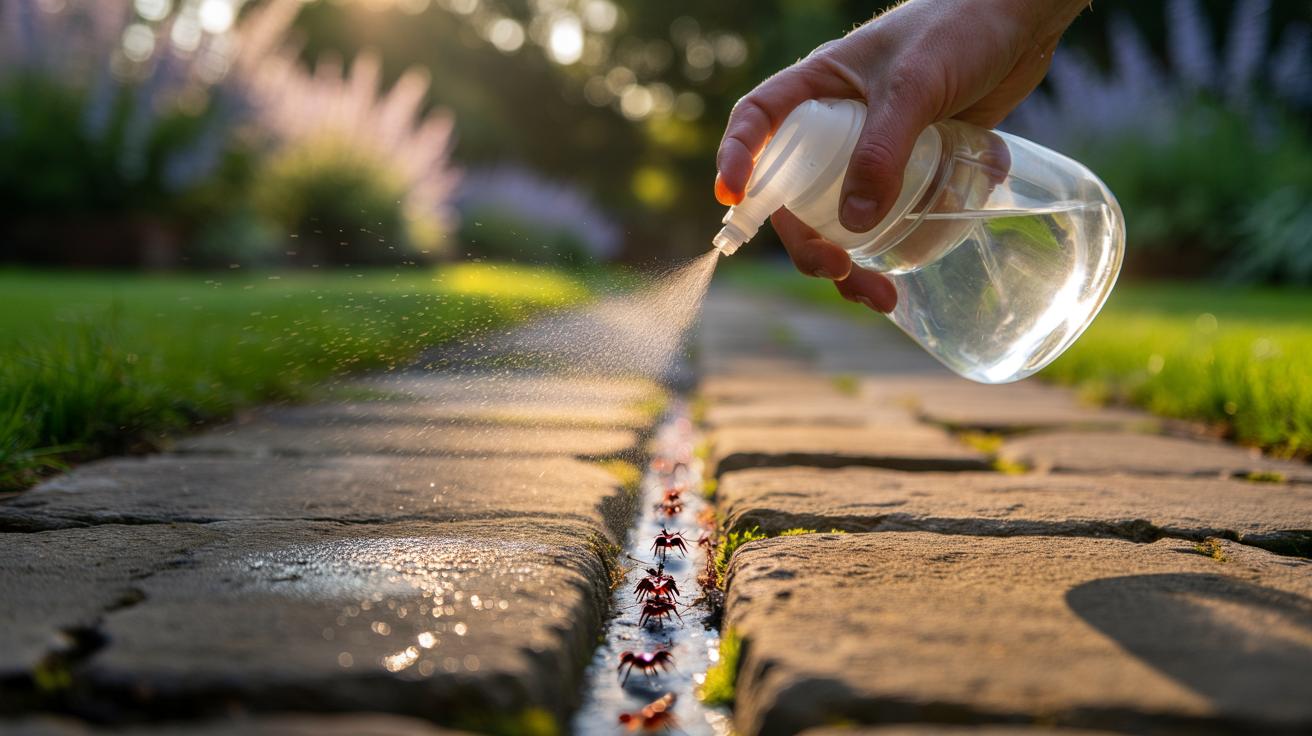
Preparation pays. Brush the path to lift debris and old detritus that can shield pheromone residues. Identify the busiest routes—usually along edges, step risers, and expansion joints. Spray a thin, continuous line across those pinch points, then mist along the trail for several feet on either side. Re-spray cracks and gaps until lightly wet, not dripping. Avoid overspray onto lawn borders and flower roots. The aim is a precise barrier on hardscape, not a cloud drifting into beds where beneficial insects work.
Timing matters. Early morning or late evening gives the solution time to sit before heat accelerates evaporation. After heavy rain, reapply; the barrier washes away. When temperatures soar, the smell dissipates faster, so increase frequency rather than concentration. On calcareous stone, reduce strength and dwell time; wipe excess with a damp cloth after five minutes. Never pour vinegar into soil as a weed killer near ornamentals. Keep a rhythm—regular, light applications beat occasional, aggressive dousings.
When to Use Alternatives and Complementary Methods
Vinegar shines as a first response, but layered tactics keep paths calm all season. Sweep weekly to remove crumbs and sap drips that attract foragers. Seal gaps with sand stabiliser or exterior-grade sealant where feasible; fewer voids mean fewer highways. Dusting diatomaceous earth into deep crevices provides a physical barrier; it abrades insect exoskeletons without chemical residues. Apply only in dry weather and away from bee traffic. For persistent colonies undermining pavers, boiling water into nest entrances can collapse chambers—carefully, and only on stone, not near roots.
If sweet-bait traps are necessary, place them off the path and away from pets, using a low-dose boric acid recipe and secure housings. Prioritise products labelled for household or garden use in the UK and follow instructions to the letter. Keep the ecosystem view in mind: ants aerate soil and tidy detritus. The goal is relocation, not eradication. Never broadcast strong acids or broad-spectrum insecticides across living beds. Combine gentle deterrents, sanitation, and small structural fixes for lasting calm.
Vinegar won’t turn back time on a long-established supercolony, but it will tip the odds on your side, starting today. Used with care, it erases pheromone trails, keeps garden paths walkable, and avoids the collateral damage of harsher chemicals. The scent is brief; the message to ants is not. Keep your spray bottle handy, build a tidy routine, and choose complementary measures only when needed. Protect the beds, treat the stone, and let the wildlife stay wild. How will you tailor a simple vinegar strategy to your own path, surfaces, and seasonal traffic?
Did you like it?4.4/5 (27)