In a nutshell
- 🌑 Blocks light effectively: layered cardboard denies weeds photosynthesis, starving annuals quickly and weakening deep-rooted perennials while still allowing gas and moisture exchange.
- 🧱 Proven method: use 2–3 corrugated layers, overlap 10–15 cm (30 cm for tough weeds), water before and after laying, and top with 5–10 cm mulch for seamless, long-lasting coverage.
- 📦 Best materials: choose plain brown corrugated cardboard, remove tapes and labels, avoid glossy or foil-lined packs; starch glues decompose well and support no-dig gardening.
- 🌿 Soil benefits and risks: boosts microbes and earthworms, improves moisture retention; prevent nitrogen drawdown with compost and manage slugs in wet spells.
- ⏳ Longevity and upkeep: expect 3–12 months of suppression; monitor edges for bindweed or couch grass, refresh mulch, and extend coverage into a second season if needed.
Gardeners across the UK are rediscovering a low-cost tactic that outperforms many sprays and fabrics: layered cardboard. When sheets are overlapped and weighted with mulch, they deny weeds the light they need to grow, cutting maintenance for months. The method exploits a simple truth: plants cannot photosynthesise without light. Unlike plastic, cardboard is breathable, biodegradable, and typically sourced for free. It also invites worms and microbes to work the soil while suppressing annual weeds and slowing tenacious perennials. Here’s how and why these humble brown sheets deliver long-lasting control—and how to use them intelligently for clean, productive beds.
How Cardboard Starves Weeds of Light
Cardboard functions as a mobile blackout curtain. Its layered fibres scatter and absorb sunlight, reducing the wavelengths necessary for photosynthesis to near zero beneath the sheet. Seeds can still germinate in darkness, but their energy reserves are finite; in the absence of light, shoots elongate, pale, and die before establishing leaves. This targeted light denial is the heart of months-long weed suppression. Even established perennials are weakened, as their rhizomes and crowns expend stored sugars attempting to push through an uncompromising barrier.
Crucially, cardboard does this while allowing some gas and moisture exchange. In damp UK conditions, that matters: soil does not suffocate as readily as it might under plastic, and rainfall can filter through, keeping microbial life active. Corrugations trap air, insulating the soil and smoothing temperature swings. The result is a calm, darker microclimate where weeds stall but beneficial soil organisms continue converting organic matter into plant-available nutrients.
Layering Techniques That Keep Beds Weed-Free
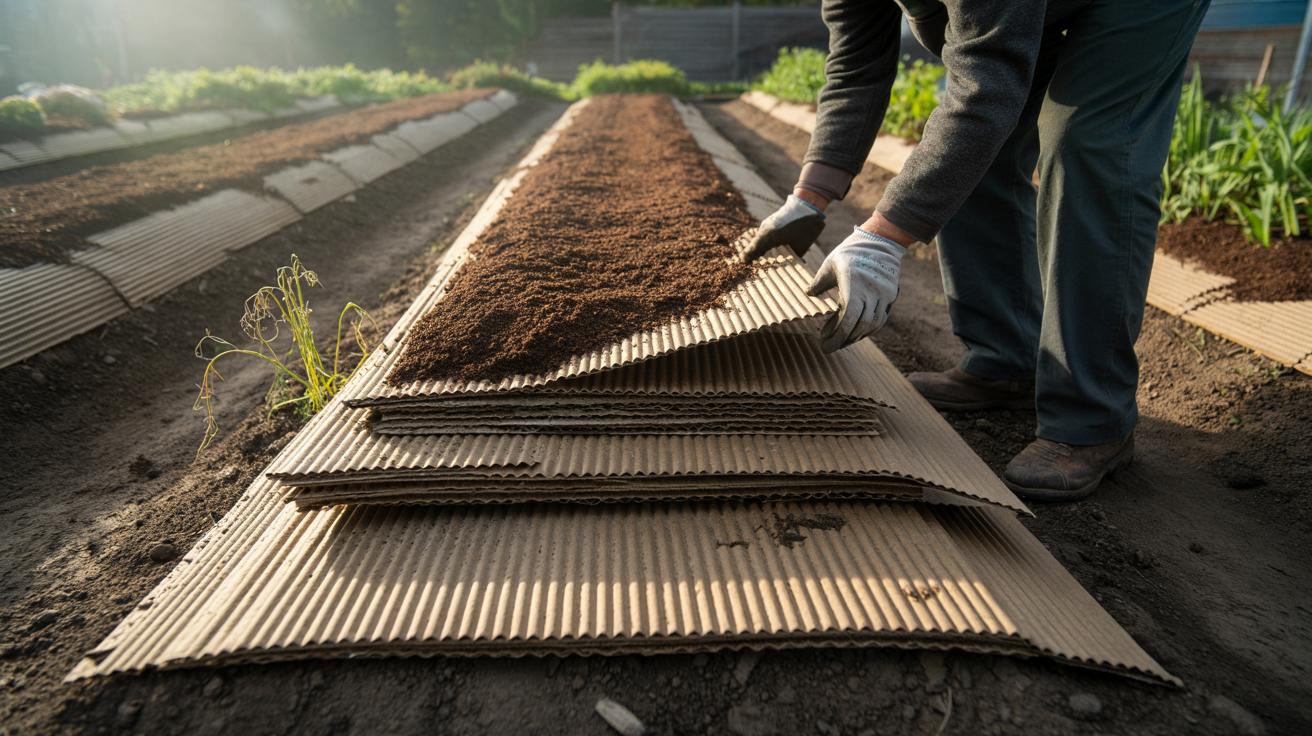
Success rests on thickness, overlap and coverage. Use two to three layers of corrugated cardboard, removing tape and staples. Overlap edges by 10–15 cm so light cannot sneak through joins. Pre-wet the ground if dry, then lay sheets tightly around stems you wish to keep. Water the cardboard to make it conform to lumps and reduce gaps. Add 5–10 cm of mulch on top—compost for beds, or woodchip for paths—to anchor the sheets, exclude light fully and improve appearance. Gaps invite weeds, so aim for seamless coverage.
Timing helps. Late winter to late spring is ideal for tackling a flush of annual seeds, while late summer can check perennial regrowth after a cut-back. Expect annuals to collapse within weeks; deep-rooted perennials may weaken over one to two seasons. Where bindweed or couch grass is rampant, double the layers, maintain a generous overlap, and extend the edge of your coverage by at least 30 cm to intercept creeping shoots.
| Parameter | Recommendation | Rationale |
|---|---|---|
| Cardboard layers | 2–3 sheets | Blocks light while staying breathable |
| Edge overlap | 10–15 cm (30 cm for tough weeds) | Prevents light leaks and weed ingress |
| Mulch depth | 5–10 cm | Anchors sheets, improves look, feeds soil |
| Soaking | Water before and after laying | Conforms to ground, speeds settling |
| Suppression time | 3–12 months | Varies with thickness and climate |
What Type of Cardboard Works Best
Choose plain, brown, corrugated cardboard with minimal printing. Most modern box inks are water-based, but avoid glossy, plastic-coated or foil-lined packaging that sheds fragments and resists decay. Remove all tape and labels to dodge microplastic contamination. Thick, double-walled cartons are excellent for pathways and stubborn patches; single-wall boxes suit vegetable beds where faster breakdown is desirable. Pizza boxes and heavily food-soiled card can invite pests, so compost those separately rather than laying them whole.
Quality matters inside the sheet, too. Starch-based adhesives common in shipping boxes are readily digested by fungi and bacteria, encouraging a rich soil food web. This biological activity is why cardboard complements no-dig gardening: it smothers weeds while feeding the decomposers that turn mulch into humus. If supplies are limited, mix in brown paper or non-glossy paper bags to maintain continuity, but keep the overall barrier opaque when held against light.
Environmental Effects and Pitfalls to Watch
As cardboard decomposes, it adds carbon that fuels microbial growth and draws in earthworms. In trials and on allotments, beds often become easier to work, with improved moisture retention and fewer weeds returning. To avoid short-term nitrogen drawdown near the surface, top with nutrient-rich compost rather than coarse, woody chip on vegetable beds. In wet summers, watch for slugs sheltering beneath the sheets; beer traps or wildlife-friendly barriers help. Expect months of weed suppression without resorting to herbicides, but remain vigilant at edges and around transplants.
Persistence varies: in a mild, damp UK season, sheets begin to soften within 8–12 weeks and are mostly gone by 6–12 months. Tough perennials like bindweed may penetrate gaps or emerge at edges, so extend coverage into the second season if necessary. Keep cardboard away from tree trunks to prevent rot, and never seal every surface—paths and beds need some exposed soil for gas exchange over time. When the barrier has broken down, simply top up mulch to keep the weed seed bank quiet.
Layered cardboard is a pragmatic marriage of recycling and horticultural science. It blocks the light weeds crave, buys time for crops to establish, and accelerates the living processes that make soil resilient. Used with careful overlaps and a generous mulch, it can turn rough ground into clean, productive beds with minimal digging. The best results come from consistency: check the joins, feed the surface, and refresh when needed. Where could a few sheets transform your plot next season—and how might you tailor the technique to your own soil, climate and crops?
Did you like it?4.5/5 (21)