In a nutshell
- 🍌 Natural oils and waxes in banana peels lift dust and create a gentle, reflective shine without synthetic sprays; effects are cosmetic, not nutritional.
- 🧽 Clean method: dust first, wipe the leaf tops with the peel’s inner side, then buff with a damp cloth and finish dry; test one leaf and avoid undersides to protect stomata.
- ✨ Benefits vs sprays: low-cost, low-waste, and subtly glossy with mild anti-static effect; limits include short-lived results and potential tackiness if overapplied.
- ⚠️ Safety tips: use fresh peels, discard after use, keep out of direct sun post-polish, and avoid sticky residue that can attract dust or pests.
- 🌿 Best plants: smooth, glossy leaves like rubber plant, monstera, philodendron; avoid fuzzy leaves, glaucous succulents, and ferns; repeat no more than monthly.
Houseplant lovers have long sworn by an easy polish hidden in the fruit bowl: the humble banana. Rubbing the inside of a banana skin across dusty foliage leaves a soft gleam without synthetic sprays, and it puts kitchen scraps to work. The secret lies in the peel’s light natural oils and waxy compounds that help lift grime and restore a gentle sheen. This is a cosmetic touch, not a fertiliser shortcut, yet the effect can make tired leaves look newly washed. Used lightly and correctly, banana skins can make leaves shine without smothering their ability to breathe. Here’s how the science stacks up, when to use the trick, and the safeguards that keep plants as healthy as they are glossy.
The Science Behind the Shine
Banana peels contain trace lipids, soft waxes, and minute amounts of potassium salts. When wiped across a leaf, these compounds form a thin film that traps dust, lifts residues, and enhances surface reflectivity. The result is a natural-looking shine that often makes leaf patterns and midribs pop. The key is restraint: a whisper of oil mimics the plant’s own cuticular waxes, while a heavy smear risks attracting dust and spores. Most stomata sit on the leaf underside, but thick coatings anywhere can interfere with gas exchange. A thin application will not clog stomata; a greasy one might.
Think of peels as a gentle cleanser rather than nourishment. The minerals in the skin are not meaningfully absorbed through a quick polish, and any sugar on the surface can become sticky. This is not feeding the plant; it’s a cosmetic clean-up and buff. The appeal is in its simplicity, low waste, and the soft finish many silicone sprays struggle to replicate.
| Component | Effect on Leaves |
|---|---|
| Natural oils | Lifts grime; leaves a light reflective film for a gentle shine |
| Waxy esters | Buffers the cuticle; reduces appearance of smears after dusting |
| Potassium traces | Cosmetic only; negligible nutrient uptake via surface rubbing |
| Sugars | Can attract dust or pests if not buffed; use sparingly |
How to Polish Leaves with Banana Skins
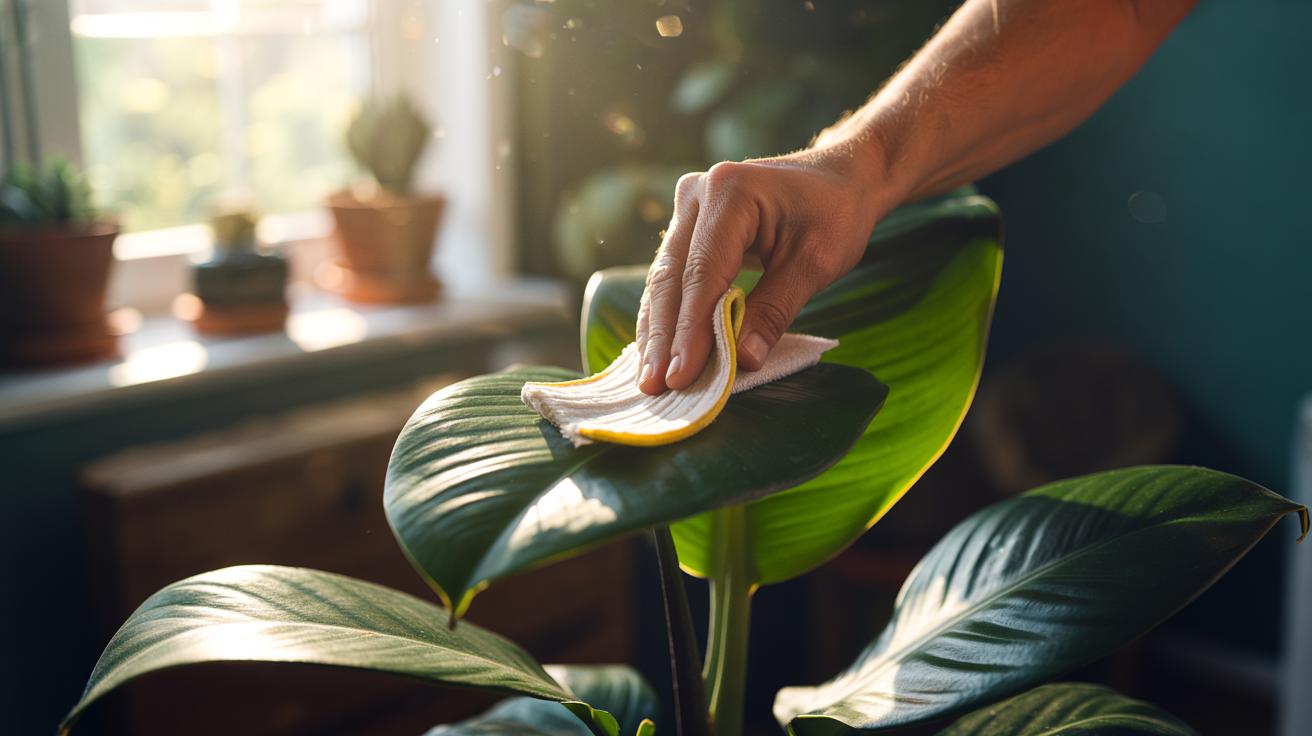
Pick a ripe, firm banana—not over-soft—and reserve a clean section of the peel. Dust the plant first with a dry, soft cloth to remove loose particles. Lightly pinch the peel’s inner side and glide it along the top surface of each leaf, following the veins. Work in small arcs, refreshing to a new patch of peel as it dulls. Always test on one inconspicuous leaf and wait 24 hours before doing the whole plant. Avoid heavy pressure and skip the undersides, which host most stomata and are more sensitive to residue.
After the peel pass, immediately buff with a barely damp microfibre cloth to remove sugars and even out the film. Finish with a dry cloth for a streak-free sheen. For large-leafed plants—think rubber plant, monstera, and ZZ plant—the effect is crisp and fast. Repeat no more than monthly, or after a deep clean. If the leaf feels tacky, you’ve used too much; buff again with a damp cloth until it feels clean.
Benefits and Limits Compared with Commercial Products
The banana method wins on simplicity, price, and sustainability. You’re repurposing a kitchen scrap, avoiding aerosolised silicones and added fragrances, and leaving behind a finish that looks natural rather than lacquered. A light oil film also offers modest anti-static benefit, so dust settles less readily for a week or two. For renters and office growers, there’s the convenience: no bottles, no special cloths beyond what’s already in a cleaning caddy. It’s an easy, low-waste trick that respects the plant’s natural look.
Limits matter. The gloss is temporary and varies by species; thick, glossy leaves respond best, while matte or textured foliage shows little change. Sugary residue can invite dust or ants if you skip the final buff. Commercial leaf shines last longer and repel water, but they can build up, clog pores, and look artificial under bright light. When in doubt, clean first, then choose the lightest-touch polish possible.
Safety, Hygiene, and Plant-Specific Tips
Use fresh peels only and discard them straight after polishing. Wash hands and tools; peels can carry microbes once handled. Keep plants out of direct sun for a few hours post-polish to avoid patchy drying. Never apply thick coatings on leaf undersides where stomata are densest. If the plant is dusty from a move or renovation, start with a full wipe-down using lukewarm water and a drop of mild soap, rinse, then apply the banana finish sparingly.
Best candidates include rubber plants (Ficus elastica), monstera, philodendron with smooth leaves, spathiphyllum, and schefflera. Avoid fuzzy leaves (African violets), glaucous succulents with protective bloom (blue echeveria), ferns, and highly textured calatheas. Inspect for pests before polishing; oil can mask early signs of scale or spider mites. If infestation is present, treat first and postpone polishing until the plant is stable. When shine competes with plant health, always choose health.
The banana-skin polish is a tidy intersection of thrift and plant care: a soft, natural gleam with nothing more than a peel, a cloth, and a minute of attention. It won’t feed your monstera or fix cultural problems, but it refreshes foliage and restores the pleasure of green canopies indoors. Keep the touch light, the buff thorough, and the routine occasional, and you’ll avoid residue while enjoying a brighter finish. Will you try the banana approach on your next dusting day, and which of your plants do you think will wear the shine best?
Did you like it?4.5/5 (29)