In a nutshell
- 🌱 Cinnamon provides natural antifungal protection against damping-off, drying the soil surface, disrupting spores, and even deterring fungus gnat larvae.
- 🧂 Smart application: use a light dusting via a tea strainer on the soil surface, favour bottom watering, reapply after heavy waterings, or use a strained cinnamon tea drench; never bury seeds in the spice.
- 🧹 Pair with strong hygiene: wash clean trays, sow thinly, provide steady airflow, and water only when the surface loses its sheen to limit mould and rot.
- ⚠️ Safety and limits: avoid inhaling dust and contact with delicate foliage; it’s not a cure-all, so fix light, moisture, and seed quality while storing cinnamon airtight.
- ♻️ Sustainable value: a low-chemical, cost-effective prevention method that reduces fungicide use and fits neatly into routine observation and careful watering.
When new gardeners whisper about a mysterious force that fells entire trays overnight, they mean damping‑off—a cocktail of mould and rot that attacks tender stems at the soil line. Chemical fungicides exist, yet a far simpler aid often sits in the larder: cinnamon. A light dusting across compost creates an unfriendly surface for common pathogens without smothering tender shoots. The spice’s aromatic oils act as a natural antifungal and antibacterial shield while keeping the top layer drier and less hospitable to fungal threads. A single, even sprinkle can tip the balance in your favour, protecting trays through the vulnerable days between germination and the first true leaves.
Why Cinnamon Works Against Seedling Diseases
The power in cinnamon lies in compounds such as cinnamaldehyde and eugenol, known to inhibit several soil-borne culprits behind damping‑off, notably Pythium, Rhizoctonia, and Fusarium. These aromatic molecules disrupt fungal cell walls and spore development, curbing spread along the compost surface where infection often starts. Equally useful, ground cinnamon’s fine texture dries the top layer fractionally, reducing the constantly wet sheen these fungi need to thrive. It is not a steriliser; it is a strategic nudge that makes conditions less welcoming to disease, buying time for seedlings to strengthen their own defences.
Unlike broad-spectrum chemicals, a dusting targets the interface that matters—where stems meet soil—so it rarely interferes with germination. It also helps deter fungus gnats, whose larvae can nick roots and invite rot. That said, cinnamon is most effective as part of a wider hygiene plan. Think of it as a natural guard on the door rather than a cure-all; it limits early outbreaks while you manage moisture, airflow, and spacing.
How to Apply Cinnamon Without Hindering Germination
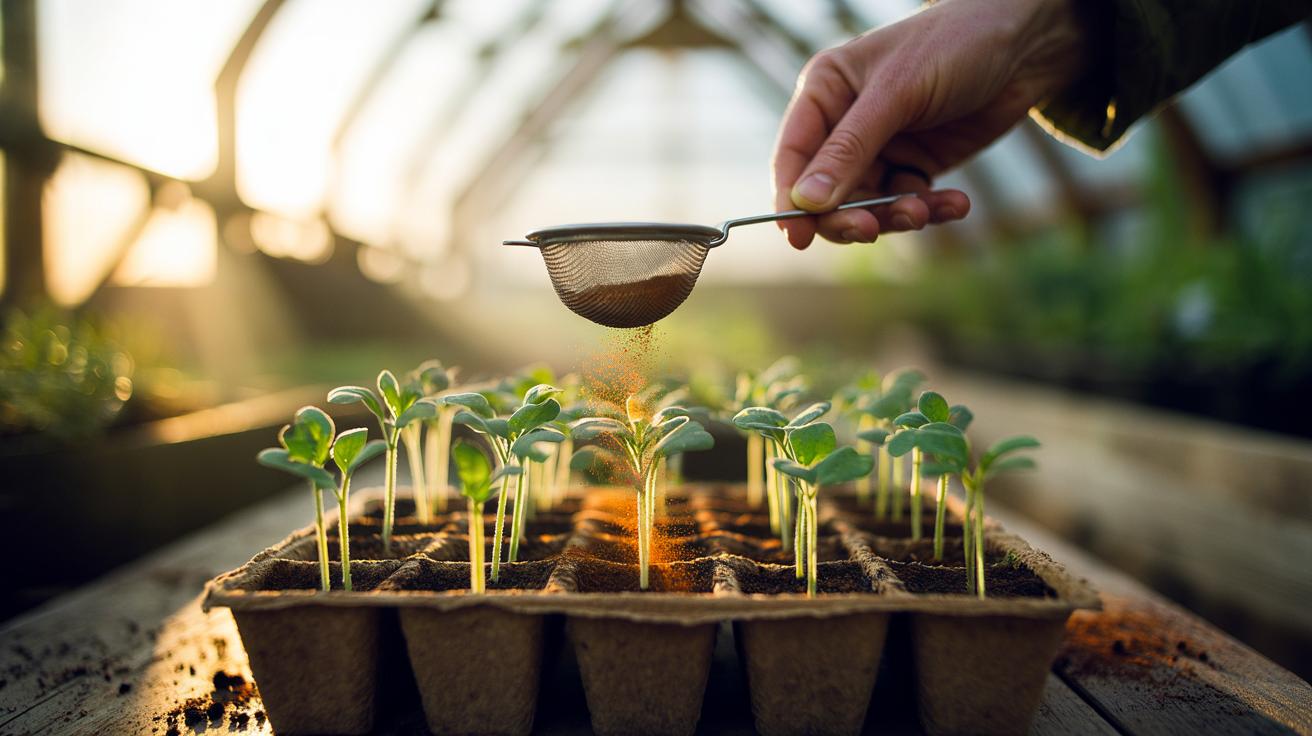
After sowing, tap a tea strainer filled with ground cinnamon to produce a thin, evenly speckled layer—picture a light dust of cocoa on a cappuccino, not a brown blanket. Aim for uniform coverage around the stem zone and any exposed compost. A light dusting is enough; more is not better. Water from below to avoid washing the powder into clumps. If seeds need darkness, the dusting won’t interfere; if they need light, keep the film faint so it doesn’t shade the surface. Reapply sparingly after heavy watering or if you see white fuzz forming.
For trays prone to outbreaks, brew a mild “cinnamon tea”: stir 1 teaspoon of ground cinnamon into 1 litre of just‑boiled water, steep overnight, and strain through a coffee filter. Use the amber liquid for a gentle drench or bottom‑water once at sowing. You can also cut cinnamon with fine sand or vermiculite to distribute it more thinly across large flats. Do not bury seeds in cinnamon; treat the surface only, focusing protection where pathogens launch their attack.
Hygiene and Growing Conditions That Boost Cinnamon’s Effect
Cinnamon excels when paired with clean tools, fresh seed compost, and steady airflow. Start by washing trays in hot, soapy water and allow them to dry fully. Sow thinly so stems are not trapped in a humid thicket. Keep a small fan on the lowest setting or crack a window to prevent stagnant air. Water only when the top few millimetres are no longer glossy; constant wetness feeds mould. Keep the surface just damp, not wet, and empty saucers after bottom‑watering. Good light reduces leggy, weak growth that succumbs easily to rot.
| Risk Factor | Visible Sign | How Cinnamon Helps | Companion Practice |
|---|---|---|---|
| Waterlogged surface | Shiny film; algae | Dries and inhibits spores | Bottom‑water; improve drainage |
| Stagnant air | Grey/white fuzz | Antifungal layer at soil line | Gentle airflow; ventilate propagator |
| Dirty trays | Repeat outbreaks | Reduces early colonisation | Wash and dry equipment |
| Dense sowing | Weak, toppled stems | Limits spread between seedlings | Thin promptly; provide strong light |
Combine these habits and the spice becomes a consistent ally rather than a last‑minute rescue. Cinnamon does not replace clean seed and sound watering, but it multiplies their benefits, especially during cool, slow‑germinating spells when disease pressure is highest.
Safety, Limits, and Sustainable Benefits
Used lightly, cinnamon is kind to the home grower and kinder to the environment than routine fungicides. It adds no synthetic residues to potting mixes and won’t upset most beneficial microbes at the surface. Still, avoid puffing clouds of dust; the fine powder can irritate lungs and eyes. Apply close to the compost, not from shoulder height, and wear a simple mask if you’re treating many trays. Keep it off delicate foliage to prevent spotting, and store the jar sealed so essential oils don’t fade.
The spice is a smart economy: a teaspoon treats multiple seed rows, and any kitchen brand will do. Ceylon or cassia both contain active antifungal compounds. If problems persist, reassess the basics—light levels, temperature, seed age, and watering routine—then reserve cinnamon as an ongoing preventative. Think sustainable: a cupboard staple, used judiciously, protects seedlings while keeping your growing space low‑chemical and low‑cost.
A pinch of cinnamon dust will not miraculously transform a tray, yet it shifts the odds—discreetly, effectively, and without fuss. By pairing its natural antifungal action with clean kit, calmer watering, and fresher air, you limit mould and rot precisely where they begin. It’s an elegant fix that rewards steady habits over quick sprays. Start light, observe, and make it part of your sowing routine. As you plan your next round of seeds, which trays in your set‑up would benefit most from a careful sprinkle and a few small changes to environment and timing?
Did you like it?4.6/5 (22)