In a nutshell
- 🔬 Cinnamon contains cinnamaldehyde and eugenol that inhibit fungi like Pythium, Rhizoctonia, and Botrytis, creating a light, desiccating barrier while cuttings callus.
- 🧪 It is not a rooting hormone or systemic cure; it works as a local, preventative surface protectant that complements clean tools, free-draining compost, and careful moisture control.
- 🧰 How-to: sanitise blades, take 7–12 cm cuttings, air-dry 15–30 minutes, lightly moisten and roll the base in fresh cinnamon, tap off excess, plant in a gritty mix, water sparingly, ventilate, and keep at 18–22°C.
- ⚖️ Versus alternatives: hormones (IBA/NAA) stimulate roots; fungicides give longer protection; cinnamon is a low-risk first step, ideal for easy-rooters and as a partner to hormones for woody species.
- ✅ Best practice: use fresh powder, apply a thin coat only to the wound, avoid heavy compost and overmisting, let succulents callus longer, and remove failing cuttings promptly—rot is usually caused by excess moisture.
Gardeners across the UK have a kitchen-cupboard ally that quietly outperforms its humble origins: cinnamon. When propagating plants from cuttings, the powdered spice acts as a natural shield against soft rot and damping-off, two scourges that can wipe out trays of new starts. It is inexpensive, widely available, and simple to apply, giving hobbyists and allotmenteers a practical edge during the most vulnerable stage of propagation. Used correctly, cinnamon helps keep pathogens at bay while the cutting forms callus and new roots. It is not a miracle cure nor a substitute for sound hygiene, but as a first line of defence it is hard to beat—especially for softwood cuttings, herbs, and tender houseplants that resent soggy compost or crowded conditions.
Why Cinnamon Shields Cuttings From Rot
The protective power of cinnamon lies in aromatic compounds such as cinnamaldehyde and eugenol. These phenolics inhibit the growth of common culprits in cutting failure—Pythium, Rhizoctonia, and Botrytis—by disrupting fungal cell membranes and interfering with enzyme activity. Sprinkled on a fresh wound, cinnamon also creates a light, desiccating barrier that discourages opportunistic microbes while the stem surface dries and begins to callus. The result is fewer infections during the crucial first days after trimming, when tissues are most exposed and any lapse in cleanliness or overwatering can turn quickly to mush.
Equally important is what cinnamon is not. It is not systemic, so it won’t travel through plant tissues or cure existing disease. Nor is it a rooting hormone. Its value is preventative and localised: a surface protectant that complements clean tools, free-draining compost, and careful moisture control. In trials by keen amateurs and professional propagators alike, this modest intervention often lifts strike rates, particularly in warm, humid propagators where fungi thrive.
Step-by-Step: Coating Stems Before Planting
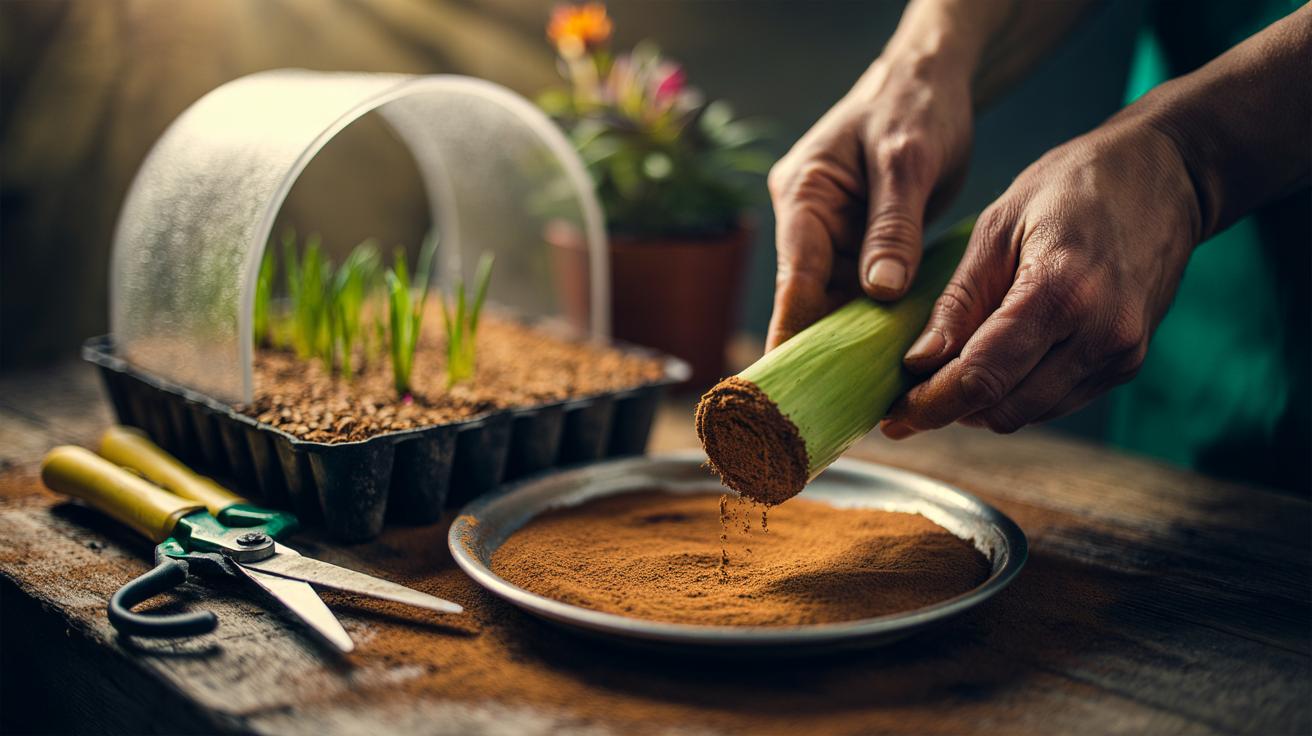
Begin with sharp, sanitised secateurs and healthy stock plants. Take 7–12 cm cuttings, removing any flowers and lower leaves. Let the cut ends air-dry for 15–30 minutes to initiate callusing; this brief pause dramatically reduces sap bleed and pathogen ingress. Only when the surface is no longer wet should you introduce cinnamon. Lightly moisten the basal centimetre of the stem, then roll it in a saucer of fresh ground cinnamon to create a thin, even coat. Tap off excess—clumps can trap moisture and impede rooting.
Set cuttings into a sterile, free-draining mix—half peat-free compost and half horticultural perlite works well—firming gently for good contact. Water sparingly from below and ventilate daily to shed condensation. If using a humidity dome, crack it open to prevent stagnant air. Keep the medium just moist, never wet. Place in bright, indirect light at 18–22°C. Inspect daily; if any cutting softens or darkens, remove it promptly to protect its neighbours.
Cinnamon vs Rooting Hormones and Fungicides
Cinnamon excels as a natural antifungal and wound sealant, but it won’t trigger new roots by itself. Synthetic rooting powders and gels containing IBA or NAA actively stimulate root initiation, while targeted fungicides suppress specific pathogens with greater persistence. Many gardeners therefore pair cinnamon with good cultural practice, reserving hormones for stubborn species and fungicides for repeated disease pressure. Think of cinnamon as a low-risk, first-step safeguard that keeps simple losses at bay.
| Material | Primary Action | Pros | Cautions |
|---|---|---|---|
| Cinnamon powder | Antifungal surface barrier | Cheap, accessible, natural aroma | Not a hormone; short-lived; apply thinly |
| Rooting hormone (IBA/NAA) | Stimulates root formation | Boosts difficult species’ strike rates | Overuse can burn tissues; follow label |
| Fungicide (e.g., copper, bio-controls) | Targets specific pathogens | Longer residual protection | Regulatory limits; resistance risk |
For easy-rooting plants—pothos, coleus, basil—cinnamon may be all you need. For woody cuttings, combine scrupulous hygiene and temperature control with hormone gels; add cinnamon as a complementary shield at the wound site.
Best Practices and Common Mistakes
Success with cinnamon hinges on cleanliness and restraint. Use fresh powder, not an old jar that’s absorbed kitchen humidity. Apply a whisper-thin coat only to the basal wound; avoid dusting leaves or nodes that need to remain exposed. Pair with a gritty, well-aerated substrate and measured watering. Rot is far more often the product of excess moisture than the absence of chemicals. Keep trays uncrowded, rotate stale air out, and quarantine any failing cuttings immediately.
Common pitfalls include caking the stem in thick layers, sowing into heavy compost, and misting so often that the medium stays cold and wet. For succulents, let the cut end harden for several days before planting, then use cinnamon sparingly. For roses and hydrangeas, consider a rooting hormone plus bottom heat, using cinnamon as the initial seal. If pets are curious nibblers, place propagation trays out of reach; the spice can irritate mouths and noses.
In a world of high-tech gels and lab-bred microbials, cinnamon offers something refreshingly simple: a small, smart intervention that tilts the odds in your favour. It will not rescue a waterlogged tray or compensate for dull blades, but it can help tiptoe cuttings through their most precarious week. Paired with clean tools, airy compost, and patient watering, the spice supports healthy callusing and confident root-out. Will you try dusting your next batch, or do you have a tried-and-tested routine you’re ready to refine—and which plants will you put to the test first?
Did you like it?4.5/5 (22)