In a nutshell
- 🌿 A light sprinkle of cinnamon checks surface soil mould on pots and seedlings, with compounds like cinnamaldehyde disrupting fungal cells; it’s effective for superficial issues, not deep root rot.
- 🛠️ How to apply: scrape off fuzz, let the top layer dry, then use a thin dry dusting; try a mild cinnamon tea for seedlings or a paste on small pruning wounds—sprinkle, don’t smother.
- 🧪 Pair with good practice: lighter watering, better airflow, and removing debris; peat‑free mixes and crowded trays benefit when cinnamon is used early as a first response.
- ⚠️ Limits and safety: avoid caking that repels water, stagger use with beneficial microbes, keep pets away, and don’t expect cures for Phytophthora or chronic drainage issues.
- 💷 Value and evidence: a sub‑£1 jar treats dozens of pots; while household spice is milder than extracts, its antifungal action plus cultural tweaks delivers quick, visible improvements.
From suburban patios to allotment plots, British gardeners are quietly turning to a humble spice jar to tame an unsightly problem. A light sprinkle of cinnamon is proving a reliable way to check soil mould on houseplants, seedlings, and container crops. The appeal is obvious: it’s inexpensive, widely available, and easy to apply without specialist kit. Used correctly, cinnamon can break the cycle of fuzzy surface growth and damping-off that sabotages tender plants. What’s more, it slots neatly alongside good watering and ventilation habits, giving growers a quick, low-risk fix with a reassuringly familiar aroma.
Why Cinnamon Works Against Soil Mould
The power of cinnamon lies in compounds such as cinnamaldehyde, which laboratory studies show can disrupt fungal cell walls and reduce spore viability. On the potting mix, a thin dusting creates a dry, inhospitable skin that slows the spread of saprophytic moulds while seedlings establish. Think of it as a gentle, surface-level check rather than a deep, systemic cure. That distinction matters: cinnamon excels where mould is superficial and moisture-related, but it will not remedy root rot or advanced pathogen outbreaks below the surface.
For growers facing the classic white fuzz that appears after overwatering or stagnant air, cinnamon can interrupt the conditions mould prefers. It’s also useful after pricking out seedlings, when disturbed media can wick excess moisture to the top layer. Cinnamon’s antifungal action pairs best with cultural tweaks—lighter watering, improved airflow, and removing decaying plant debris—to keep conditions balanced over the long term.
How to Use Cinnamon in Pots and Beds
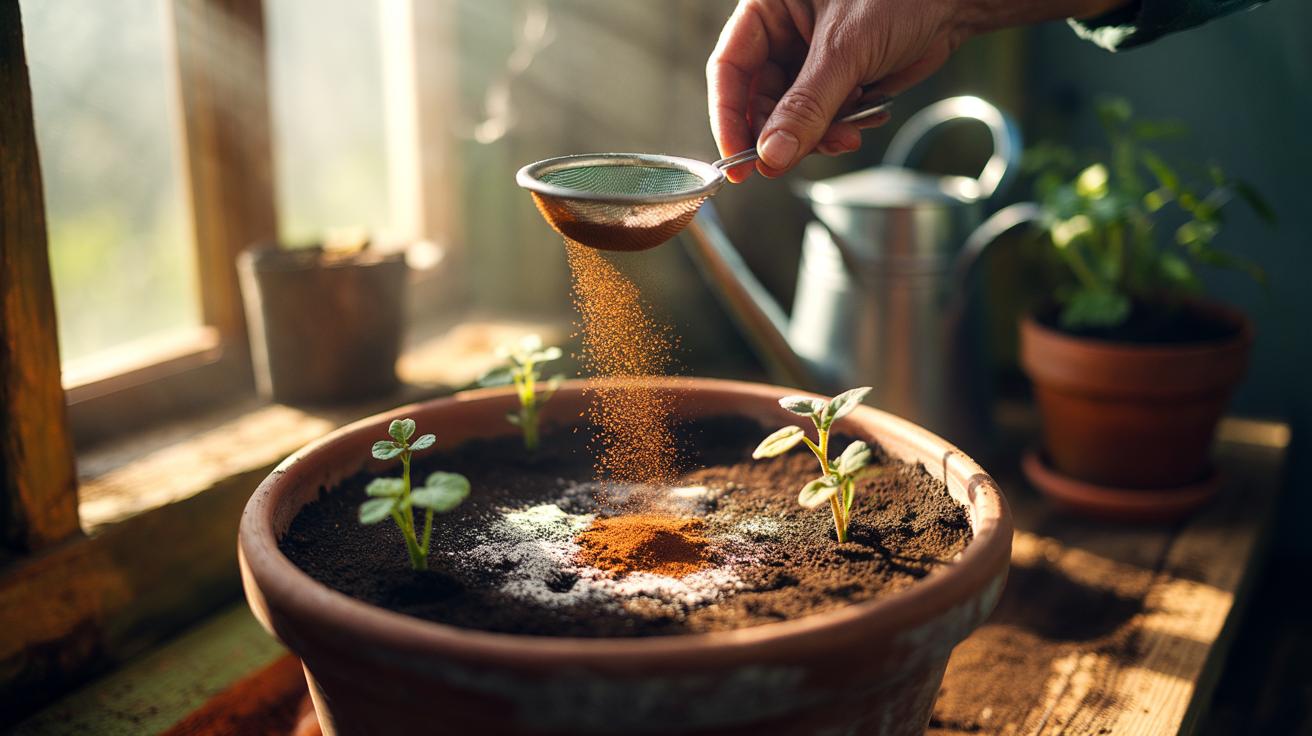
Start by scraping away any visible mould, then allow the top centimetre of compost to dry. Sieve or lightly dust ground cinnamon over the surface: a whisper-fine layer is enough. Sprinkle, don’t smother: a thin dusting curbs mould without stressing roots or repelling water. For seedlings, target the rows and the rim of trays, where condensation often collects. In outdoor beds, focus on the collar of young plants after rain, avoiding heavy clumps that could form crusts on light soils.
Some gardeners make a simple “cinnamon tea” to wet the surface without adding strong fertilisers. Stir half a teaspoon into a litre of warm water, let it settle, then use the clear top liquid to moisten the compost. For pruning wounds or nicks on fleshy stems, a dab of cinnamon-and-water paste can act as a temporary barrier while tissues callus. The quick-reference guide below keeps rates tidy.
| Method | How to Apply | Typical Rate | Best For |
|---|---|---|---|
| Dry dusting | Light sieve over dry top layer | Pinch per 10–12 cm pot | Surface mould on pots and trays |
| “Tea” rinse | Decant clear liquid; moisten surface | ½ tsp per 1 litre water | Seedlings prone to damping-off |
| Paste spot-guard | Thick dab on cut or nick | Pea-sized per wound | Soft-stem cuttings and divisions |
Safety, Limits, and Common Mistakes
Because cinnamon is a kitchen staple, it’s easy to overdo it. Too much powder can cake, repel irrigation, and stress fine roots. Aim for a translucent veil, not a cap. If you’re using beneficial microbes or mycorrhizal inoculants, stagger applications: dust cinnamon after transplanting, then wait a week before adding biologicals to avoid suppressing helpful organisms right at the surface. Always remove dead leaves and algae first; spice cannot compensate for decaying material feeding the mould.
There are common-sense precautions. Avoid inhaling dust; apply with windows open or outdoors. Keep pets from investigating freshly dusted pots—cinnamon can be irritating in snouts and eyes. Do not rely on cinnamon for true root rot or advanced Phytophthora problems; correct watering and drainage are non-negotiable. Where mould recurs rapidly, reassess light, temperature swings, and pot size. Remember: cinnamon is a helper, not a licence to water heavily or park plants in still, humid corners.
Cost, Evidence, and Real-World Results
A jar of supermarket ground cinnamon—often under £1—covers dozens of pots, outlasting many proprietary sprays in casual use. That frugality matters when replacing compost or buying fungicides is overkill for a mild surface bloom. There’s supporting science for cinnamon’s antifungal constituents, though household spice is less concentrated than essential oils seen in lab assays. What it loses in potency, it gains in convenience and low risk for home growers. Paired with bottom-watering and regular turning of trays, the effect is often swift: fuzz recedes, seedlings stand taller, and the compost smells clean, not sour.
Gardeners report best results when cinnamon is the quick first response to early mould, not a last-ditch remedy. On peat-free mixes—which can stay springy and damp on top—dusting after the first watering cycle can pre-empt growth entirely. If issues persist, escalate sensibly: space pots for airflow, thin seedlings, and adjust the watering schedule. For persistent pathogen pressure in greenhouses, consider rotating to sterilised trays and refreshing media at the end of the season.
Cinnamon won’t replace good husbandry, but it earns its place beside the watering can—cheap, simple, and surprisingly effective against soil mould. With a measured sprinkle and a few cultural tweaks, you can keep trays bright, roots healthy, and the air fresh around your plants. The trick is to act early and lightly, then let airflow and smart watering do the heavy lifting. As the growing season gathers pace, how will you fold this spice-rack standby into your routine to keep compost clear and seedlings thriving?
Did you like it?4.4/5 (27)