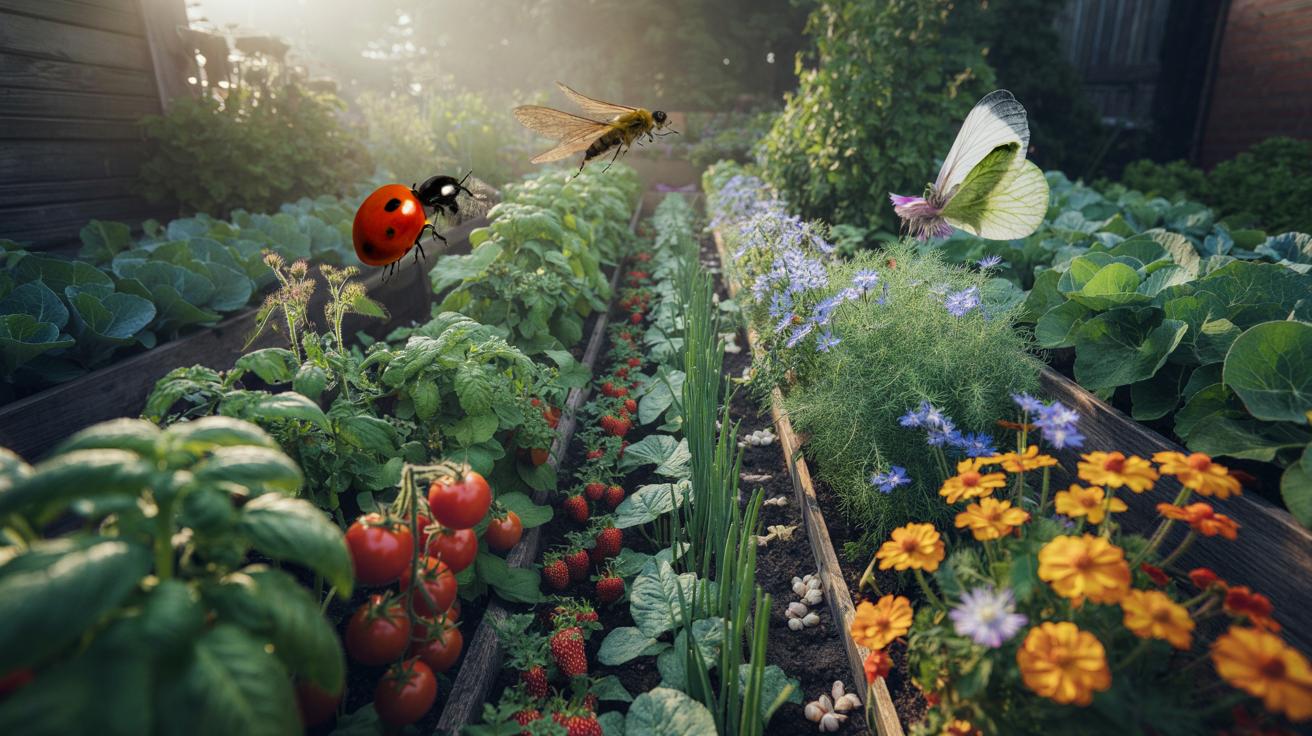
In a nutshell
- 🌿 Companion planting harnesses plant chemistry and structure to deter pests via scent masking, push–pull, and visual disruption, with diversity as the first defence.
- 🐞 Nectar-rich allies (dill, fennel, marigolds, calendula) boost hoverflies, lacewings, and parasitic wasps, cutting aphids and caterpillars as part of IPM.
- 🧅 Proven pairings: carrots + onions/leeks (carrot fly), brassicas + nasturtium/thyme, tomatoes + basil/Tagetes, beans + dill/alyssum, strawberries + borage.
- 🧭 Design a pest-savvy plot with patchwork clusters, trap-crop edging, staggered sowings, layered canopies, steady watering, and mulch; record what works.
- ⚠️ Know the limits: companions aren’t a cure-all—use barriers for slugs and allium leaf miner; avoid overcrowding, contain mint, and don’t mix up Tagetes with Calendula.
Across the UK, gardeners increasingly turn to companion planting to keep insects in check without leaning on sprays. The idea is simple: combine plants so that one protects another, either by confusing pests, enticing their predators, or drawing trouble away from your harvest. Done well, this approach reduces damage from aphids, whitefly, and carrot fly, and encourages a steadier yield through the season. Diversity is your first line of defence. Mixing herbs, flowers, and vegetables creates scent layers and habitat that pests struggle to read, while hoverflies and ladybirds find forage and shelter. The result is a neater balance—less firefighting, more quiet productivity.
Why Companion Planting Works Against Pests
Companion planting leverages plant chemistry and ecology. Aromatic allies such as basil, rosemary, and thyme release volatile compounds that mask host crops. This “scent camouflage” reduces landing rates for insects that navigate by smell. In a push-pull dynamic, strongly scented companions can push pests from a target crop while a trap species pulls them to a sacrificial buffet. When pests waste time on decoys, your main crop breathes easier. Visual disruption helps too: mixed heights and foliage shapes break the cues flying insects use to locate single-species blocks.
The strategy also feeds your army of allies. Umbellifers like dill and fennel, and daisies such as marigolds and calendula, offer nectar for adult hoverflies, lacewings, and parasitic wasps whose larvae devour aphids and caterpillars. Groundcover herbs act as living mulch, cooling soil and sheltering predators like ground beetles. By designing for beneficial insects, you reduce the pest population before it booms. The effect isn’t magic; it’s layered resistance that simplifies management week by week.
Proven Pairings for UK Beds and Borders
For root crops, interplant carrots with onions, leeks, or chives to cut carrot fly attacks; allium scent helps mask carrot aroma, while staggered rows reduce straight-line pest flights. Brassicas gain from a ring of nasturtiums as a trap crop for cabbage white butterflies and aphids, and a drift of thyme beneath to discourage egg-laying. Tomatoes pair well with basil to unsettle whitefly and support flavourful harvests, and with French marigolds (Tagetes patula) whose roots disrupt certain soil nematodes. Small, repeated clusters outperform one big block.
Legumes and salads benefit from dill or sweet alyssum that call in hoverflies to police blackfly. Borage alongside strawberries draws pollinators and its bristly leaves deter casual slug browsing, while chives near lettuce help hold back aphids. Use mint sparingly in pots—the scent is useful, the spread is not. Rotate beds annually to prevent pests and diseases building, and keep the soil fed with compost so plants mount stronger natural defences.
| Target Crop | Companion | Pest Deterred | How It Helps | Notes |
|---|---|---|---|---|
| Carrots | Onion, leek, chive | Carrot fly | Scent masking | Alternate rows; thin on breezy days |
| Brassicas | Nasturtium, thyme | Cabbage white, aphids | Trap crop, repellent aroma | Inspect and remove eggs on trap leaves |
| Tomatoes | Basil, Tagetes patula | Whitefly, nematodes | Volatiles, root exudates | Full sun; marigolds as edging |
| Beans | Dill, sweet alyssum | Blackfly/aphids | Beneficial attraction | Allow some flowers to set |
| Strawberries | Borage | Browsing, low pollination | Physical deterrent, pollinator draw | Self-seeds; edit seedlings |
Designing a Pest-Savvy Plot
Think in patterns rather than pairs. Plant in patchworks of 5–9 plants per cluster, repeating companions across a bed so scent and shelter are evenly distributed. Edge vulnerable crops with trap species to intercept pests along windward sides. Thread nectar-rich flowers at 60–90 cm intervals to keep beneficial insects fueled from spring to frost. Spacing and timing are as vital as the pairing: tight spacing invites mildew; starved soil invites stress, which signals pests.
Stagger sowings to avoid presenting a uniform, tender buffet. Combine verticals and sprawlers—beans over marigolds, tomatoes above basil—to maximise light and confuse visual trackers. Keep water consistent and nitrogen moderate; lush, sappy growth is aphid heaven. Mulch to stabilise moisture and shelter ground predators, but leave small bare patches for solitary bees. Use fine mesh on high-pressure targets, then let companions mop up the stragglers. Finally, record what works; your garden’s microclimate will refine the template.
Evidence, Limits, and Common Mistakes
Research shows mixed but encouraging results. Allium–carrot mixes often cut carrot fly damage in low to moderate pressure. Tagetes suppresses certain nematodes when planted densely and left in place before cropping. Flower strips consistently raise numbers of hoverflies and parasitic wasps, trimming aphid populations. Yet some pests, like slugs and allium leaf miner, yield better to barriers, beer traps, or timing. Companion planting is a cornerstone, not a silver bullet. Fold it into broader integrated pest management: rotation, hygiene, resistant varieties, and physical protection.
Avoid common pitfalls. Don’t confuse French marigolds (Tagetes) with pot marigold (Calendula)—they behave differently below ground. Contain mint or it will overrun beds. Skipping deadheading starves beneficials later; keep flowers coming. Overcrowding suffocates airflow and invites disease. Finally, don’t expect instant results; ecological balance builds over weeks. Track pest levels, note weather, and test small plots before scaling. Observation turns rules of thumb into site-specific strategy, saving time and harvests.
Companion planting rewards curiosity and patience. By weaving herbs and flowers through your vegetables, you create a resilient fabric where pests find fewer opportunities and predators find a home. Start with two or three targeted pairings, watch the traffic of insects in and out of your beds, and tune the mix across the season. The garden that feeds its allies feeds itself. Which crop-pest battle will you tackle first, and what companions will you trial to shift the balance in your patch this year?
Did you like it?4.6/5 (25)