In a nutshell
- 🌿 Magnesium (Mg) is central to chlorophyll and energy transfer, directing sugars to flowering and fruit set in peppers for stronger blooms and fuller pods.
- 🔍 Spot interveinal chlorosis on older leaves to diagnose Mg deficiency; distinguish from nitrogen and iron issues, and consider a small foliar trial or testing to confirm.
- 🧪 Apply Epsom salt via foliar spray (15 g/4 L every 14–21 days) or soil drench (same rate, monthly), with top-dress and container mix options; treat in cool periods and adjust for hard water.
- ⚖️ Avoid overuse: excess Mg can suppress calcium and potassium; it won’t cure blossom end rot. Maintain pH 6.0–6.8, steady watering, and periodic leaching in containers.
- 📈 Expect richer green leaves, better flower retention, and improved fruit fill with targeted, pulse-style applications at bud and early fruiting, followed by close observation.
Gardeners swear by Epsom salt for peppers, and there’s solid science behind the anecdote. The crystals in your cupboard are simply magnesium sulfate, a readily available source of magnesium (Mg) and sulfur that plants can absorb quickly. In peppers, Mg is pivotal for photosynthesis, energy transfer, and the movement of sugars to developing flowers and fruits. Applied wisely, Epsom salt can sharpen leaf colour, support bloom retention, and encourage plumper, better-filled pods. Yet it is not a cure‑all. The key is understanding when your plants genuinely need Mg, how to deliver it efficiently, and how to avoid nutrient imbalances that can quietly choke yields. Here’s how magnesium makes the difference—and how to use Epsom salt to help your peppers perform.
Why Magnesium Matters for Peppers
Magnesium sits at the heart of chlorophyll, the pigment that turns sunlight into plant energy. In peppers, that energy is then channelled into the demanding tasks of flowering and fruit set. Mg also activates enzymes for ATP production and supports phloem loading, the process that moves sugars from leaves to growing tissues. Without adequate Mg, peppers often create energy but fail to distribute it efficiently to buds and developing fruits. The result can be weak flowering, poor pollen performance, and premature fruit drop. Adequate Mg keeps leaves photosynthetically active for longer, stabilises membranes, and underpins the carbohydrate flow that fuels fruit expansion. Because Mg is mobile in plants, it shifts from older to newer tissues under stress—so a steady supply helps maintain canopy health just as plants transition from vegetative growth into heavy reproductive demand.
There’s also a synergy with sulfur in Epsom salt. Sulfur supports amino acid and enzyme synthesis, subtly improving overall nutrient efficiency. While peppers are moderate Mg users compared with tomatoes, high-yield cultivars in containers or rich-potash feeding regimes often tip into shortfall. Think of Epsom salt as a precision tool to smooth the plant’s energy economy at peak workload, rather than a universal tonic.
Spotting Magnesium Deficiency Before Yields Suffer
The hallmark symptom is interveinal chlorosis on older leaves: the veins remain green while the tissue between them turns pale yellow. Edges may curl slightly, and in strong light the yellowing can take on an orange or reddish cast. Because Mg is mobile, the problem starts on lower foliage and creeps upward during flowering and early fruit fill. Catch it early and you can restore colour and vigour within a fortnight. Distinguish Mg deficiency from nitrogen shortage (which causes even yellowing) and from iron deficiency (which begins on the newest leaves). In peppers, excessive potassium from heavy tomato feeds can trigger or mask Mg deficiency by competitive uptake at the root surface.
Environmental clues help diagnosis. Cool, wet composts, sandy soils low in cation exchange capacity, and peat‑heavy potting mixes are frequent culprits, especially when pH dips below 6.0. Plants in containers and grow bags are most at risk because watering leaches Mg and root volumes are restricted. Soil or compost testing is ideal; lacking that, a small‑scale trial with a foliar Mg spray on a few affected plants can act as a quick diagnostic. Improvement in leaf colour and flower retention after a light spray strongly points to Mg shortage.
How to Use Epsom Salt: Rates, Timing, and Methods
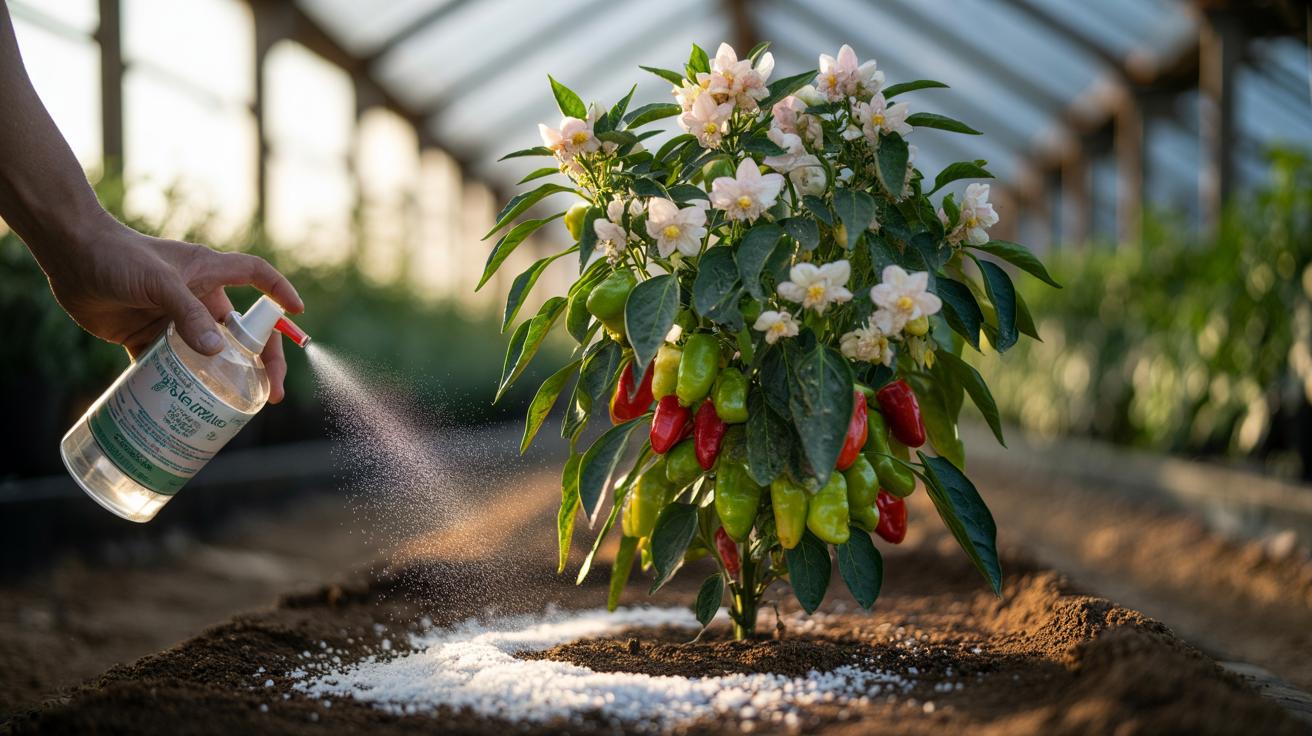
Epsom salt dissolves readily, making foliar sprays and root drenches straightforward. For a foliar spray, dissolve 15 g (about 1 tablespoon) per 4 L of water and mist leaves—especially the undersides—until just shy of runoff. Apply in the cool of morning or evening every 14–21 days through the bud and early fruiting stages. For a soil drench, use the same concentration and apply 0.5–1 L per mature plant monthly. Always start on a small batch of plants and observe for seven days. Avoid mixing concentrated Epsom salt directly with calcium nitrate in the same tank to prevent precipitation; if combining feeds, dilute separately first.
| Method | Rate | Best Timing | Notes |
|---|---|---|---|
| Foliar spray | 15 g per 4 L | Bud to early fruit set | Quickest leaf colour response |
| Soil drench | 15 g per 4 L, 0.5–1 L/plant | Monthly in season | Helps sustained Mg supply |
| Top‑dress (beds) | 20–30 g/m² | Before flowering | Water in thoroughly |
| Containers | 5–10 g per 10 L compost | Mix at potting on | Supplement with light sprays |
If you use hard mains water rich in calcium and magnesium, you may need fewer applications than if you use rainwater. Never exceed label guidance or treat on hot, bright days, and rinse any residue off fruit.
Avoiding Pitfalls and Maximising Results
Do not use Epsom salt as a blanket fix. If your soil already tests high in Mg, extra applications can suppress calcium and potassium uptake, leading to bitter, dull fruit and physiological issues. Note that blossom end rot is a calcium problem; Epsom salt will not cure it and overuse may make it worse by competing at the root interface. Keep pH around 6.0–6.8 so Mg remains available, and feed peppers with a balanced fertiliser that doesn’t overload potassium. In high‑K tomato feeds, a light, periodic Mg spray helps keep the ratio in check.
In containers, leach salts every few weeks by watering to 10–20% runoff, especially in warm spells. Prioritise steady watering; drought swings quickly exacerbate nutrient imbalances. For organic systems, magnesium sulfate is generally permitted, but always check your certifier. Think in pulses: brief foliar boosts at bud initiation and early fruiting, then reassess. Watch for richer green leaves, tighter flower retention, and improved pod fill within two weeks. If there’s no response, revisit diagnosis—your peppers may be short of nitrogen, phosphorus, or simply light.
Epsom salt can be a sharp instrument in the pepper grower’s toolkit, sharpening photosynthesis and helping sugars flow to flowers and fruits exactly when the plant needs them. The trick is to deploy it with intent: identify Mg shortfalls, apply targeted doses, and balance the broader nutrition. Used in this way, magnesium supports consistent flowering, stronger fruit set, and fuller flavours without the collateral of excess salts. Test first, start small, and observe. With that mindset, will you trial a foliar Mg spray at first bud this season and log the difference in flower retention and fruit fill across your pepper varieties?
Did you like it?4.3/5 (25)