In a nutshell
- 🌿 A single layer of mulch shades soil, cools roots, and suppresses weeds, dramatically cutting evaporation and transpiration.
- 💧 A 5–8 cm layer creates a capillary break, keeping moisture in the root zone and reducing surface water loss by up to 70%, so watering drops from every 2–3 days to every 5–7.
- 🪵 Choose materials to match planting: bark/wood chips, composted green waste, leaf mould, straw, or gravel, applied at the right depth for sustained moisture savings.
- 🛠️ Simple method: pre-water, weed, spread evenly, keep a 5–10 cm stem collar clear, and top up 1–2 cm yearly to maintain performance in beds and pots.
- 📈 Benefits compound over time—better soil structure, improved infiltration, and fewer competitors—delivering lower bills and more resilient UK gardens.
As British summers swing between sodden weeks and sharp dry spells, gardeners are searching for reliable ways to stabilise beds and borders. A single layer of mulch offers a deceptively simple solution: it locks in soil moisture, cools roots, and suppresses thirsty weeds, meaning fewer trips with the watering can. The science is sound and the practice is straightforward, yet many plots still go bare. Lay a consistent blanket of mulch once, and you can cut watering significantly while improving soil health. Here is how one layer changes the balance, the best materials to use, and the steps to keep that protective cover working all season.
The Physics of Moisture Retention
Uncovered soil heats quickly and loses water through evaporation and plant-driven transpiration. Mulch acts as an insulating layer that shades the surface, slows air movement, and reduces radiant heat. The result is cooler conditions at root level and a steady supply of water where plants need it most. By breaking the wind–sun–soil connection, mulch disrupts the main drivers of moisture loss.
There is also a key capillary effect. Bare particles wick water to the surface, where it vanishes into the air. A 5–8 cm mulch layer creates a capillary break, stopping that upward draw. Underneath, the soil structure remains crumbly and moist, supporting fungi and microbes that help plants access nutrients. This physical barrier keeps water moving downwards, not up.
Organic mulches add a bonus: slow decomposition improves soil organic matter, increasing the ground’s sponge-like qualities. More pores mean better infiltration during rain and greater water-holding capacity between showers. Inorganic mulches, such as gravel, still cut evaporation, but they do not feed the soil. Choose based on your planting and maintenance goals.
Choosing the Right Mulch for Your Garden
Start with the plants and your soil. For vegetables, soft fruit, and perennials, shredded bark, wood chips, or composted green waste are dependable, feeding the soil as they suppress evaporation. For Mediterranean shrubs and alpine schemes, gravel or slate chippings suit the aesthetic and resist wind lift. The best mulch is the one that matches your planting style and maintenance routine. Avoid fresh grass clippings in thick layers; they mat, heat, and repel water. Likewise, steer clear of dyed or contaminated materials that may leach chemicals.
Depth and particle size matter. Finer mulches knit together, offering excellent coverage, while chunky chips last longer but can leave gaps. Aim for an even 5–8 cm blanket around established plants, keeping stems and trunks clear to prevent rot. Leaf mould excels in shade, while straw shines for tender vegetables. Use what you can source sustainably and replenish lightly each year.
| Material | Ideal Depth | Typical Watering Reduction | Longevity | Best Use |
|---|---|---|---|---|
| Shredded bark/wood chips | 5–8 cm | 40–60% | 1–3 years | Borders, trees, shrubs |
| Composted green waste | 5–7 cm | 30–50% | 6–12 months | Veg beds, perennials |
| Leaf mould | 4–6 cm | 25–45% | 6–12 months | Woodland/shade planting |
| Straw | 7–10 cm | 40–55% | One season | Soft fruit, squashes |
| Gravel/slate | 3–5 cm | 25–40% | Multi-year | Mediterranean beds, pots |
How One Layer Cuts Watering in Half
A consistent mulch layer lowers the soil surface temperature and reduces evaporation, meaning moisture from rain or irrigation remains available for days rather than hours. In typical UK summer conditions, a 5–8 cm blanket can reduce surface water loss by up to 70%. That translates, for many gardeners, into watering every five to seven days instead of every two to three.
Weed suppression multiplies the saving. Fewer weeds mean fewer competitors drawing water from the root zone. Organic mulches also soften the impact of summer showers, slowing runoff so water soaks in rather than racing away. Infiltration improves, and the soil stores more between watering cycles.
Adjust expectations by soil type. Free-draining sandy beds may still dry faster, while heavy clay retains moisture well once mulched but needs careful spring warm-up. Track your beds for two weeks after mulching and recalibrate your watering routine based on plant response, not habit.
Laying and Maintaining Mulch: Step-by-Step
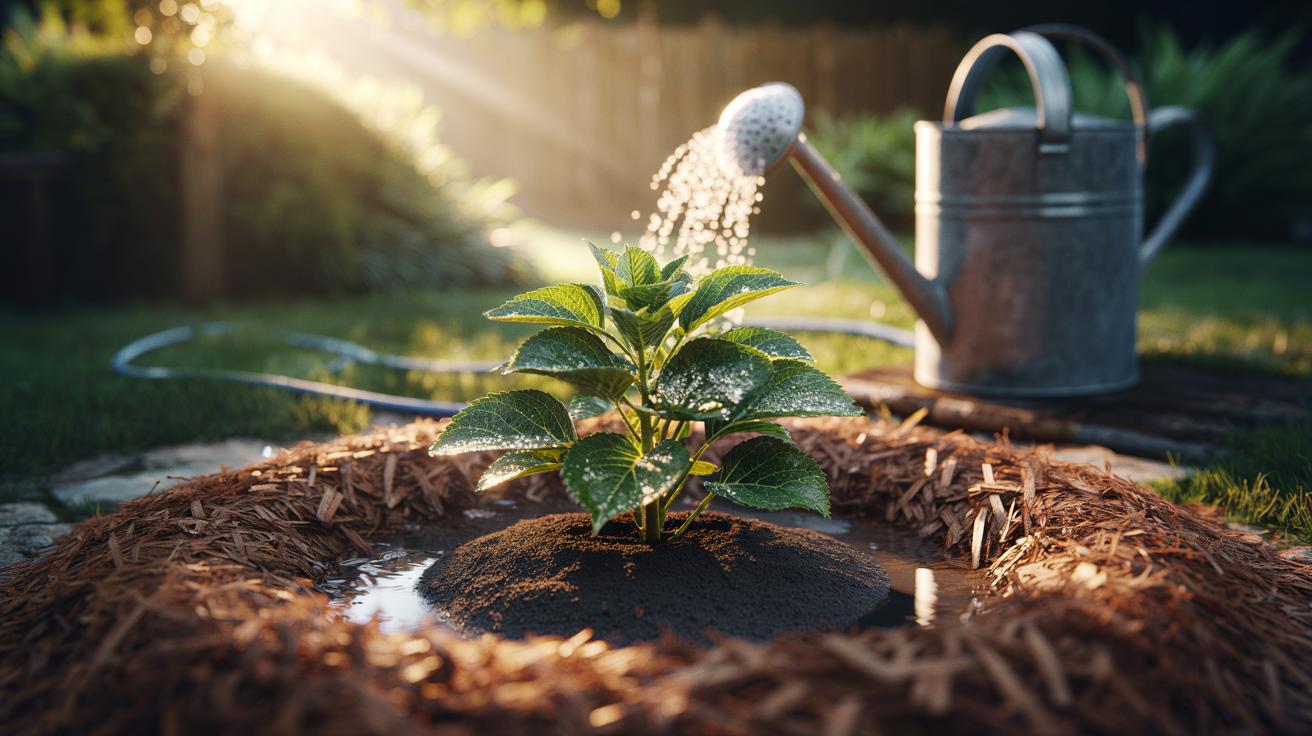
Begin with a thorough watering or wait for steady rain. Remove perennial weeds and spread a fine layer of compost if your soil is hungry. Then apply your chosen mulch to a uniform depth—measured with a ruler, not guesswork—keeping a 5–10 cm collar around stems and trunks. This “no-touch zone” prevents rot and discourages pests.
For beds already planted, tuck mulch gently between plants to avoid smothering crowns. In windy sites, moisten organic mulches during laying to help them settle. Pots benefit too: a 2–3 cm top-dressing of shredded bark or grit cuts evaporation and stabilises temperatures around roots. Even coverage is the key to reliable savings.
Maintenance is light. Top up by 1–2 cm annually as material decomposes, and fluff compacted areas with a hand fork to maintain porosity. After heavy rain, check that water is penetrating; if it beads, break any crust and re-wet. With minimal upkeep, your mulch layer keeps saving water season after season.
One thoughtful layer delivers a cascade of benefits: steadier moisture, cooler soil, richer biology, and fewer weeds—together slashing the time and water your garden demands. The effect is cumulative, with each season of organic mulch building better structure and resilience. In a climate edging towards extremes, this simple practice is a pragmatic insurance policy for plants and pockets alike. Lay it once, monitor, and fine-tune—then enjoy the breathing space it creates. Which materials and depths will you trial this season to turn your beds into moisture-efficient, low-maintenance performers?
Did you like it?4.5/5 (27)