In a nutshell
- 🍅 Magnesium matters: Mg drives chlorophyll; deficiency shows as interveinal chlorosis on older leaves and reduced fruit set.
- 🧂 Epsom salt basics and when to use: it’s magnesium sulfate for true Mg shortages; it does not cure blossom end rot.
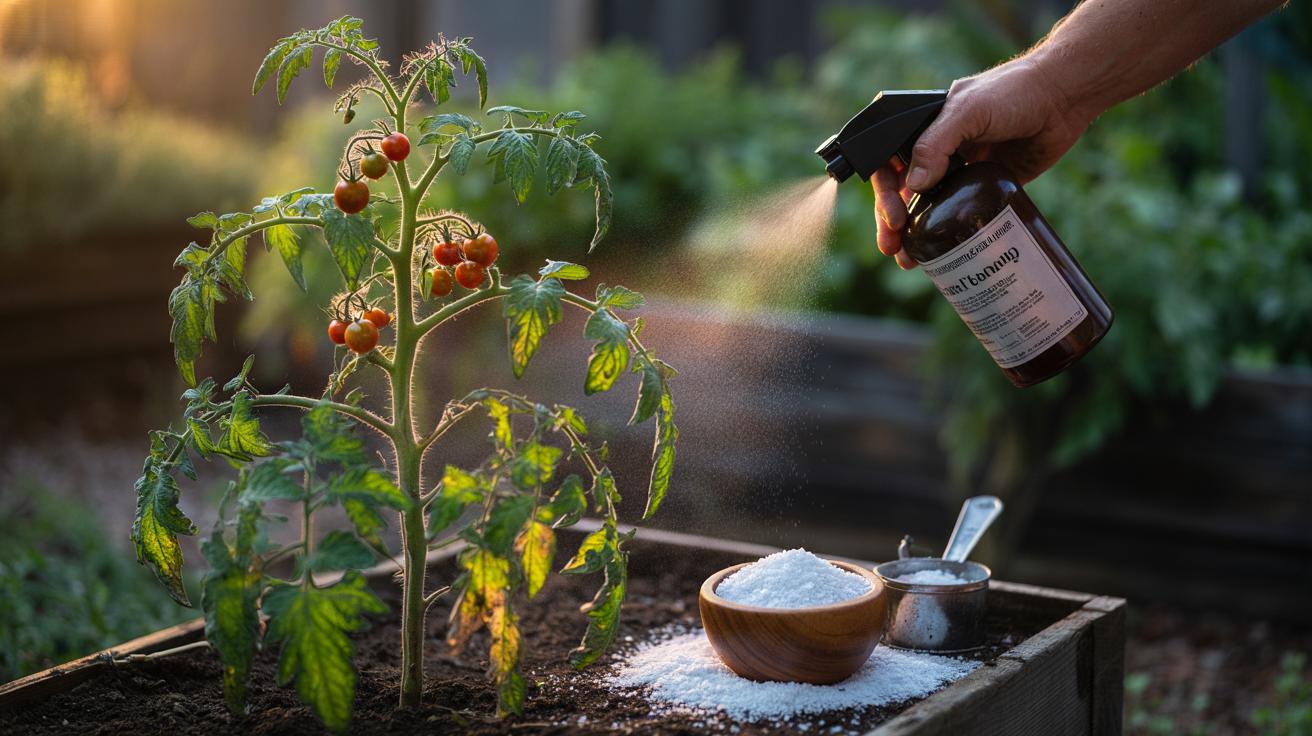
- 🧪 Safe application: foliar spray 1 tbsp/gal every 2–4 weeks; soil drench 1–2 tbsp/gal; keep pH 6.2–6.8 and track plant response.
- ⚠️ Risks and myths: more isn’t better—excess Mg can block calcium/potassium and raise salinity; organic use is for a documented deficiency only.
- 🌱 Smarter strategy: pair targeted Epsom use with soil tests, compost, balanced feeds, dolomitic lime or gypsum, steady watering, and mulch.
Gardeners swear by it, sceptics roll their eyes, and tomatoes sit in the middle of the debate. The “Epsom salt secret” is really no secret at all: it’s about magnesium, an essential nutrient that fuels photosynthesis and flavour development. Used wisely, Epsom salt—magnesium sulfate—can rescue tired leaves and boost productivity, especially in pots or sandy soils. Misused, it wastes money and may unbalance nutrients. This article unpacks when it works, how to apply it safely, and why soil conditions determine results. Epsom salt is a tool, not a miracle. Learn to spot deficiency, dose precisely, and dovetail it with good watering and feeding for tomatoes that don’t just survive—they thrive.
Why Magnesium Matters for Tomatoes
Tomatoes are light-hungry engines. Their leaves manufacture sugars, acids, and aroma compounds that define summer on a plate. At the heart of that chemistry sits magnesium (Mg), the central atom in chlorophyll. When magnesium runs short, older leaves pale between the veins (interveinal chlorosis), overall photosynthesis dips, and fruit setting stalls. You may notice patchy yellowing that creeps upward, while veins remain stubbornly green. Growth slows. Flavour can flatten. What looks like mysterious decline is often a straightforward nutrient shortage. Because magnesium is mobile in plants, the newest leaves may look fine while the oldest suffer, adding to the confusion. Spotting the pattern early saves a season.
So why do tomatoes, particularly, show it? Two reasons: they’re heavy feeders and they’re often grown in containers where nutrients wash out fast. High-potassium feeds can also crowd out magnesium uptake. In short, tomatoes demand a lot and modern mixes don’t always keep up. Enter Epsom salt: a soluble, rapid source of magnesium and sulfur that can plug the gap—if the gap exists.
Epsom Salt: How It Works and When to Use It
Epsom salt is magnesium sulfate heptahydrate (MgSO4·7H2O). Highly soluble, it delivers magnesium to chloroplasts and sulfur to amino-acid pathways. That duo lifts leaf colour, supports enzyme activity, and can tighten fruit quality when the plant is genuinely deficient. Crucially, it does not supply calcium, so it cannot cure blossom end rot—a calcium and watering issue. Using Epsom salt to fix blossom end rot often makes matters worse by competing with calcium uptake. That’s why timing and diagnosis matter more than enthusiasm.
Use it when a soil test or clear symptoms indicate magnesium shortage. It’s particularly helpful in sandy or high-calcium soils, after heavy rain, or in containers that leach minerals. If your soil is already adequate in magnesium—common on clay—skip it. Correct watering, balanced fertiliser, and steady potassium levels should do the heavy lifting. Epsom salt is the emergency jumper cables, not the engine. Always treat the cause, not just the symptom.
Practical Application Methods and Safe Dosages
The safest route is to start small, observe, and calibrate. Foliar sprays act quickly, while soil applications last longer. Avoid piling it on: excess magnesium can raise salinity and reduce calcium and potassium uptake. For sprays, aim for cool, still evenings to limit leaf scorch and improve absorption. For soil drenches, water deeply afterward so salts distribute evenly through the root zone. Keep a notebook—dates, doses, responses—to refine your approach through the season.
| Method | Rate | Timing | Notes |
|---|---|---|---|
| Foliar spray | 1 tbsp per gallon (3.8 L) | Every 2–4 weeks when deficiency appears | Spray undersides of leaves at dusk; visible greening in 48–72 hours |
| Soil drench | 1–2 tbsp per gallon, 1 gallon per plant | Monthly in containers; as needed in beds | Water in thoroughly to prevent salt buildup |
| Side-dress | 1 tbsp per foot of plant height | Midseason, once or twice | Scatter around drip line; keep off stems |
| At transplant | 1 tbsp mixed into backfill | Planting time | Only in proven Mg-poor soils |
Pair any application with a balanced feed. Too much potassium can block magnesium, while excess magnesium can block calcium. Keep pH between 6.2 and 6.8 for best uptake. If leaves crisp at the edges or growth stalls after dosing, flush the pot with plain water and pause.
Common Myths, Risks, and Smarter Alternatives
Myth one: Epsom salt is a universal tomato booster. In reality, it’s situational. Myth two: it cures blossom end rot. It doesn’t—consistent moisture and adequate calcium do. Myth three: more is better. Overuse can elevate electrical conductivity, stressing roots, especially in containers on hot patios. The right dose at the right time is the only “secret” worth keeping. There’s also a regulatory nuance: organic gardeners can use magnesium sulfate to correct a documented deficiency, but not as a blanket tonic.
Safer long-term strategies exist. For new beds, add dolomitic lime where pH is low; it raises pH gently while supplying magnesium. For calcium without shifting pH, use gypsum. Build soil biology with compost so nutrients cycle steadily. Choose fertilisers that balance nitrogen, phosphorus, potassium, and magnesium rather than hammering one element. And never skip the basics: steady watering, mulch to moderate temperature, and timely pruning for airflow—these amplify any nutrient plan.
Epsom salt can be the quiet ally behind dark-green leaves and a truss heavy with fruit, but only when it answers a real deficiency. Treat it as a precision instrument, not a folk cure, and fold it into a broader plan that includes testing, mulching, balanced feeding, and good irrigation. Let evidence, not habit, guide the hand. What will you try this season: a targeted Epsom salt trial alongside a soil test, or a switch to soil-building amendments that promise steadier nutrition over time?
Did you like it?4.6/5 (22)